Nadda Cites NFHS-6 to Counter Congress on Health Record
Synopsis
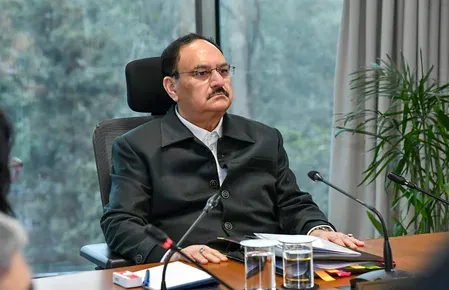
Union Health Minister J. P. Nadda on June 6, 2026 cited NFHS-6 to counter Congress criticism of India's health record, asserting the survey documents real gains in maternal and child health, service access and social protection, and calling out what he termed decades of prior policy failure.
Key Takeaways
Union Health Minister J.
Nadda invoked NFHS-6 on June 6, 2026 in a direct rebuttal to the Congress party over India's healthcare record.
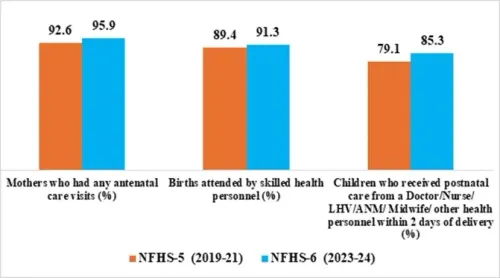
Nadda described the pre- 2014 period as one of 'poor health outcomes, inadequate healthcare access and weak delivery systems despite repeated promises.' NFHS-6 is cited by the government as evidence of 'greater access to healthcare, stronger maternal and child health services, wider social protection and measurable improvements.' The minister specifically credited frontline health workers and beneficiaries as drivers of the reported transformation, warning that denying progress 'does a disservice' to them.
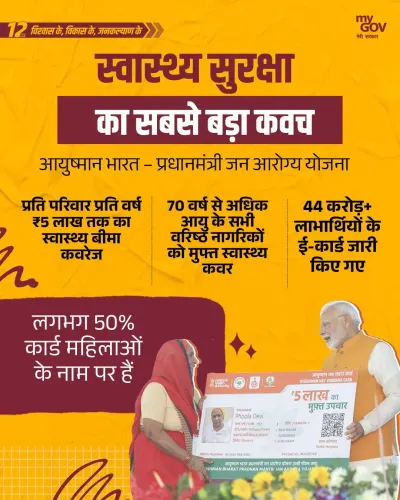
Key government health initiatives in the backdrop include Ayushman Bharat (2018), providing up to Rs 5 lakh annual coverage, and Mission Indradhanush (2014) for immunisation.
Complete NFHS-6 state and district fact sheets are awaited and will be key to independent verification of the claims made by both sides.
Union Health Minister J. P. Nadda on Saturday, June 6, 2026, invoked the findings of the Sixth National Family Health Survey (NFHS-6) to rebut criticism from the Congress party over India's healthcare record, asserting that measurable progress in maternal and child health, service access and social protection stands as evidence against what he described as decades of policy failure under previous governments.
Context
The post is a reply on X in an ongoing thread, with Nadda directly addressing what he characterised as the Congress leadership's selective acknowledgement of health outcomes. 'What is most revealing is what the Congress leadership chooses not to acknowledge,' he wrote, framing the exchange as a contest over the credibility of survey data versus political narrative. The remark follows a pattern of government rebuttals to opposition critiques during periods of heightened political contestation.
Nadda argued that 'denying progress does a disservice to the millions of frontline health workers and beneficiaries who have driven this transformation,' signalling that the government views challenges to NFHS-6 findings as an affront to health workers on the ground. He concluded with a pointed assertion: 'Facts matter. Outcomes matter. NFHS-6 speaks for itself.'
Policy Backdrop
The National Family Health Survey is India's foremost large-scale periodic demographic and health survey, used by successive governments as the primary benchmark for tracking maternal and child health, immunisation, nutrition and service access. The government has consistently cited successive NFHS rounds to document gains attributed to flagship schemes including Ayushman Bharat Pradhan Mantri Jan Arogya Yojana, launched in 2018 to provide health insurance coverage of up to Rs 5 lakh per family annually for the bottom 40 per cent of the population.
Broader infrastructure strengthening has proceeded through the National Health Mission, operational since 2013 and evolved from the National Rural Health Mission of 2005. Mission Indradhanush, initiated in 2014, targeted full immunisation in high-risk districts. The National Health Policy 2017 set overarching goals for universal health coverage and increased public health expenditure, providing the policy architecture within which these programmes operate.
Nadda's post draws a sharp contrast between what he described as 'poor health outcomes, inadequate healthcare access and weak delivery systems despite repeated promises' under earlier governments, and the 'different reality' reflected in NFHS-6, which he said shows 'greater access to healthcare, stronger maternal and child health services, wider social protection and measurable improvements in key indicators.'
Stakeholders and Impact
The most direct stakeholders in this debate are the women, children and rural households whose health outcomes NFHS rounds track, along with the frontline health workers — including ASHAs, ANMs and anganwadi workers — whom Nadda specifically cited as drivers of the reported transformation. Any political dispute over the interpretation of survey findings carries implications for how future health budgets and scheme designs are justified before Parliament.
The Congress party, which led central governments for multiple decades prior to 2014, has a direct political stake in how the pre-2014 health record is characterised. The exchange reflects a broader contest over the legacy of programmes such as the National Rural Health Mission, which was itself a Congress-era initiative, and whether current improvements are the cumulative result of long-running investments or a break from a failed past.
What's Next
Attention will now turn to the release of complete NFHS-6 state and district fact sheets, which will allow independent scrutiny of the headline claims made by both sides. Parliamentary discussion on the Health Ministry's demands for grants and scheme performance is also expected to provide a formal arena for this data-driven debate. The government's willingness to anchor its health narrative explicitly in survey outcomes suggests that NFHS-6 will remain a central reference point in political and policy discourse through the coming legislative session.
Point of View
Making it harder for the opposition to contest without engaging the numbers directly. By foregrounding NFHS-6 as the arbiter of truth, the government attempts to neutralise Congress criticism while simultaneously crediting frontline workers — a constituency with strong public sympathy. The framing of decades of Congress-era failure as the baseline against which current gains are measured is a recurring BJP electoral argument, and anchoring it in a government survey lends it institutional weight. The exchange signals that health outcomes, long a technical domain, are now firmly part of the political battleground ahead of the legislative session.
NationPress
21 Oct 2026
Frequently Asked Questions
What is NFHS-6 and why is it important?
NFHS-6 is the Sixth National Family Health Survey, India's largest periodic demographic and health survey tracking indicators such as maternal mortality, child nutrition, immunisation and healthcare access. It is used by governments and researchers as the primary benchmark for measuring progress in public health.
What did J. P. Nadda say about NFHS-6?
Nadda said NFHS-6 reflects 'greater access to healthcare, stronger maternal and child health services, wider social protection and measurable improvements in key indicators,' and used the findings to rebut Congress criticism of the government's health record.
What is Ayushman Bharat and how does it relate to this debate?
Ayushman Bharat Pradhan Mantri Jan Arogya Yojana, launched in 2018, provides health insurance of up to Rs 5 lakh per year to families in the bottom 40 per cent of the population. The government cites it as a key driver of improved healthcare access documented in NFHS rounds.
Why is Congress being criticised in Nadda's post?
Nadda argued that the Congress leadership 'chooses not to acknowledge' improvements in health outcomes, saying this denial disrespects frontline health workers and beneficiaries who have contributed to the progress shown in NFHS-6.
What happens next after this NFHS-6 debate?
The release of complete NFHS-6 state and district fact sheets will allow independent assessment of the claims. Parliamentary discussions on the Health Ministry's budget and scheme performance are also expected to continue this debate in a formal legislative setting.