Nadda hails WHO removing India from malaria high-burden list
Synopsis
The WHO has removed India from its High-Burden to High-Impact malaria list, a milestone Union Health Minister J. P. Nadda called a major achievement on 17 November 2026, while renewing the government's commitment to full malaria elimination by 2030.
Key Takeaways
The WHO has removed India from its High-Burden to High-Impact (HBHI) malaria country list, signalling a statistically verified decline in transmission.
Union Health Minister J.
Nadda announced and welcomed the development on 17 November 2026 .
India's goal remains zero indigenous malaria cases by 2030 , anchored in the National Framework for Malaria Elimination in India 2016–2030 .
The National Vector Borne Disease Control Programme (NVBDCP) — combining vector control, rapid diagnostics, and treatment scale-up — has driven the case-count decline.
Nadda identified continuous research, public participation, and evidence-based policy as the three essentials for the final push.
India's parallel elimination drives for kala-azar and lymphatic filariasis follow the same evidence-led model.
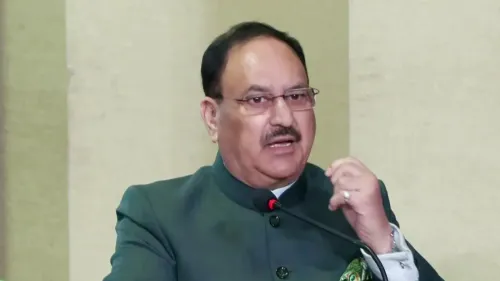
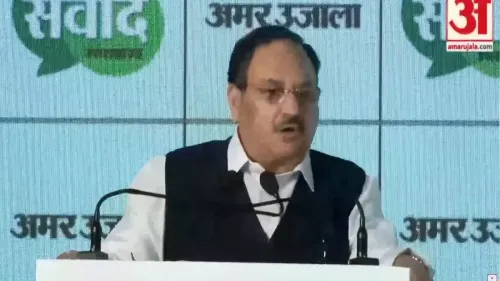
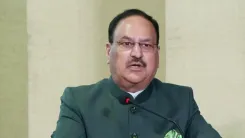
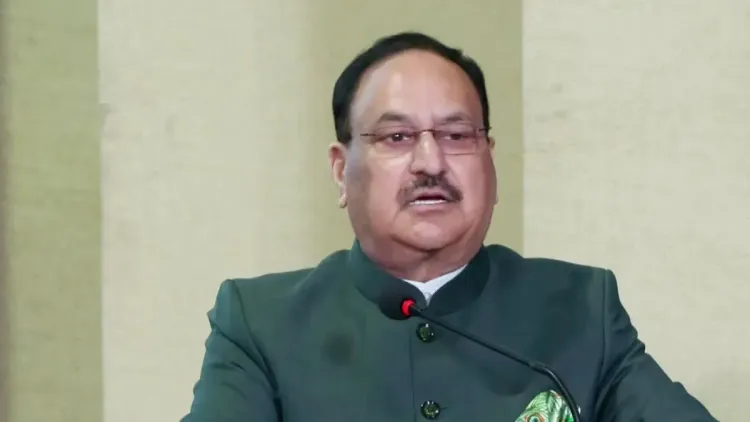
India has crossed a threshold that public-health workers spent years chasing — the World Health Organization has removed the country from its High-Burden to High-Impact (HBHI) malaria country list, a designation that once grouped India alongside the world's most severely affected nations. Union Health Minister J. P. Nadda welcomed the development on Tuesday, 17 November 2026, calling it a major achievement and renewing the government's pledge to eliminate malaria entirely by 2030.
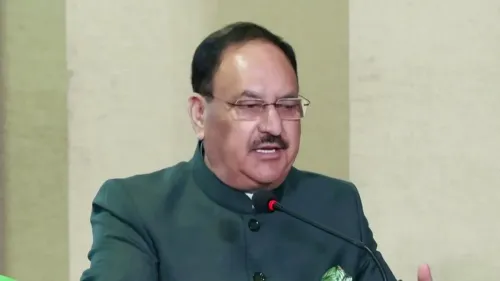
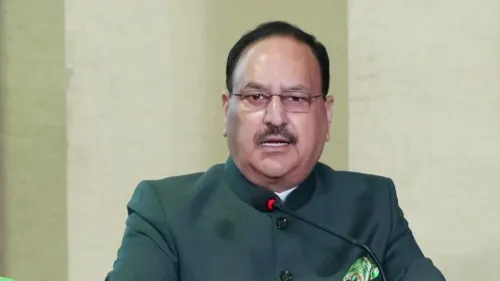
Posting in Hindi on X, Nadda wrote: 'वर्ल्ड हेल्थ ऑर्गेनाइजेशन (WHO) द्वारा भारत को हाई-बर्डन टू हाई-इम्पैक्ट देशों की सूची से बाहर करना एक बड़ी उपलब्धि है।' ('The WHO removing India from the High-Burden to High-Impact countries list is a major achievement.') He extended congratulations to all stakeholders and stressed that reaching zero indigenous cases by 2030 would demand 'continuous research, effective public participation, and policies based on scientific evidence.'What the HBHI list means — and why leaving it matters
The WHO launched the High-Burden to High-Impact initiative to focus global attention and resources on a handful of countries that together account for the overwhelming share of the world's malaria cases and deaths. Membership on the list is a statistical signal of crisis-level transmission. Being removed signals that sustained, evidence-led intervention has measurably bent the curve. For India — a country of continental scale with highly varied climatic and epidemiological zones — the reclassification is not a ceremonial footnote. It is a data-verified verdict.
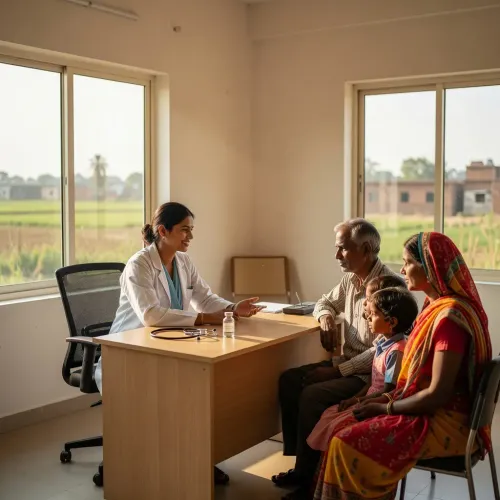
India's gains have been driven by its National Vector Borne Disease Control Programme (NVBDCP), which scaled up indoor residual spraying, insecticide-treated bed-net distribution, rapid diagnostic testing, and artemisinin-combination therapy across endemic districts. The steady case-count decline reported in successive WHO World Malaria Reports tracked this progress year by year.
The 2016 elimination framework that set the clock ticking
The strategic spine behind this achievement is the National Framework for Malaria Elimination in India 2016–2030, launched a decade ago with the explicit goal of zero indigenous malaria cases by 2030. The framework stitched together surveillance, vector control, treatment scale-up, and inter-sectoral coordination into a single timeline. India's removal from the HBHI list is, in a real sense, the mid-game score on that ten-year plan — encouraging, but with the final whistle still four years away.
The same evidence-based, target-driven logic governs India's parallel elimination drives for kala-azar and lymphatic filariasis, making the malaria milestone part of a wider national ambition to exit the map of endemic tropical disease.
What the final push to 2030 requires
Nadda's post is not a victory lap — it is a restatement of conditions. 'Continuous research, effective public participation, and science-based policies' are the three pillars he names, and they flag real vulnerabilities in the last mile. Residual transmission pockets in forested and tribal districts, cross-border movement along India's northeastern and central frontiers, and insecticide or drug resistance remain live risks. The WHO's annual World Malaria Report will be the next formal checkpoint, tracking whether case numbers continue their downward trajectory or plateau. Every district that holds the line matters.
Point of View
Immediately pivoting to the 2030 target, which insulates the government from complacency charges if transmission rebounds. The emphasis on 'scientific evidence-based policies' also positions India's public-health establishment on the global stage as a peer of international health institutions, not merely a recipient of their guidance. The real political test comes at the annual WHO World Malaria Report, where any stall in the downward trend will be read as a policy failure rather than an epidemiological fluctuation.
NationPress
17 Nov 2026
Frequently Asked Questions
What does it mean that WHO removed India from the High-Burden to High-Impact malaria list?
It means India's malaria case burden has fallen enough that the WHO no longer classifies it among the world's highest-burden countries. The HBHI initiative groups nations that together account for the majority of global malaria cases and deaths; leaving the list reflects a statistically significant, sustained decline in transmission.
What is India's target for malaria elimination?
India aims to achieve zero indigenous malaria cases by 2030 , as laid out in the National Framework for Malaria Elimination in India 2016–2030 launched a decade ago.
What programme has driven India's reduction in malaria cases?
The National Vector Borne Disease Control Programme (NVBDCP) has been the primary vehicle, scaling up indoor residual spraying, insecticide-treated bed nets, rapid diagnostic testing, and artemisinin-combination therapy across endemic districts.
What did J. P. Nadda say about India's WHO malaria reclassification?
Union Health Minister J. P. Nadda called the reclassification 'a major achievement,' congratulated all stakeholders, and said continuous research, public participation, and evidence-based policies are essential to meet the 2030 elimination deadline.
Which other diseases is India trying to eliminate alongside malaria?
India is running parallel elimination drives for kala-azar (visceral leishmaniasis) and lymphatic filariasis , using the same evidence-based, target-driven approach as its malaria programme.