Almora Women Turn Rose, Tulsi and Rosemary into Livelihoods
Synopsis
Women self-help group members in Almora, Uttarakhand are cultivating rose, tulsi and rosemary as a self-employment pathway, backed by the DAY-NRLM framework and the state's push to integrate aromatic crops into rural livelihoods.
Key Takeaways
Almora district women in Self-Help Groups are growing rose, tulsi, and rosemary as primary self-employment crops.
The model draws on the Deendayal Antyodaya Yojana – National Rural Livelihoods Mission , launched nationally in 2011 .
Uttarakhand has strategically promoted aromatic and medicinal crops in hill districts as alternatives to subsistence grain farming.
The Kumaon region's cool climate makes it naturally suited to these three commercially distinct crops.
Future policy focus is expected on processing units, market linkages, and value-chain integration for aromatic crop growers.
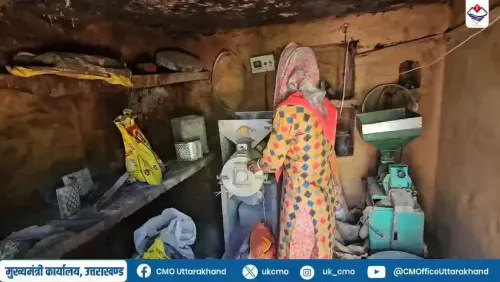
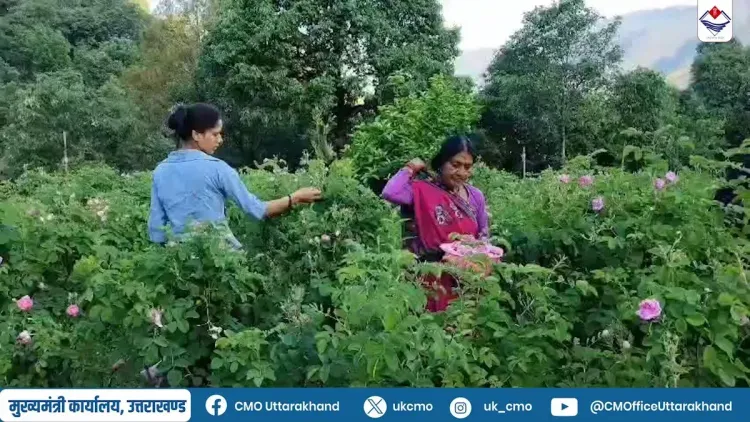
In the terraced hills of Almora district, women tied to self-help groups are not waiting for factory jobs to come to them — they are growing their own. Members of Self-Help Groups (SHGs) across the district are cultivating rose, tulsi, and rosemary as a primary source of self-employment, the Chief Minister's Office of Uttarakhand announced on Tuesday, 17 November 2026.
Fragrant fields, real incomes
Almora sits deep in Uttarakhand's Kumaon division, where steep terrain makes conventional grain farming difficult but the cool climate is ideal for aromatic and medicinal plants. Rose petals feed the perfume and cosmetics supply chain; tulsi (holy basil) is a cornerstone of the herbal-wellness industry; rosemary commands steady demand in essential-oil and food-processing markets. By clustering women into SHGs around these three crops, the district is effectively converting hillside plots into micro-enterprise hubs.
The SHG backbone and the national mission behind it
The push is rooted in the Deendayal Antyodaya Yojana – National Rural Livelihoods Mission (DAY-NRLM), scaled up nationally in 2011 to build women's collectives into durable economic units. SHGs under the mission pool savings, access credit, and collectively negotiate with buyers — advantages an individual small farmer rarely commands alone. In Uttarakhand, the state government has layered this framework with targeted support for aromatic and medicinal-crop growers across its hill districts, linking them into value chains for essential oils and herbal products.
Why Almora's model could travel
Almora is not the first hill district to try this, but the combination of three commercially distinct crops — a flower, a herb, and an aromatic shrub — spread risk in a way that mono-crop pilots have not always managed. Diversification means that even when one market dips, the others can carry household income. The next critical step, as state policy watchers note, will be market linkages: processing units, cold chains, and direct-to-brand arrangements that stop the value being captured downstream by intermediaries rather than by the women who grew the crop.
Point of View
Not a constraint. By anchoring the model inside DAY-NRLM's SHG infrastructure, the government reduces implementation risk — the collective is already constituted, creditworthy, and organised. The real test of the model's durability, however, lies in whether the state follows through with the processing and market-linkage investments that convert raw crop output into steady household income, rather than leaving women exposed to volatile intermediary pricing.
NationPress
17 Nov 2026
Frequently Asked Questions
Which crops are women's SHGs in Almora cultivating for self-employment?
Women's self-help groups in Almora are cultivating rose, tulsi (holy basil), and rosemary as self-employment crops, leveraging demand in essential-oil, herbal, and cosmetics markets.
What is DAY-NRLM and how does it support women farmers in Uttarakhand?
The Deendayal Antyodaya Yojana – National Rural Livelihoods Mission, scaled up in 2011, organises rural women into self-help groups that pool savings, access credit, and collectively engage in micro-enterprises such as aromatic crop farming.
Why is Almora suited to growing aromatic and medicinal plants?
Almora lies in Uttarakhand's Kumaon division at high altitude, where the cool climate and terraced hill terrain are well-suited to aromatic and medicinal plants like rose, tulsi, and rosemary.
What are the market opportunities for rose, tulsi and rosemary grown in Uttarakhand?
Rose feeds perfume and cosmetics supply chains, tulsi is central to the herbal-wellness industry, and rosemary commands steady demand in essential-oil and food-processing sectors, giving SHG farmers multiple revenue streams.
What policy support does Uttarakhand provide for SHG-linked aromatic crop farming?
Uttarakhand has promoted aromatic and medicinal-crop cultivation in hill districts through state programmes that link such crops with SHGs and work to connect growers to value chains for essential oils and herbal products.