Nadda at ICMR-NIMR Golden Jubilee: Malaria Cases Down 80%
Synopsis
Union Health Minister J. P. Nadda and President Droupadi Murmu attended ICMR-NIMR's 50th anniversary in New Delhi, with Nadda announcing an 80% fall in malaria cases and deaths since 2015 and reaffirming India's pledge to eliminate malaria by 2030.
Key Takeaways
Union Health Minister J.
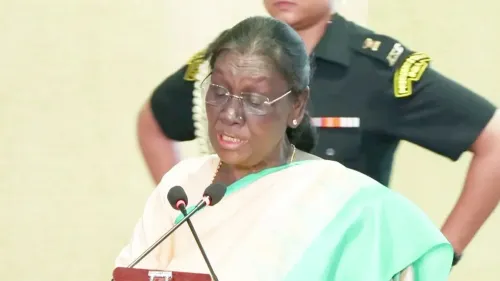
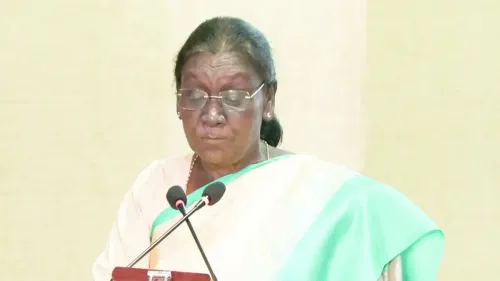
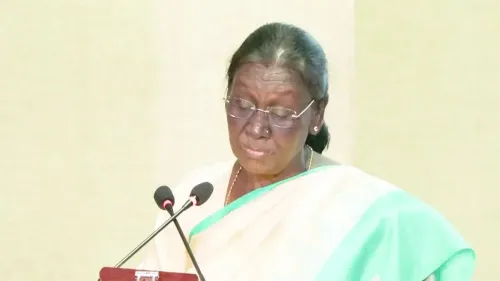
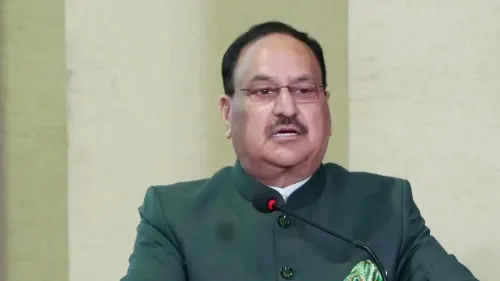
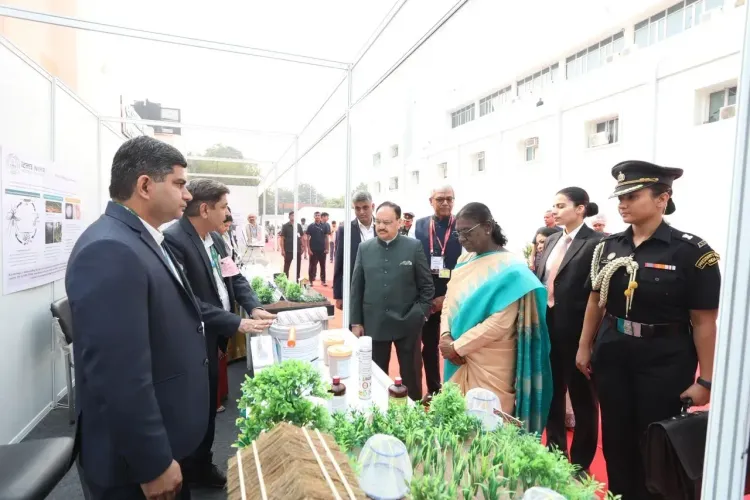
Nadda and President Droupadi Murmu attended the Golden Jubilee of ICMR–NIMR in New Delhi on November 17, 2026 .
India has achieved a nearly 80% reduction in malaria cases and deaths between 2015 and 2025 .
High-burden malaria districts have fallen sharply from 155 to 33 over the same decade.
The decline is attributed to scientific innovation, early diagnosis, effective treatment, and community participation .
India's Malaria-Free India by 2030 goal is rooted in the National Framework for Malaria Elimination (2016) .
ICMR–NIMR marks 50 years of malaria research underpinning national public health policy.
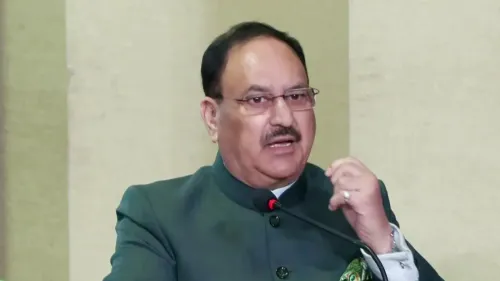
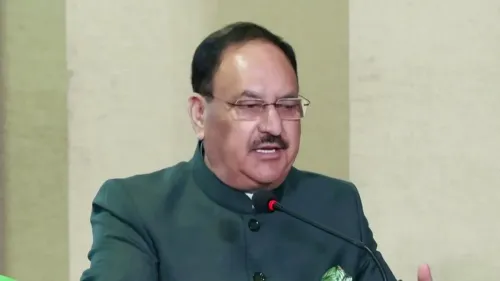
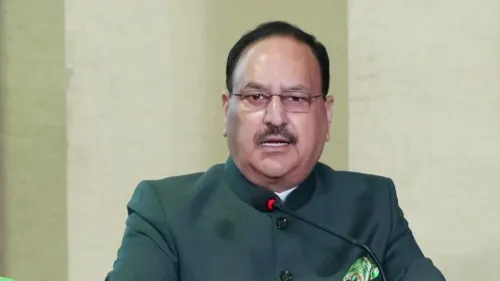
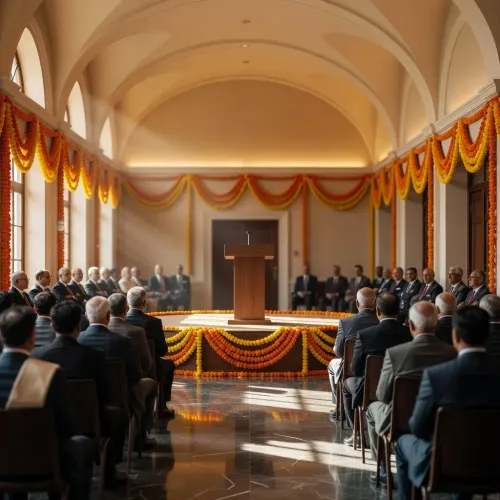
Fifty years of relentless science — and India now stands within striking distance of ending malaria for good. Union Health Minister J. P. Nadda joined President Droupadi Murmu in New Delhi on Tuesday, November 17, 2026, at the Golden Jubilee celebrations of ICMR–National Institute of Malaria Research (ICMR–NIMR), marking half a century of pioneering public health research with a declaration that the finish line is now firmly in sight.
From 155 high-burden districts to 33 — the numbers tell the story
The headline statistic is striking: India has recorded a nearly 80% reduction in both malaria cases and deaths between 2015 and 2025. Even more telling is the geographic shrinkage of the disease — the number of high-burden districts has collapsed from 155 to just 33 over the same period. That means hundreds of districts once synonymous with malaria outbreaks, overwhelmed health posts, and preventable deaths have been effectively turned around.
Nadda credited the turnaround to a combination of scientific innovation, early diagnosis, effective treatment, and community participation — a four-pillar approach that health officials argue has made India's model replicable across endemic regions. 'India has achieved a nearly 80% reduction in malaria cases and deaths between 2015 and 2025, with high-burden districts declining sharply from 155 to just 33,' he wrote.
ICMR–NIMR at 50: the institution behind the numbers
ICMR–NIMR, celebrating its Golden Jubilee this year, has been the spine of India's malaria research architecture for five decades — from vector biology and drug resistance surveillance to field trials of new diagnostics. The presence of the President at the event signals the highest level of institutional recognition for work that rarely makes front pages but has quietly saved millions of lives.
Nadda's tribute was direct: 'Congratulate ICMR–NIMR on 50 years of pioneering research and dedicated service to public health.' The institute's research output has fed directly into national treatment protocols and the design of community-level interventions under the National Health Mission.
The 2030 deadline and the road India has already walked
India's commitment to a Malaria-Free India by 2030 is anchored in the National Framework for Malaria Elimination, launched in 2016, which set phased elimination targets aligned with WHO global goals and Sustainable Development Goal 3 on ending epidemics. The sharp decline in high-burden districts suggests the framework is producing measurable results — though the final 33 districts are likely the hardest to crack, clustering in remote, forest-fringe, and tribal geographies where surveillance and healthcare access remain most challenging.
With four years left on the clock and the burden now concentrated in a fraction of its former footprint, India's malaria programme enters what public health experts call the 'last mile' — the phase where political will, sustained funding, and hyper-local strategy matter most. The Golden Jubilee of ICMR–NIMR, then, is not just a backward glance. It is a declaration of institutional readiness for the final push.
Point of View
Using the ICMR-NIMR jubilee as a platform to signal momentum ahead of the 2030 elimination deadline. The 80% reduction claim, if validated by forthcoming surveillance reports, would represent one of the most significant vector-borne disease successes in the developing world. However, the compression of burden into 33 residual high-burden districts — likely in remote tribal and forest-fringe areas — means the final phase demands a qualitatively different strategy than the broad-stroke gains of the last decade. The Health Minister's framing of community participation alongside scientific tools also signals an intent to mainstream grassroots mobilisation within the National Health Mission architecture ahead of mid-term programme reviews.
NationPress
17 Nov 2026
Frequently Asked Questions
What is India's target for malaria elimination?
India aims to achieve a Malaria-Free India by 2030 under the National Framework for Malaria Elimination , launched in 2016 and aligned with WHO global targets.
How much have malaria cases reduced in India?
According to Union Health Minister J. P. Nadda, India has achieved a nearly 80% reduction in malaria cases and deaths between 2015 and 2025 .
What is ICMR-NIMR and why is it celebrating 50 years?
ICMR–National Institute of Malaria Research (ICMR-NIMR) is India's premier institution for malaria research under the Indian Council of Medical Research. It is celebrating its Golden Jubilee in 2026, marking five decades of contributions to malaria surveillance, drug research, and public health policy.
How many high-burden malaria districts remain in India?
The number of high-burden malaria districts in India has declined from 155 to just 33 between 2015 and 2025, according to statements made at the ICMR-NIMR Golden Jubilee event.
Who attended the ICMR-NIMR Golden Jubilee event?
President Droupadi Murmu and Union Health Minister J. P. Nadda attended the Golden Jubilee celebrations of ICMR-NIMR in New Delhi on November 17, 2026 .