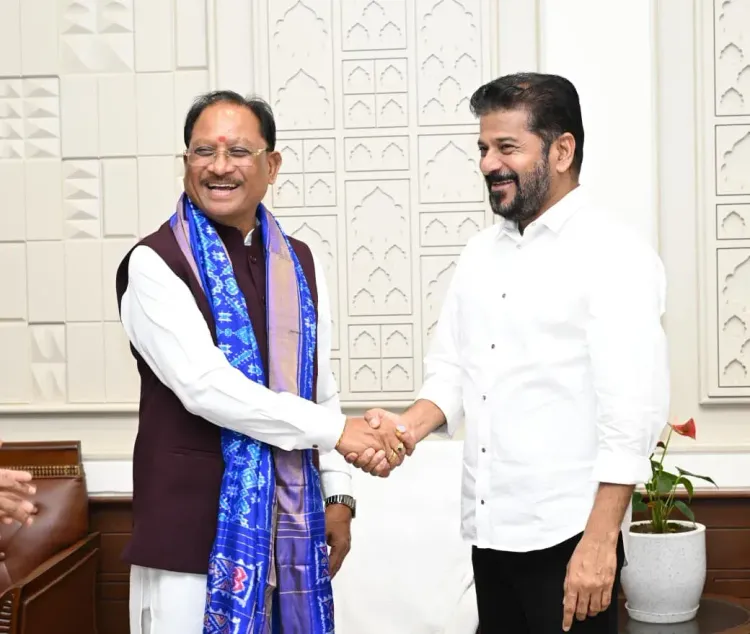
CM Revanth meets Chhattisgarh CM for Sammakka Sagar NOC
Synopsis
Telangana CM Revanth Reddy travelled to Raipur on 17 November to personally request Chhattisgarh CM Vishnu Deo Sai for a swift NOC for the completed Sammakka Sagar Barrage, which has a 6.94 TMC storage capacity on the Godavari in Mulugu district. Chhattisgarh responded positively.
Key Takeaways
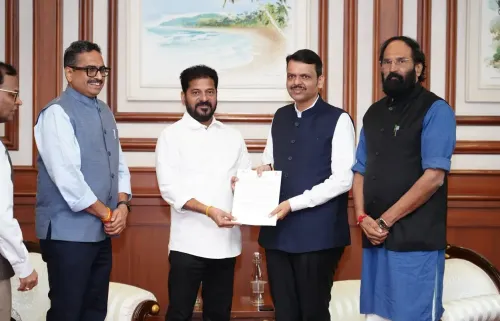
Telangana CM Revanth Reddy met Chhattisgarh CM Vishnu Deo Sai in Raipur on 17 November 2026 to request an urgent NOC for the Sammakka Sagar Barrage .
The barrage at Thupakulagudem, Mulugu district is physically complete with a storage capacity of 6.94 TMC at +83 metres full reservoir level.
The site was shifted from Kanthanapalli to reduce submergence from 11,408 acres and 17 tribal villages to approximately 33 acres in Chhattisgarh , per an IIT Kharagpur study.
Telangana paid Rs 9.883 crore for the IIT Kharagpur impact study; the report was submitted to Chhattisgarh on 30 July .
CM Sai responded positively and committed to completing the NOC process swiftly.
Telangana has offered to fund all land acquisition, compensation, and rehabilitation costs in Chhattisgarh as per rules.
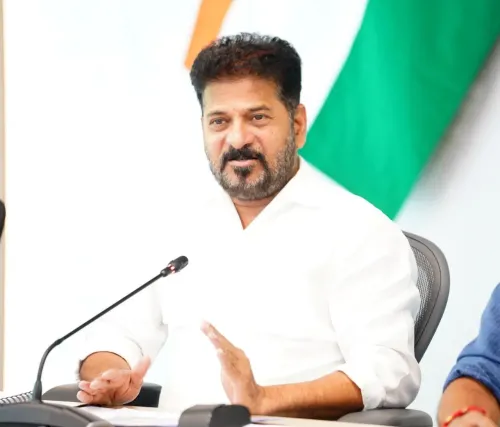
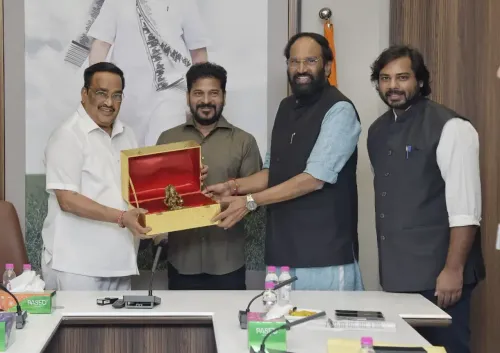
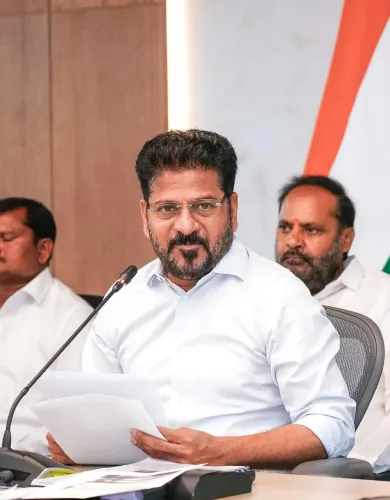
A completed barrage with nowhere to store water — that is the paradox Telangana Chief Minister Revanth Reddy carried to Raipur on Tuesday, 17 November 2026, when he met Chhattisgarh Chief Minister Vishnu Deo Sai seeking an urgent No-Objection Certificate for the Sammakka Sagar Barrage on the Godavari River near Thupakulagudem in Mulugu district. The Chief Minister's Office of Telangana announced that Sai responded positively and committed to completing the NOC process swiftly.
A barrage built, a clearance pending
The Sammakka Sagar Barrage is physically complete. Its full reservoir level is set at +83 metres, giving it a storage capacity of 6.94 TMC (thousand million cubic feet) of Godavari water. The project is designed to bring irrigation and drinking water to drought-prone, backward, and tribal regions of Telangana — but without Chhattisgarh's NOC, that water cannot legally be impounded. Chief Minister Revanth Reddy was accompanied to the meeting by Irrigation Minister Uttam Kumar Reddy, signalling the administration's urgency about the clearance.
The post from the Chief Minister's Office noted that the CM cited El Niño-driven rainfall deficits and rising water-stress projections for Telangana as reasons to accelerate the NOC. With the barrage ready, every delayed monsoon season without stored water translates directly into unmet demand across tribal and rain-shadow districts.
Why the site moved from Kanthanapalli to Thupakulagudem
The project's history holds a significant redesign. The original proposal sited the barrage at Kanthanapalli, but impact assessments found it would submerge 11,408 acres of land and displace 17 tribal villages, raising serious concerns about forest rights, displacement, and security infrastructure in the area. To reduce that footprint, the construction site was shifted downstream to Thupakulagudem, now within Mulugu district.
The relocation paid off measurably. A study commissioned by Telangana and conducted by IIT Kharagpur — funded by a Telangana government payment of Rs 9.883 crore — found that at the Thupakulagudem alignment, only approximately 33 acres in Chhattisgarh face submergence under normal conditions. Even during peak flood events, the affected area would not exceed 100 acres in Chhattisgarh. The IIT Kharagpur team submitted its report to the Chhattisgarh government on 30 July.
Telangana's offer to Chhattisgarh on land and rehabilitation
Chief Minister Revanth Reddy told his Chhattisgarh counterpart that Telangana is fully prepared to pay all costs for land acquisition, compensation, and rehabilitation of affected residents in Chhattisgarh in accordance with applicable rules. This financial commitment removes one of the last substantive obstacles to Chhattisgarh issuing the NOC. CM Sai responded by assuring that the NOC process would be completed quickly.
The CMO post also noted that Revanth Reddy requested Chhattisgarh's cooperation in expediting all remaining approvals, not just the NOC — suggesting broader clearances for water storage and other project parameters are still in the pipeline.
Godavari basin coordination in the post-bifurcation era
Interstate coordination on Godavari basin projects has been a recurring feature of Telangana's governance since the state's formation in 2014. Projects straddling the Telangana-Chhattisgarh border require bilateral technical and administrative clearances that can lag years behind physical construction. The Sammakka Sagar case is a textbook example: a drought-relief infrastructure project, designed with significant compromise on its original scope to minimise cross-border impact, now awaiting final bureaucratic closure. The Tuesday meeting in Raipur — a sitting CM travelling to a neighbouring state's capital for an infrastructure clearance — underscores how much rides on this NOC for communities in Mulugu and surrounding tribal areas.
With both Chief Ministers on record expressing intent and IIT Kharagpur's technical report already in Chhattisgarh's hands, the formal issuance of the NOC becomes the single remaining trigger before Telangana can begin storing 6.94 TMC of Godavari water for one of its most water-stressed regions.
Point of View
Telangana signals that the Sammakka Sagar NOC is a political priority, not a file stuck in bureaucratic transit. The decision to cite El Niño and water-stress data in a bilateral meeting elevates a local infrastructure clearance into a climate-resilience argument, making it harder for Chhattisgarh to defer. With IIT Kharagpur's report minimising the cross-border submergence case to under 100 acres even at peak flood, Telangana has effectively pre-emptively answered Chhattisgarh's most defensible objection. The positive public response from CM Sai creates momentum — but formal NOC issuance, land acquisition timelines, and downstream approvals will be the real test of whether Tuesday's diplomatic goodwill translates into water for Mulugu's tribal farmers.
NationPress
17 Nov 2026
Frequently Asked Questions
What is the Sammakka Sagar Barrage and where is it located?
The Sammakka Sagar Barrage is a multi-purpose project built on the Godavari River near Thupakulagudem in Mulugu district, Telangana . It has a storage capacity of 6.94 TMC at a full reservoir level of +83 metres and is designed to supply irrigation and drinking water to drought-affected and tribal areas.
Why does Telangana need an NOC from Chhattisgarh for this project?
Because the barrage's reservoir, when filled, would submerge a small portion of land in neighbouring Chhattisgarh . Under interstate water and land regulations, Telangana requires a No-Objection Certificate from Chhattisgarh before it can legally impound water in the structure.
How much land in Chhattisgarh will the Sammakka Sagar Barrage submerge?
An IIT Kharagpur study found that the revised Thupakulagudem alignment would submerge approximately 33 acres in Chhattisgarh under normal conditions; even during heavy floods the affected area would not exceed 100 acres .
Why was the project shifted from Kanthanapalli to Thupakulagudem?
The original Kanthanapalli site was projected to submerge 11,408 acres and displace 17 tribal villages . To minimise displacement and environmental impact, the barrage location was moved to Thupakulagudem , drastically reducing the submergence footprint.
What was the outcome of the CM Revanth Reddy-CM Vishnu Deo Sai meeting in Raipur?
Chhattisgarh CM Vishnu Deo Sai responded positively to Telangana's request and assured that the NOC process would be completed swiftly. Telangana also confirmed it is ready to pay all land acquisition, compensation, and rehabilitation costs in Chhattisgarh.