CM Revanth Reddy: Kaleshwaram Barrages Unfit for Water Storage
Synopsis
Telangana CM Revanth Reddy on 11 July 2026 declared that the Medigadda, Annaram and Sundilla barrages of the Kaleshwaram project cannot store water safely, citing NDSA's 365-page report and a Jal Shakti-appointed Technical Oversight Committee constituted on 30 June 2026 to guide restoration.
Key Takeaways
The NDSA's 365-page report explicitly states that storing water in the Medigadda, Annaram, and Sundilla barrages is unsafe under current conditions.
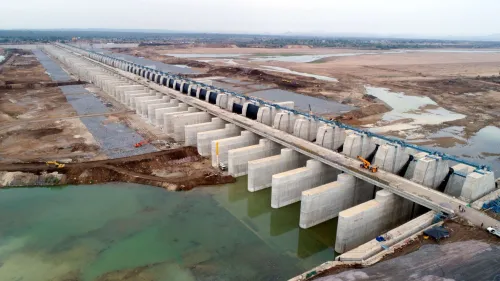
Block 7 of Medigadda barrage suffered a pier subsidence of 1.2 metres in October 2023 , attributed to defects in planning, design, construction, and maintenance.
An Executive Engineer's letter dated 18 May 2020 — 11 months after inauguration — had already flagged structural defects to contractor L&T , warnings that were not acted upon.
The Ministry of Jal Shakti constituted a Technical Oversight Committee on 30 June 2026 , chaired by an NDSA (Technical) Member and including CWC, SMRS, CWPRS and Telangana government representatives.
Closing barrage gates to store the minimum 5 TMC of water required for pumping could endanger the entire project and risk flooding Bhadrachalam town , per the NDSA.
Restoration works will begin after testing concludes this month, guided by IIT Mumbai and international experts under the TOC's oversight.
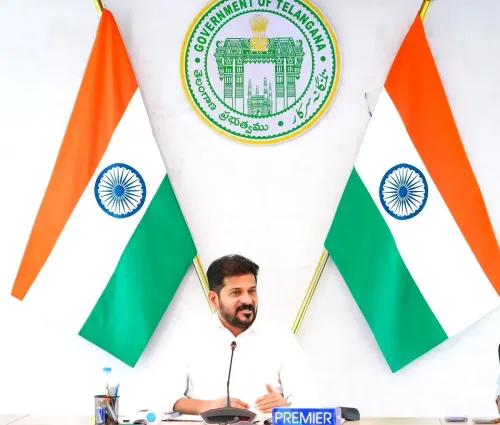
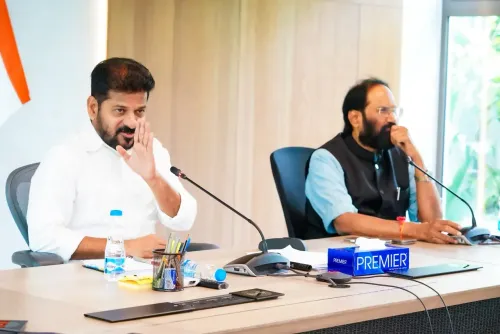
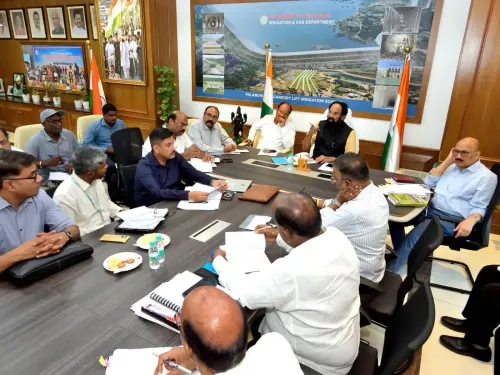
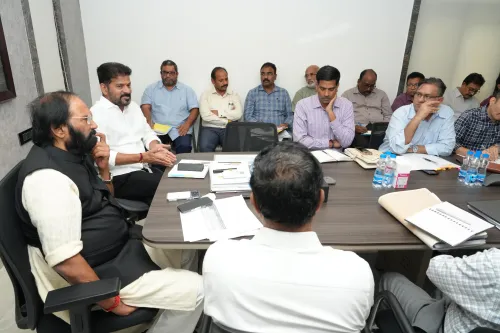
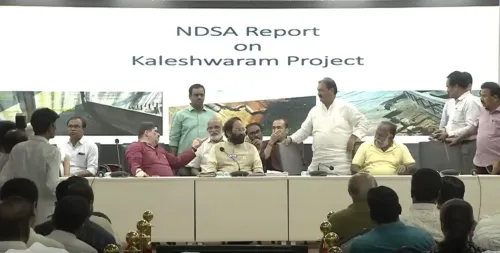
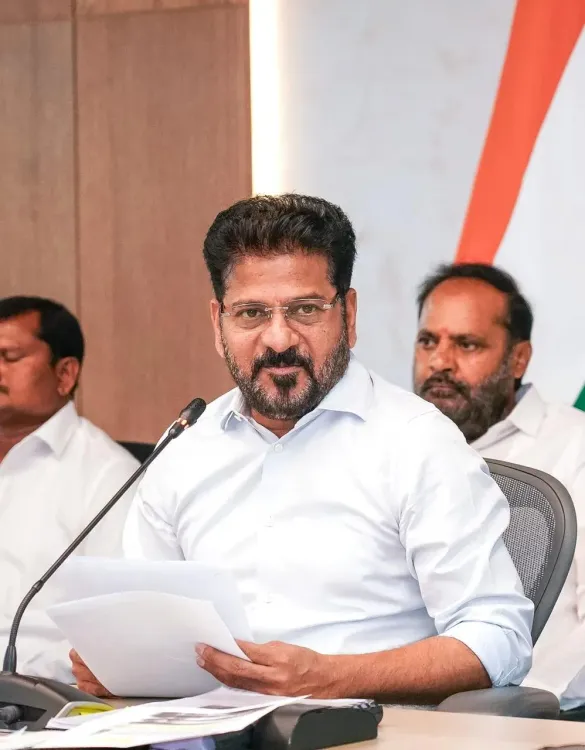
Chief Minister Revanth Reddy of Telangana on Saturday, 11 July 2026, held a press conference at the Bodhi Pavilion, MCR HRD Institute, Hyderabad, to explain why the state government is not lifting water from the Godavari river through the Kaleshwaram Lift Irrigation Project, citing explicit directives from the National Dam Safety Authority (NDSA) and the Union Ministry of Jal Shakti.
Context
Speaking alongside Deputy Chief Minister Bhatti Vikramarka and ministers Uttam Kumar Reddy and Ponnam Prabhakar, CM Revanth Reddy said the state has come under criticism for not utilising Godavari flows. He pushed back firmly, saying, 'నీటిని ఎత్తిపోయాలంటే ముందు నీటిని నిల్వచేయాలి' — 'to lift water, you must first store it' — and that storing water in the damaged barrages would be catastrophic.
The Chief Minister stated that the NDSA's 365-page report has 'very clearly' noted that storing water in the barrages at Medigadda, Annaram, and Sundilla is 'not at all reasonable in current conditions.' He added that closing the barrage gates — a prerequisite for storage — would expose the entire project to danger, potentially flooding Bhadrachalam town and washing away entire villages downstream.
Policy Backdrop
The Dam Safety Act was enacted by Parliament on 30 December 2021, establishing the NDSA as the statutory national body for dam inspection, monitoring, and maintenance oversight. Under this law, all states are bound to follow NDSA directives. Following the Medigadda barrage pier subsidence incident in October 2023 — where pillars at Block 7 sank by 1.2 metres — the NDSA conducted an immediate site inspection and issued a preliminary report, later followed by a comprehensive 365-page final report.
The report attributed the disaster to defects in planning, design, construction, and operation and maintenance. It also noted that an Executive Engineer's letter dated 18 May 2020 — just 11 months after the project's inauguration on 21 June 2019 — had already flagged structural defects to contractor L&T and warned that proceeding without rectification would endanger the barrage. Those warnings were not acted upon, the CM said, leading to the eventual collapse.
The NDSA report further found that the Kannepalli pump house was completely submerged during a Godavari flood on 14 July 2022 after a retaining wall collapsed, and has still not been fully restored. An FIR was registered at Mahadevpur Police Station the day after the Medigadda subsidence.
On 30 June 2026, the Ministry of Jal Shakti constituted a Technical Oversight Committee (TOC) to guide the design and restoration of the Medigadda, Annaram, and Sundilla barrages. The committee is chaired by an NDSA (Technical) Member and includes directors from the Central Water Commission (CWC) for designs and gates, a Superintending Engineer-level representative each from SMRS and CWPRS, and three SE-level representatives from the Telangana government.
Stakeholders and Impact
The Kaleshwaram project was conceived as a lifeline for irrigation across Telangana, drawing water from the Godavari through a cascade of barrages and pump houses. The NDSA report states that for pumping operations at Medigadda to begin, water must be stored to a level of 93.5 metres, requiring a minimum of 5 TMC (thousand million cubic feet) of water. Without closing the gates — which the NDSA has explicitly prohibited until repairs are complete — this threshold cannot be reached.
The CM also clarified that the project's operational lifeline currently runs through Sripada Yellampalli, which he called the 'heart' of the project. Farmers dependent on Kaleshwaram's command area and residents of the Godavari basin, particularly around Bhadrachalam, are directly affected by any decision to attempt premature water storage.
What's Next
The Chief Minister stated that the government has 'no ill intent' in the matter of project restoration and that testing processes are expected to conclude this month. Following that, restoration works will commence in line with recommendations from IIT Mumbai and international experts, under the oversight of the Technical Oversight Committee. He said the state government will 'fully cooperate' with the NDSA and will not proceed with any design changes or repairs without prior approval from the NDSA or the Central Water Commission (CWC). The Telangana government's position is that it will follow the TOC's proposals 'to the letter' before any restoration work begins on the three barrages.
Point of View
The Congress-led Telangana government insulates itself from opposition charges of mismanaging the Godavari's flows while simultaneously building a public record that places structural blame on the previous BRS administration's construction oversight. The invocation of the 2021 Dam Safety Act and the May 2020 Executive Engineer letter is a pointed attempt to trace the fault line backward. More broadly, this episode reflects a growing national pattern where post-2021 NDSA jurisprudence is reshaping how states handle irrigation infrastructure failures — with independent federal oversight now carrying decisive legal and political weight that state governments cannot easily override or ignore.
NationPress
10 Oct 2026
Frequently Asked Questions
Why is the Telangana government not lifting water from the Godavari through Kaleshwaram?
The NDSA's 365-page report has clearly stated that the Medigadda, Annaram and Sundilla barrages are unsafe for water storage in their current condition. Since water must first be stored before it can be lifted, and since closing the barrage gates to enable storage poses a serious danger to the entire project, the state government says lifting is not possible without completing repairs first.
What happened to the Medigadda barrage and when?
In October 2023, the pillars at Block 7 of the Medigadda barrage subsided by 1.2 metres. The NDSA attributed this to defects in planning, design, construction, and operation and maintenance of the structure.
What is the Technical Oversight Committee for Kaleshwaram?
The Ministry of Jal Shakti constituted the Technical Oversight Committee on 30 June 2026 to guide the design and restoration of the Medigadda, Annaram and Sundilla barrages. It is chaired by an NDSA (Technical) Member and includes CWC directors and representatives from SMRS, CWPRS and the Telangana government.
What is the NDSA and what powers does it have over state dams?
The National Dam Safety Authority is a central statutory body established under the Dam Safety Act enacted by Parliament on 30 December 2021. All states are legally bound to follow NDSA directives on dam inspection, monitoring, maintenance and repairs.
When will Kaleshwaram project restoration begin?
CM Revanth Reddy stated that the current testing phase is expected to conclude in July 2026, after which restoration works will begin under the guidance of IIT Mumbai and international experts, in compliance with the Technical Oversight Committee's recommendations.