Telangana Minister Promises Scientific Restoration of Kaleshwaram Barrages
Synopsis
Telangana's Irrigation Minister, Uttam Kumar Reddy, reveals plans for a scientifically driven restoration of the Kaleshwaram project barrages, ensuring transparency and expert oversight. Key strategies and timelines are set before the monsoon season.
Key Takeaways
Telangana is restoring Kaleshwaram barrages.
Scientific methods will ensure transparency.
Expert agencies have been appointed for assessments.
Restoration techniques include advanced technology.
Completion is targeted before the monsoon.
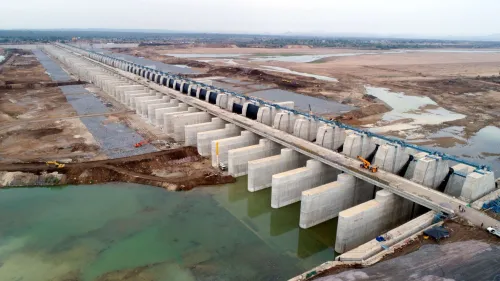
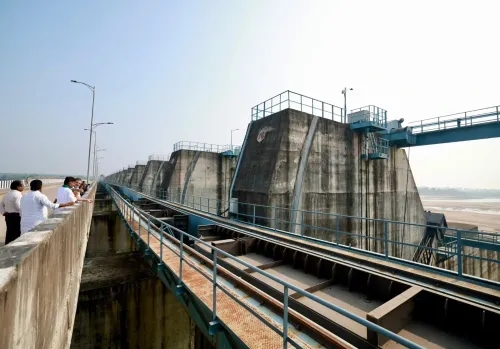
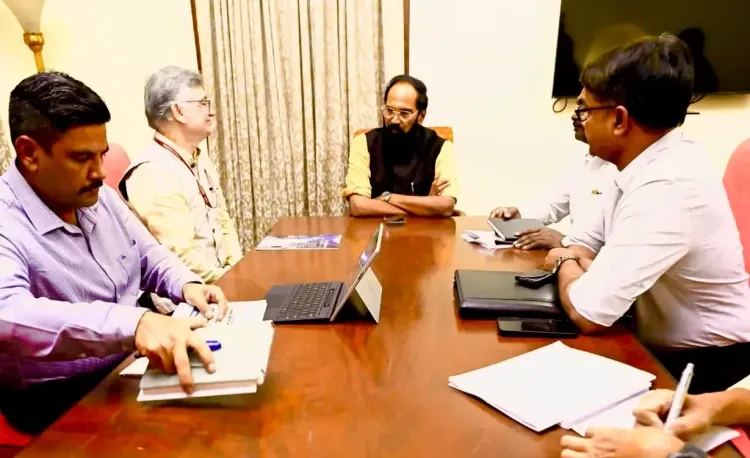
Hyderabad, April 17 (NationPress) Telangana's Irrigation Minister, Uttam Kumar Reddy, announced on Friday that the government will execute a systematic and transparent restoration of three barrages associated with the Kaleshwaram project.
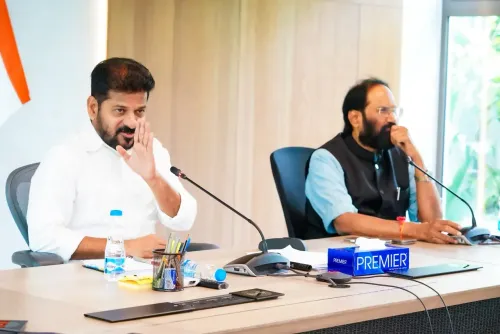
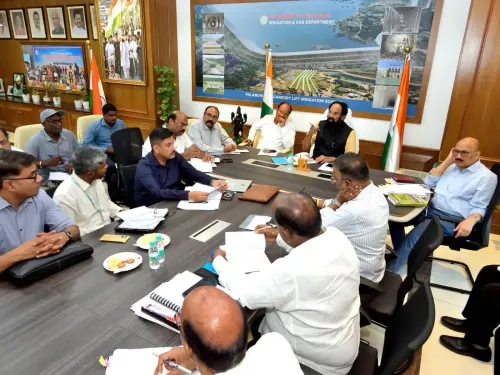
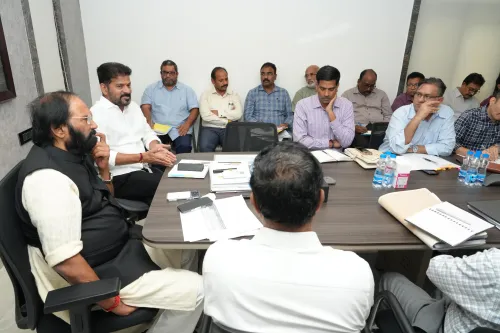
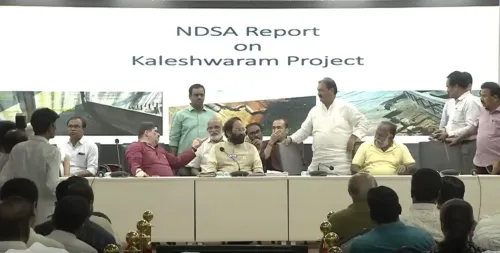
During a meeting with Anil Jain, Chairman of the National Dam Safety Authority (NDSA), in Delhi, the Minister outlined the action plan for the repair and restoration of the Medigadda, Annaram, and Sundilla barrages.
The Minister emphasized the precautionary steps being implemented to avoid past mistakes.
An official statement indicated that the NDSA Chairman expressed approval of the extensive testing being carried out under expert supervision. He mentioned that he plans to visit the barrages personally in the near future.
As part of this restoration initiative, the government has engaged expert agencies. Specialized firms for design and testing have already begun their tasks.
The Central Water and Power Research Station (CWPRS) is conducting essential preliminary tests and studies that are prerequisites for the design phase.
To aid the restoration of the barrages, various advanced techniques are being employed, including Ground Penetrating Radar (GPR) scanning, drone surveys, borehole drilling, and geotechnical and geophysical testing to evaluate the soil's condition and the structural integrity of the constructions.
Uttam Kumar Reddy stated that to ensure effective collaboration among different agencies, a Central Coordination Committee has been established. This committee consists of officials from the Irrigation Department, representatives from CWPRS, design firm representatives, and members of other technical agencies.
The committee's responsibility includes ensuring timely tests, provision of necessary data, and maintaining effective coordination among all involved parties.
The government is committed to ensuring that this process strictly adheres to technical standards under the oversight of central experts. There is also potential for a specialized technical expert team to join the committee if the need arises.
Once all test results are obtained and a thorough analysis of the data is conducted, the design firm will pinpoint any structural defects and develop new restoration designs.
These designs will then be submitted to the National Dam Safety Authority, after which the government will commence restoration activities in line with the Authority's recommendations and guidelines.
The irrigation minister mentioned that the government aims to complete all necessary testing and finalize the designs within the next three to four months, prior to the arrival of the monsoon season.
The initiative is progressing and plans to initiate restoration efforts following the monsoon.
Point of View
The commitment of Telangana's government to restore the Kaleshwaram barrages through scientific methods and expert supervision highlights a proactive approach to infrastructure management. The establishment of a coordination committee ensures that multiple agencies work harmoniously, aiming for timely completion before the monsoon.
NationPress
16 Sept 2026
Frequently Asked Questions
What is the Kaleshwaram project?
The Kaleshwaram project is an extensive irrigation project in Telangana designed to provide water for agricultural and drinking purposes.
Which barrages are being restored?
The barrages being restored are Medigadda, Annaram, and Sundilla.
What techniques are being used for assessment?
Techniques include Ground Penetrating Radar scanning, drone surveys, borehole drilling, and geotechnical testing.
Who is overseeing the restoration process?
The restoration process is overseen by the National Dam Safety Authority and a Central Coordination Committee.
When is the restoration work expected to begin?
Restoration work is planned to start after the monsoon season, following the completion of necessary tests.