CM Himanta Sends Strong Signal from East Karbi Anglong
Synopsis
Assam CM Himanta Biswa Sarma on 7 November 2026 invoked East Karbi Anglong's voice in a combative post, declaring the state will not surrender its peace and progress to anarchy — a pointed signal from a district with deep insurgency history.
Key Takeaways
Assam CM Himanta Biswa Sarma posted a sharp statement on 7 November 2026 anchored in East Karbi Anglong .
He declared Assam will not 'bow to the goons of anarchy' and vowed the state stands 'strong and united.' East Karbi Anglong falls under the Karbi Anglong Autonomous Council , a region with a significant history of ethnic autonomy demands and armed group activity.
The September 2021 Memorandum of Settlement with Karbi armed groups remains the peace foundation the current administration has built its development narrative upon.
The hashtag #SaveDemocracyRemoveAnarchy frames the moment as a broader political and democratic contest beyond a single district episode.
Opposition reactions and formal state law-and-order measures are the next key developments to watch.
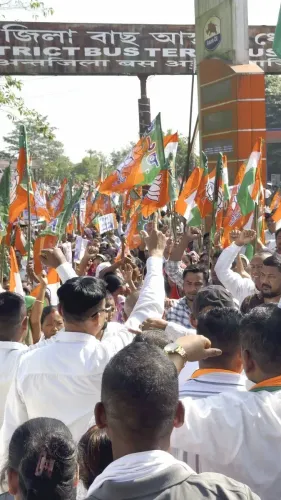
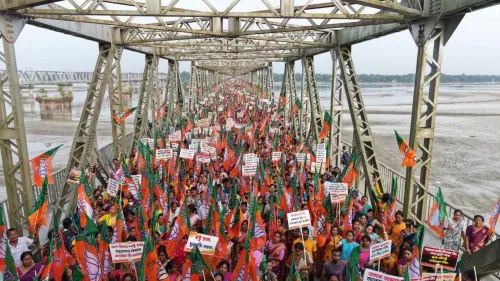
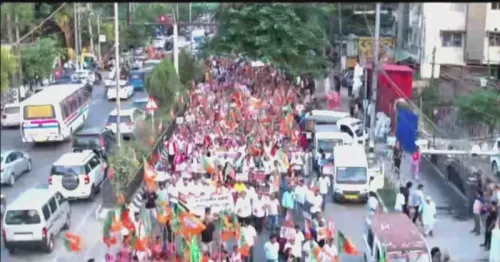
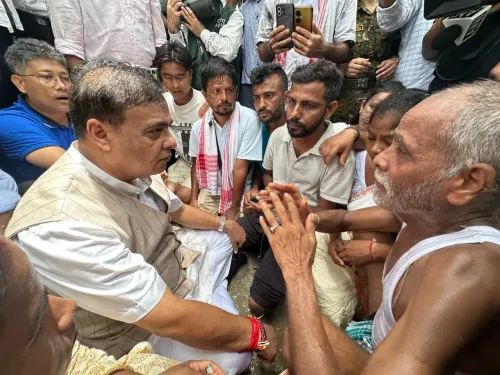
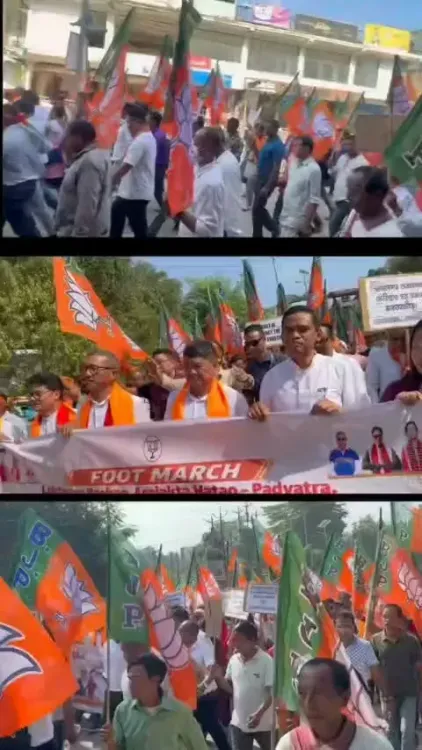
A district with a long memory of unrest just sent a message — and Assam Chief Minister Himanta Biswa Sarma made sure all of Assam heard it. On Saturday, 7 November 2026, Sarma posted a pointed declaration anchored in East Karbi Anglong, invoking the district's voice to signal that neither anarchy nor those who engineer it would find ground in the state.
The post, tagged #SaveDemocracyRemoveAnarchy, read: 'East Karbi Anglong has spoken. Assam will not bow to the goons of anarchy or allow its peace and progress to be undermined. We stand strong and we stand united.' The language was deliberate — framing whatever unfolded in the district not as a local episode but as a statewide referendum on order and governance.
East Karbi Anglong's Weight in This Declaration
East Karbi Anglong is no ordinary administrative unit. The district falls under the Karbi Anglong Autonomous Council, a body that administers one of Assam's largest hill regions and carries the institutional memory of decades of ethnic autonomy struggles and armed group activity. When a Chief Minister specifically names a district of this profile, the resonance is immediate and layered.
The peace framework underpinning that region traces directly to the September 2021 Memorandum of Settlement, in which Karbi armed groups formally agreed to end insurgency in exchange for development commitments and political accommodation. That accord was widely cited as a landmark for the BJP-led administration — a proof-point that negotiated peace could replace protracted conflict. Any threat to that order, however local, strikes at a carefully built narrative.
A Familiar Posture, a Sharper Edge
Sarma's statement fits a consistent pattern across successive Assam administrations: when trouble stirs in autonomous hill districts, the state government moves swiftly to frame itself as the defender of hard-won development gains. The BJP-led government in particular has leaned into this posture — positioning each such moment as a binary choice between progress and disruption.
What gives this post its edge is the word choice. 'Goons of anarchy' is not bureaucratic language — it is a combative, public call-out that signals the administration is prepared to act and wants that readiness visible. The hashtag doubles as a political rallying cry, broadcasting the message beyond Assam's borders to a national audience.
Opposition responses and any formal law-and-order measures from the state administration will be the next indicators of how far this moment escalates — or whether Sarma's post itself is intended to contain it before it does.
Point of View
He ties the moment to a district where the BJP government has staked its peace-dividend credentials since the 2021 settlement. The combative phrasing — 'goons of anarchy' — departs from administrative neutrality and suggests the message is as much for a statewide and national political audience as for the district itself. The hashtag #SaveDemocracyRemoveAnarchy signals an attempt to fold a local law-and-order moment into a larger ideological frame, a move consistent with the BJP's broader national playbook. How opposition parties and the Karbi Anglong Autonomous Council respond will determine whether this remains a rhetorical salvo or the opening move in a sharper political confrontation.
NationPress
7 Nov 2026
Frequently Asked Questions
What happened in East Karbi Anglong that prompted Himanta Biswa Sarma's post?
The specific incident referenced by CM Sarma has not been independently confirmed in available reports. His post on 7 November 2026 declared that 'East Karbi Anglong has spoken' and warned against threats to Assam's peace and progress, but did not name a particular event.
What is the Karbi Anglong Autonomous Council?
The Karbi Anglong Autonomous Council administers one of Assam's largest hill regions, including East Karbi Anglong district . It was established to give the Karbi community a degree of self-governance and has historically been at the centre of ethnic autonomy demands in the state.
What was the 2021 Karbi peace accord?
The September 2021 Memorandum of Settlement was signed between the central and state governments and several Karbi armed groups. It ended the insurgency in the region in exchange for development investments and political accommodation, and is considered a flagship peace achievement of Sarma's administration.
What does #SaveDemocracyRemoveAnarchy mean?
The hashtag is a political framing used by CM Himanta Biswa Sarma to characterise opposition or disruptive elements as anti-democratic. It positions the state government as a defender of democratic order and development against what it terms anarchic forces.
What is Himanta Biswa Sarma's role beyond being Assam CM?
Himanta Biswa Sarma is the Chief Minister of Assam and a senior BJP leader. He also serves as the convenor of the North-East Democratic Alliance (NEDA) , making him a key political architect for BJP's electoral strategy across the north-eastern states.