CM Bhajanlal meets Kayamkhani community, champions girl education
Synopsis
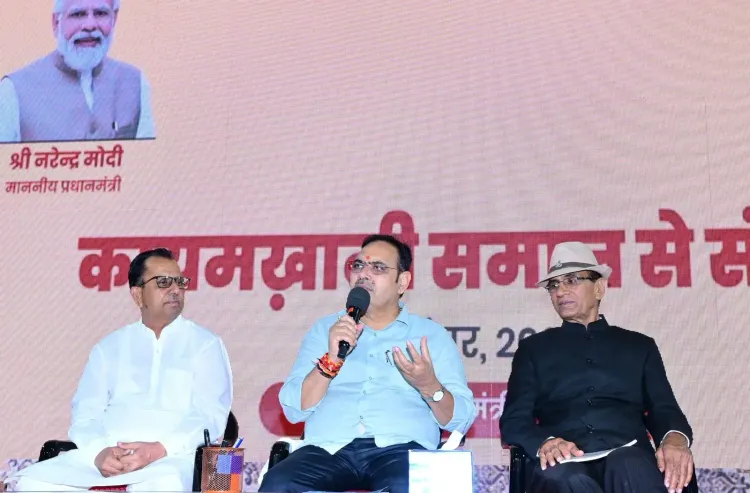
Chief Minister Bhajanlal Sharma met Kayamkhani community delegates on 1 November 2026, championing girl-child education and the triad of youth energy, elder wisdom, and women's participation as drivers of Rajasthan's development.
Key Takeaways
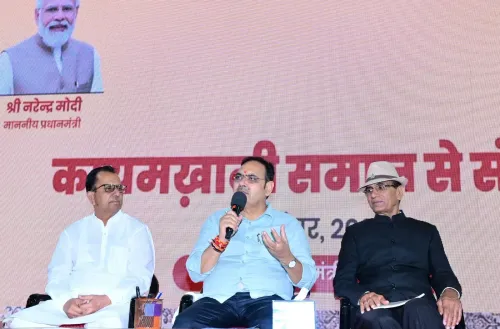
Chief Minister Bhajanlal Sharma held a direct dialogue with representatives of the Kayamkhani community on 1 November 2026 .
Sharma stressed that youth thinking, elders' experience, and women's participation together 'pave new paths of progress.' He specifically emphasised girl-child education , calling educated and empowered daughters the foundation of family, society, and nation.
Kayamkhani delegates from across Rajasthan thanked the CM for existing public-welfare schemes during the meeting.
The dialogue continues the BJP-led government's pattern of structured community outreach since December 2023.
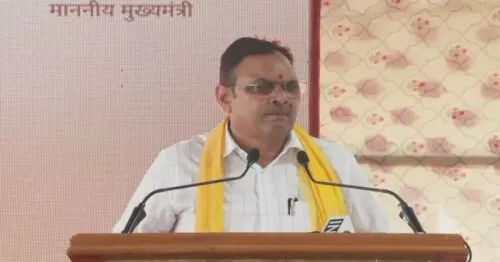
Girl education is not a welfare footnote — it is, Chief Minister Bhajanlal Sharma told representatives of the Kayamkhani community on Sunday, 1 November 2026, the very foundation on which families, society and the nation stand. The Rajasthan Chief Minister's Office shared details of the wide-ranging dialogue in Jaipur, where community representatives from across the state gathered to engage directly with the CM.
What Sharma told the Kayamkhani gathering
Speaking to the assembled delegates, Sharma wove together three strands of development: 'yuva soch, varishthjanon ka anubhav aur matrishakti ki sahbhagita' — the energy of youth, the wisdom of elders, and the active participation of women. Together, he said, these forces can 'pave new paths of progress.' The framing was deliberate: inclusive growth built from within a community, not delivered from above.
On girl-child education specifically, Sharma was direct — 'betiyon ke shikshit aur sashakt hone se parivar, samaj aur rashtra ki neenv mazboot hoti hai' ('when daughters are educated and empowered, the foundation of family, society and nation grows stronger'). The emphasis on girls' schooling as a structural, not merely symbolic, priority has been a consistent feature of the BJP-led government's community outreach messaging since it took office in December 2023.
Kayamkhani representatives express gratitude, flag welfare priorities
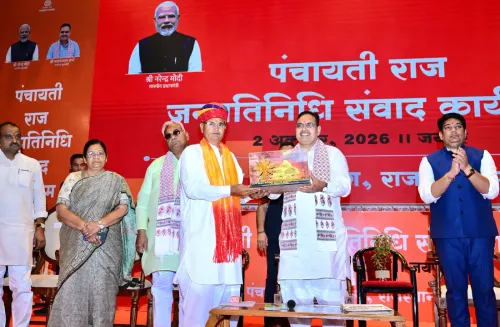
The meeting was not one-directional. Delegations and organisational representatives of the Kayamkhani community who had travelled from across Rajasthan used the occasion to formally thank the Chief Minister for existing welfare schemes. The exchange reflects a governing pattern the current administration has leaned into — periodic community consultations that allow beneficiary groups to voice both appreciation and priorities in a structured setting.
The Kayamkhani community, a distinct social group with a significant presence across Rajasthan, has historically participated in state-level dialogues on education, livelihoods, and social development. Their engagement with the CM's office signals the government's continued effort to maintain direct channels with specific communities rather than routing all outreach through formal bureaucratic machinery.
Girl education and women's empowerment as policy anchors
Rajasthan has seen recurring policy statements on girl-child education from successive governments, but the current administration has consistently placed it at the centre of community-level messaging. Sharma's remarks echo earlier addresses at similar outreach events, pointing to a deliberate communications strategy ahead of state budget cycles and assembly sessions where education and welfare allocations come under scrutiny.
Watch for whether Sunday's dialogue translates into specific announcements — on scholarships, school infrastructure, or community-specific welfare programmes — in upcoming assembly sessions or the next state budget presentation.
A Chief Minister who frames daughters' education as the 'foundation' of the nation is setting a benchmark. The question Rajasthan will answer in its next budget: whether the rhetoric comes with rupees behind it.
Point of View
Photo-documented dialogues with specific social groups that simultaneously signal welfare delivery and consolidate political goodwill. Placing girl education at the centre of the message is strategically astute: it is broadly popular, ties into Central government schemes, and is difficult to oppose. The real policy test will come when the state budget translates these stated priorities into measurable line items for girls' schooling and community welfare. Until then, the outreach functions as both genuine consultation and visible governance branding.
NationPress
2 Nov 2026
Frequently Asked Questions
Who is Bhajanlal Sharma and what is his role in Rajasthan?
Bhajanlal Sharma is the Chief Minister of Rajasthan, in office since December 2023 , representing the Bharatiya Janata Party. He leads the state government and has focused on community outreach and welfare-scheme delivery.
Who are the Kayamkhani community in Rajasthan?
The Kayamkhani community is a distinct social group with a significant presence across Rajasthan. They have historically participated in state-level dialogues on education, livelihoods, and social development.
What did CM Bhajanlal Sharma say about girl education?
Sharma said that when daughters are educated and empowered, the foundation of family, society, and the nation grows stronger — placing girl-child education as a structural pillar of development, not just a welfare measure.
What is the hashtag 'Aapno Agrani Rajasthan' about?
The hashtag #आपणो_अग्रणी_राजस्थान translates to 'Our Pioneering Rajasthan' and is used by the Rajasthan Chief Minister's Office to brand the current government's vision of a forward-leading state.
Will there be follow-up policy announcements after this community dialogue?
No specific follow-up announcements have been made yet. Analysts and community representatives will watch upcoming Rajasthan assembly sessions and the next state budget for concrete schemes on girl education and community welfare.