CM Bhajanlal champions heritage at Jodhpur Ram Katha
Synopsis
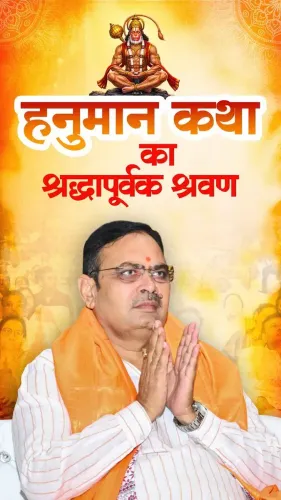
Chief Minister Bhajanlal Sharma addressed a Shri Ram Katha gathering in Jodhpur during Shardiya Navratri on 17 October 2026, calling Rajasthan's culture a source of immense pride and invoking PM Modi's 'development with heritage' philosophy as a governing compass for the state.
Key Takeaways
CM Bhajanlal Sharma addressed a Shri Ram Katha event in Jodhpur on 17 October 2026 during Shardiya Navratri .
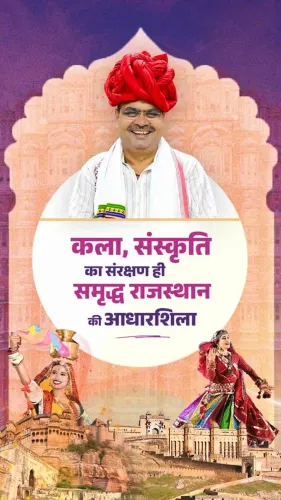
He described Rajasthan's culture as 'a culture of immense pride' and called on citizens to cherish and preserve it.
He explicitly echoed PM Narendra Modi 's principle that development and heritage must progress together.
The BJP has used the 'Vikas aur Virasat' (development and heritage) frame in national policy since 2014 .
Jodhpur , Rajasthan's second-largest city, is a major centre of the state's living cultural and architectural heritage.
BJP-governed states routinely use Navratri and Ram Katha platforms to reinforce cultural-identity governance messaging.
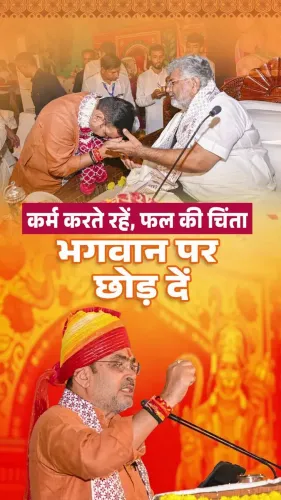
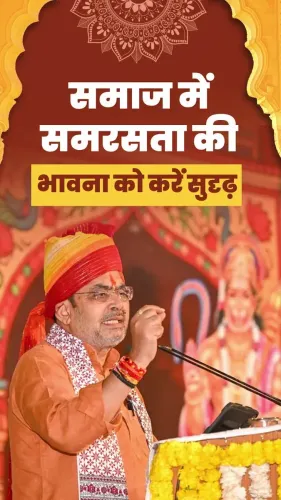
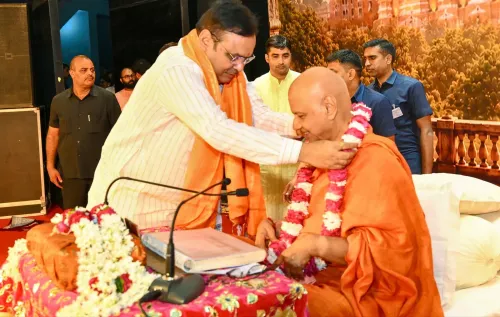
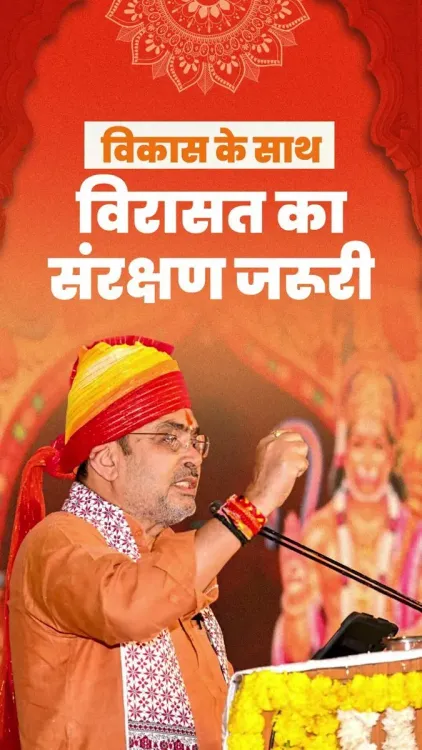
In the heart of Jodhpur, with the spirit of Shardiya Navratri in the air, Chief Minister Bhajanlal Sharma stepped up to address a Shri Ram Katha gathering on Saturday, 17 October 2026 — and turned a religious discourse into a statement of civilisational pride.
Speaking at the event, CM Sharma declared: 'Hamari ye sanskriti bahut garv ki sanskriti hai' ('Our culture is a culture of immense pride'). He invoked Prime Minister Narendra Modi's oft-repeated governing philosophy — that India's development and its heritage must walk hand in hand — and urged citizens to cherish and preserve that inheritance.
The 'Vikas aur Virasat' thread running through BJP governance
The phrase CM Sharma echoed is no casual utterance. Since 2014, the central government has consistently framed major infrastructure and tourism policies around the idea that economic growth must not come at the cost of cultural memory. From the restoration of heritage corridors to the promotion of intangible traditions, the 'development with heritage' argument has been woven into the BJP's national governance narrative.
Rajasthan, with its unmatched density of forts, temples, and living folk traditions, sits at the very centre of that argument. For CM Sharma — sworn in December 2023 — aligning state messaging with that national theme is both a political and a cultural signal: Rajasthan's government sees its ancient identity not as a relic, but as an asset to be actively guarded.
Why Navratri and Ram Katha are the chosen stage
The choice of venue and occasion is deliberate. Shri Ram Katha gatherings during Navratri draw large, cross-section audiences across Rajasthan's cities and towns, making them ideal platforms for governance messaging that blends the sacred with the civic. BJP-led state governments have routinely used such events — in Jodhpur, Jaipur, and beyond — to reinforce cultural-pride narratives in a setting that resonates deeply with local communities.
Jodhpur, Rajasthan's second-largest city, is itself a living argument for the 'heritage as identity' case — its blue-washed lanes, the looming Mehrangarh Fort, and centuries-old Marwari traditions make it a natural backdrop for exactly this kind of address.
The question now is whether the rhetoric translates into announced policy — state heritage schemes or cultural-tourism initiatives that give the 'Virasat' pledge a budget line and a deadline.
Point of View
It is also a soft assertion of cultural legitimacy: Rajasthan's BJP leadership positioning itself as the custodian, not merely the administrator, of the state's civilisational depth. The real test will come when rhetoric meets resource allocation — whether Navratri speeches translate into funded heritage or cultural-tourism schemes will determine how substantive this messaging ultimately is.
NationPress
17 Oct 2026
Frequently Asked Questions
What did CM Bhajanlal Sharma say at the Jodhpur Ram Katha event?
CM Bhajanlal Sharma said that Rajasthan's culture is 'a culture of immense pride' and that, as PM Modi emphasises, development and heritage must go together — urging citizens to cherish and preserve their cultural inheritance.
When and where did CM Bhajanlal Sharma address the Ram Katha?
He addressed the Shri Ram Katha gathering in Jodhpur on Saturday, 17 October 2026, during the Shardiya Navratri festival.
What is the 'development with heritage' idea that PM Modi promotes?
Since 2014, PM Modi's government has framed policies around the principle that India's economic growth and infrastructure expansion should be pursued alongside the active preservation of its tangible and intangible cultural heritage.
Why does the Rajasthan BJP government use Navratri events for governance messaging?
Navratri and Ram Katha gatherings draw large, diverse audiences across Rajasthan, making them effective platforms to communicate cultural-pride and governance narratives to a broad cross-section of citizens.
Who is Bhajanlal Sharma?
Bhajanlal Sharma is the Chief Minister of Rajasthan from the BJP, sworn into office in December 2023 after the party's victory in the state assembly elections.