Shekhawat joins CM Bhajanlal at Ram Katha near Jodhpur
Synopsis
Union Culture and Tourism Minister Gajendra Singh Shekhawat joined Rajasthan CM Bhajanlal Sharma at a Shri Ram Katha at Raghuvanshpuram Ashram near Jodhpur on 17 October 2026, receiving blessings from Sant Murlidhar Ji Maharaj and affirming Lord Ram's values as the foundation of Indian culture.
Key Takeaways
Gajendra Singh Shekhawat and Rajasthan CM Bhajanlal Sharma jointly attended Shri Ram Katha at Keshavpriya Gaushala, Raghuvanshpuram Ashram near Kelawa Khurd, Jodhpur on 17 October 2026 .
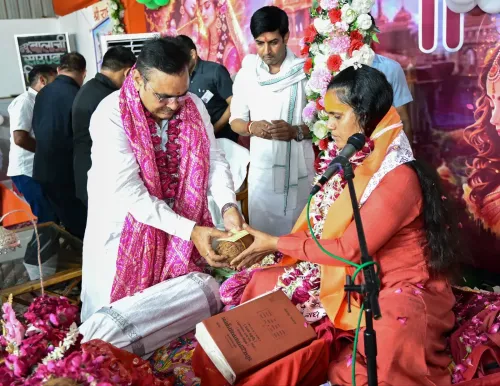
Both leaders received blessings from Sant Shri Murlidhar Ji Maharaj , the spiritual preceptor presiding at the Vyas Peeth.
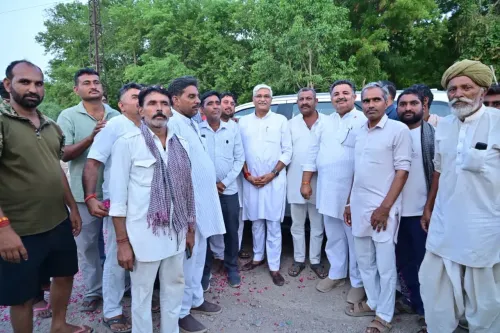
Shekhawat engaged directly with Ram devotees gathered at the ashram event.
The minister stated that 'the life values of Lord Shri Ram are the foundational pillars of our culture and the soul of India resides in them.' As Culture and Tourism Minister, Shekhawat oversees the Ramayana Circuit under the Swadesh Darshan scheme (launched 2014-15 ), linking spiritual heritage to national tourism policy.
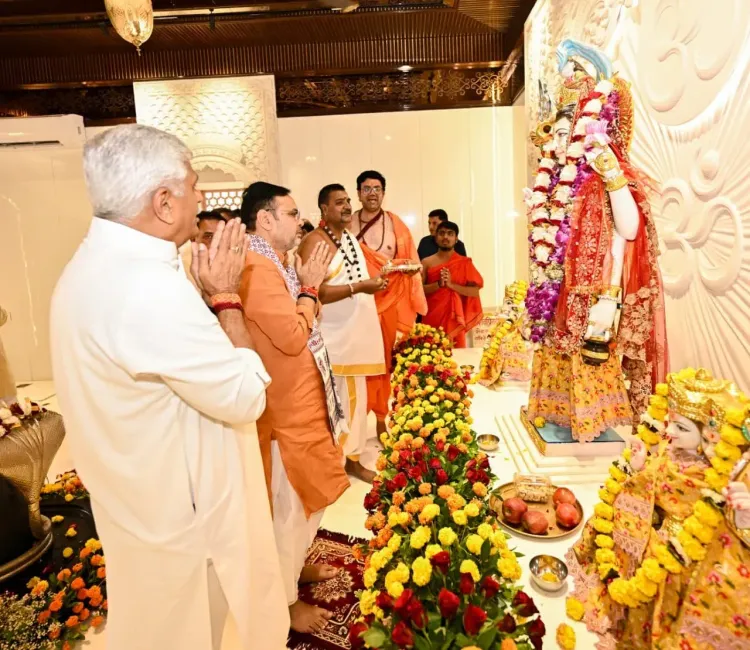
At a sacred gathering just outside his own constituency, Union Culture and Tourism Minister Gajendra Singh Shekhawat sat alongside Rajasthan Chief Minister Bhajanlal Sharma on Saturday, 17 October 2026, to hear the Shri Ram Katha at the Keshavpriya Gaushala, Shri Raghuvanshpuram Ashram near Kelawa Khurd, Jodhpur — a moment that wove together faith, politics, and India's living cultural tradition.
Shekhawat shared the occasion on X, writing in Hindi: 'व्यासपीठ पर विराजित पूज्य संत श्री मुरलीधर जी महाराज का आशीर्वाद प्राप्त कर श्रीराम कथा का श्रवण किया' — 'I received the blessings of revered Sant Shri Murlidhar Ji Maharaj, seated at the Vyas Peeth, and listened to the Shri Ram Katha.' He added that he also engaged in conversation with Ram devotees gathered at the ashram. The minister closed with a line that carried both cultural and political resonance: 'The life values of Lord Shri Ram are the foundational pillars of our culture. The soul of India resides in them.'
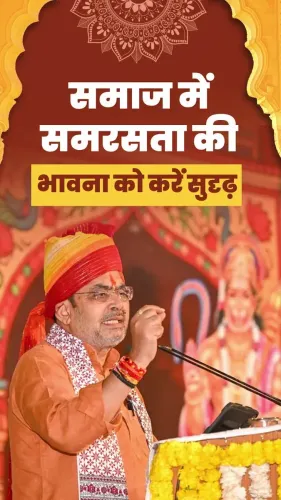
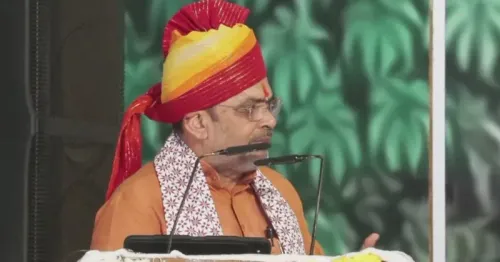
Shekhawat and CM Bhajanlal at the Raghuvanshpuram Ashram
The joint appearance of two of Rajasthan's most prominent BJP figures at a Ram Katha underscores a pattern that has grown sharper since the party returned to power in the state. Central and state leaders regularly attend such religious-cultural gatherings, framing them not merely as personal acts of faith but as visible affirmations of a shared civilisational commitment. The event, held at a gaushala-ashram complex near Jodhpur — Shekhawat's own Lok Sabha constituency — drew a gathering of Ram devotees from the region.
Murlidhar Ji Maharaj, the spiritual preceptor presiding over the Katha from the Vyas Peeth, conferred blessings on both leaders. The Ram Katha is a traditional recitation of the life and teachings of Lord Ram, typically spanning several days, and draws large congregations across Rajasthan's towns and villages.
Ram's cultural legacy and the Ramayana Circuit connection
For Shekhawat, Saturday's attendance carries a professional dimension beyond personal devotion. As Culture and Tourism Minister, he oversees the Swadesh Darshan scheme, which since 2014-15 has included a dedicated Ramayana Circuit — a tourism development initiative that maps and develops sites across India linked to Lord Ram's life and journey. The minister's public invocation of Ram's 'life values as foundational pillars of our culture' aligns directly with the government's stated rationale for that scheme: that spiritual heritage and tourism infrastructure can reinforce each other.
Rajasthan, with its dense network of temples, ashrams, and pilgrimage routes, sits at the intersection of that cultural-tourism push. State-level announcements on heritage tourism projects — particularly those with a Ramayana or Vedic thread — remain a space to watch as both the Centre and the Bhajanlal government signal their priorities.
Two senior leaders, one sacred text, one ashram near Jodhpur — and a ministry whose brief is to turn precisely such moments of living culture into a national story worth travelling for.
Point of View
Particularly in home constituencies ahead of any electoral cycle. For a minister who holds the Culture portfolio, such events also carry policy subtext: the Ramayana Circuit under Swadesh Darshan explicitly monetises this same spiritual geography. The framing of Ram's values as India's 'foundational pillars' echoes language used in several central government heritage and tourism documents, suggesting a deliberate alignment between personal faith expression and institutional cultural messaging. Rajasthan's dense pilgrimage economy gives both state and Centre strong incentive to keep this cultural-political signalling active.
NationPress
17 Oct 2026
Frequently Asked Questions
What is the Raghuvanshpuram Ashram near Jodhpur?
The Raghuvanshpuram Ashram is a religious-cultural complex at Kelawa Khurd near Jodhpur, Rajasthan, which houses the Keshavpriya Gaushala and hosts spiritual events including the Shri Ram Katha.
Why did Gajendra Singh Shekhawat attend the Ram Katha event?
Shekhawat participated in the Shri Ram Katha at the Raghuvanshpuram Ashram near his Jodhpur constituency alongside Rajasthan CM Bhajanlal Sharma, received blessings from Sant Murlidhar Ji Maharaj, and interacted with Ram devotees at the gathering.
What is the Ramayana Circuit under Swadesh Darshan?
The Ramayana Circuit is a component of the central government's Swadesh Darshan scheme, launched in 2014-15, designed to develop tourism infrastructure at sites across India associated with Lord Ram's life and journey.
Who is Bhajanlal Sharma?
Bhajanlal Sharma is the Chief Minister of Rajasthan from the BJP, who joined Union Minister Gajendra Singh Shekhawat at the Ram Katha event near Jodhpur on 17 October 2026.
What did Shekhawat say about Lord Ram's values?
Shekhawat stated that 'the life values of Lord Shri Ram are the foundational pillars of our culture and the soul of India resides in them,' reflecting his post on X after attending the Shri Ram Katha.