CM Bhajanlal Calls for Tech Integration in Rajasthan Tax System
Synopsis
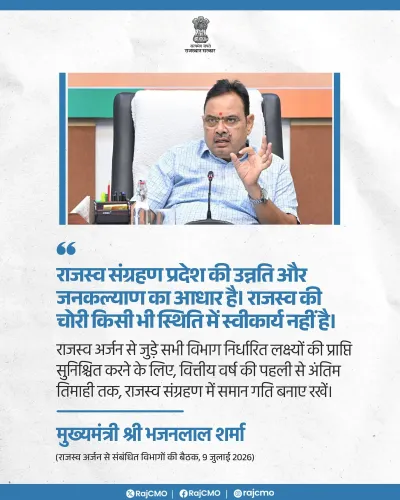
The Rajasthan CMO on 10 July 2026 called on CM Bhajan Lal Sharma to embed new technologies in the state's tax system, aiming to make revenue target achievement simpler and more efficient under the 'Our Leading Rajasthan' governance agenda.
Key Takeaways
The Chief Minister's Office of Rajasthan posted the directive on 10 July 2026 , tagging CM Bhajan Lal Sharma directly.
The message calls for integrating 'new technologies' into the tax system to simplify achievement of revenue targets .
The post was published under the hashtag #आपणो_अग्रणी_राजस्थान ('Our Leading Rajasthan'), a recurring CMO governance branding.
Rajasthan has progressively upgraded its commercial taxes and excise IT systems following the 2017 GST rollout and the Digital India programme.
Key stakeholders include state revenue officials and the broader taxpayer base of businesses and individuals in Rajasthan .
Concrete implementation steps — including new portals or AI -based audit tools — are expected to emerge in the next state budget cycle.
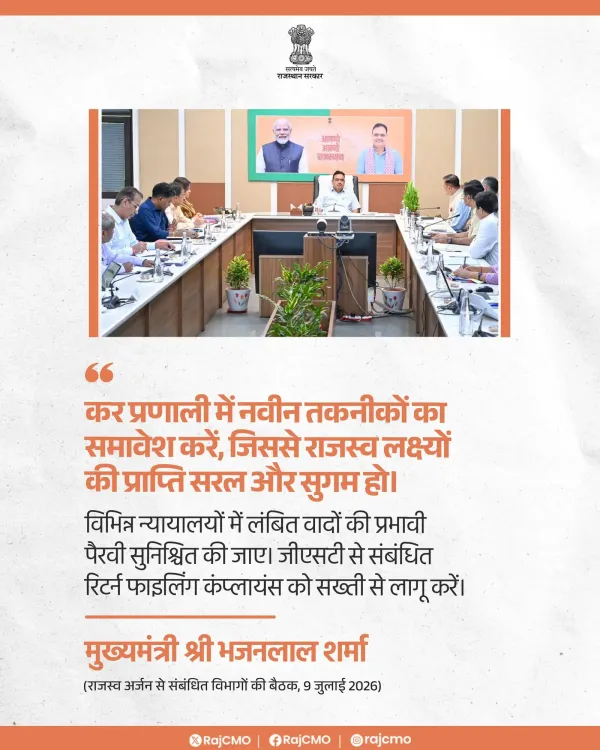
The Chief Minister's Office of Rajasthan on Friday, 10 July 2026, directed Chief Minister Bhajan Lal Sharma to integrate new technologies into the state's tax administration to make achieving revenue targets simpler and more efficient. The directive, shared on the official CMO account, underscores the state government's push for digital transformation in fiscal governance.
Context
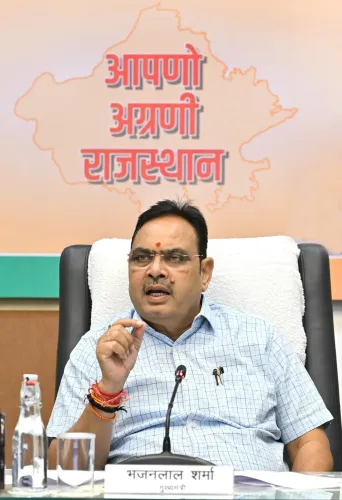
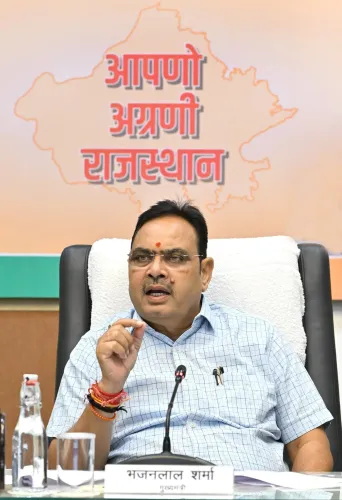
The post, tagged directly to @BhajanlalBjp under the hashtag #आपणो_अग्रणी_राजस्थान ('Our Leading Rajasthan'), carries a clear administrative message: 'कर प्रणाली में नवीन तकनीकों का समावेश करें, जिससे राजस्व लक्ष्यों की प्राप्ति सरल और सुगम हो' — 'Integrate new technologies into the tax system so that achieving revenue targets becomes simple and smooth.' The call reflects a governance priority that the Bhajan Lal Sharma administration has signalled since taking office in December 2023.
The hashtag 'Our Leading Rajasthan' has been consistently used by the CMO to frame flagship governance and development messaging, positioning the state as a frontrunner in policy delivery among Indian states.
Policy Backdrop
India's tax landscape was fundamentally restructured with the Goods and Services Tax (GST) rollout in 2017, which mandated states to upgrade their IT infrastructure for invoice matching and compliance monitoring. The Digital India programme, launched in 2015, further accelerated the adoption of online tax filing, e-payment gateways, and data analytics within state revenue departments.
Rajasthan has followed this national trajectory through successive e-governance upgrades in its commercial taxes and excise departments. The current emphasis on 'new technologies' — which could encompass artificial intelligence, machine learning-based audit triggers, and integrated data platforms — mirrors similar drives in other BJP-governed states focused on fiscal efficiency and plugging revenue leakages.
Stakeholders and Impact
The primary stakeholders are Rajasthan's taxpaying businesses and individuals, as well as the state's revenue and commercial taxes officials who would implement any upgraded systems. Smoother compliance processes typically reduce the administrative burden on small and medium enterprises, which form a large share of the state's registered taxpayer base.
For the Government of Rajasthan, meeting revenue targets is critical to financing state expenditure on welfare schemes, infrastructure, and public services. Technology-driven tax administration has demonstrably improved collections in several Indian states by reducing human discretion, limiting evasion, and accelerating refund processing — all of which build taxpayer confidence.
What's Next
Observers will watch for concrete announcements from the Rajasthan state finance department, particularly around new tax portal upgrades, integration of AI-powered audit tools, or inter-departmental data-sharing frameworks in the coming budget cycle. The directive from the CMO sets a policy tone, but implementation timelines and specific technology partnerships are yet to be publicly detailed.
If the state follows through with substantive upgrades, Rajasthan could position itself alongside leading states in digital tax governance — a benchmark that carries political as well as fiscal weight as the Bhajan Lal Sharma government approaches its mid-term phase.
Point of View
Suggesting the CMO is building a consistent record of reform optics. Whether this translates into measurable revenue gains will depend on the pace and depth of actual IT upgrades in the state's commercial taxes department.
NationPress
10 Jul 2026
Frequently Asked Questions
What did the Rajasthan CMO post about tax technology on 10 July 2026?
The Rajasthan CMO directed CM Bhajan Lal Sharma to integrate new technologies into the state's tax system so that achieving revenue targets becomes simpler and more efficient.
What is the 'Our Leading Rajasthan' hashtag used by the Rajasthan CMO?
'Our Leading Rajasthan' (आपणो अग्रणी राजस्थान) is a recurring hashtag used by the Rajasthan CMO to brand governance and development messaging, positioning the state as a policy frontrunner.
How has Rajasthan modernised its tax administration so far?
Rajasthan has undertaken successive e-governance upgrades in its commercial taxes and excise departments following the 2017 GST rollout and the national Digital India programme, including online filing and e-payment systems.
Who is Bhajan Lal Sharma and what is his role in Rajasthan?
Bhajan Lal Sharma is a BJP leader who became Chief Minister of Rajasthan in December 2023 following the state assembly elections.
What could new tax technologies in Rajasthan mean for businesses?
Integrating new technologies such as AI-based audit tools and integrated data platforms can reduce compliance burdens for businesses, limit tax evasion, and speed up refund processing, benefiting small and medium enterprises in particular.