CM Bhajanlal invokes Ayodhya temple at Jaipur Vijayadashami
Synopsis
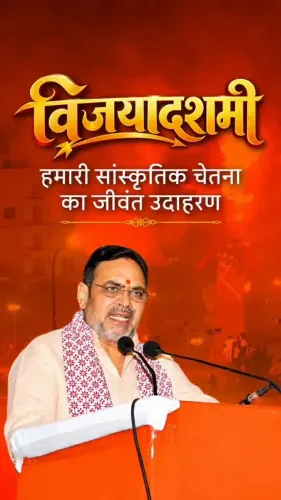
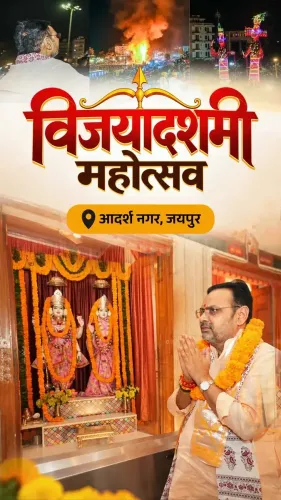
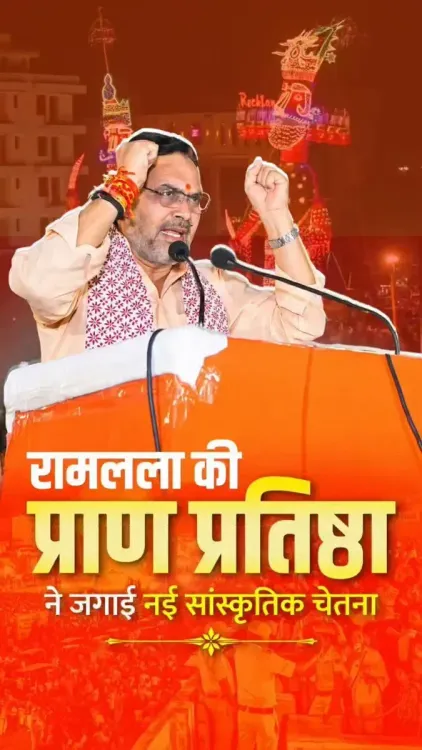
Chief Minister Bhajanlal Sharma addressed the Vijayadashami Mahotsav 2026 in Jaipur's Adarsh Nagar on 21 October, invoking the January 2024 Ayodhya Pran Pratishtha as a symbol of India's cultural renaissance and describing the Ram temple as an emblem of 500 years of faith and patience.
Key Takeaways
CM Bhajanlal Sharma spoke at the Vijayadashami Mahotsav 2026 in Adarsh Nagar, Jaipur on 21 October 2026 .
He said the Pran Pratishtha of Ram Lalla in Ayodhya had given India's cultural consciousness 'new energy' after 500 years .
He described the Ayodhya temple as a symbol of 'long-held faith, patience, and pride.' The Ram temple was consecrated on 22 January 2024 , following the Supreme Court's November 2019 verdict on the Ram Janmabhoomi site.
BJP-led state governments have routinely highlighted the Ayodhya temple at public cultural events since the 2024 consecration.
At a gathering steeped in the symbolism of Dussehra, Chief Minister Bhajanlal Sharma told the crowd at the Vijayadashami Mahotsav 2026 in Adarsh Nagar, Jaipur on Wednesday, 21 October 2026 that the consecration of Ram Lalla in Ayodhya had breathed new energy into India's cultural consciousness — a claim that landed with unmistakable political weight.
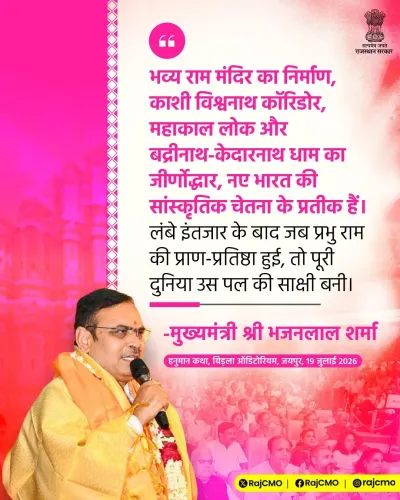
Addressing the festival, Sharma said: '500 saal ke baad Ayodhya mein Ramlalla ki pran pratishtha ne Bharat ki sanskritik chetna ko nayi urja dene ka kaam kiya hai' — 'After 500 years, the consecration of Ram Lalla in Ayodhya has given new energy to India's cultural consciousness.' He described the temple as a symbol of 'long-held faith, patience, and pride.'
Ayodhya's January 2024 consecration — the moment CM Sharma referenced
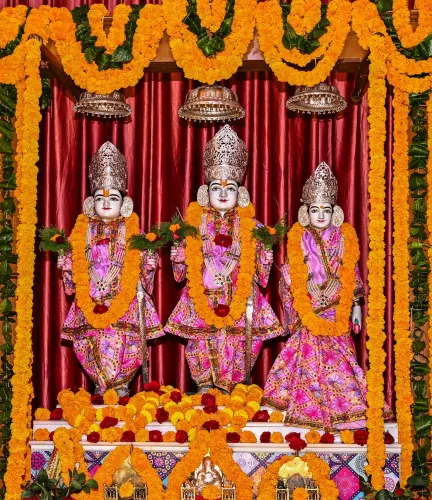
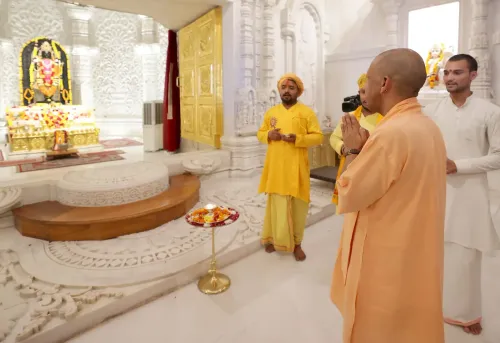
The event Sharma invoked is the Pran Pratishtha ceremony of 22 January 2024, when the Ram Lalla idol was formally consecrated in the newly constructed temple at Ayodhya, Uttar Pradesh. That ceremony came after the Supreme Court of India's November 2019 verdict cleared the legal path for temple construction on the Ram Janmabhoomi site — ending a decades-long dispute and setting off a nationwide building effort. For BJP governments, the temple represents the fulfilment of a generational promise.
The '500 years' framing is a recurring reference in BJP political discourse, pointing to the period since the Babri Masjid was built at the contested site in the 16th century — a timespan Hindu nationalist voices use to frame the 2024 consecration as a civilisational restoration.
Vijayadashami as a BJP political stage
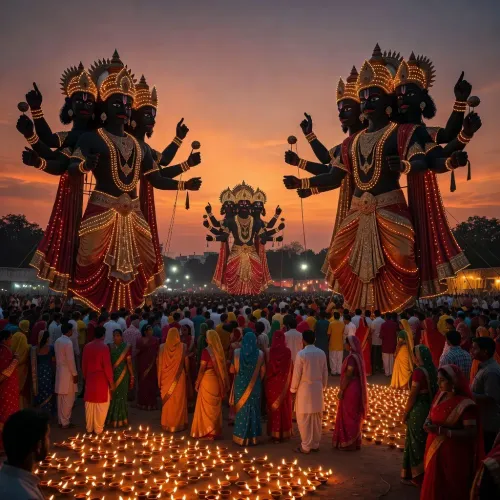
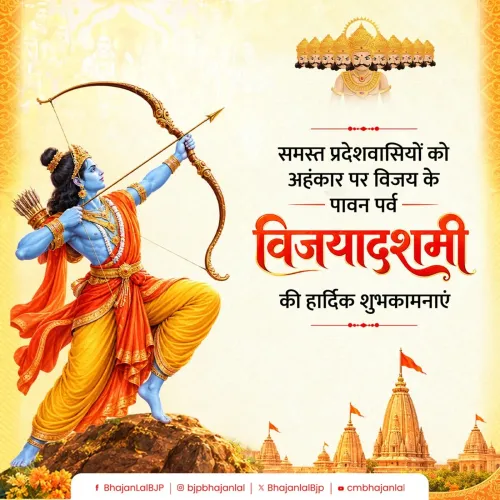
Vijayadashami — the festival marking Rama's victory over Ravana — is a natural backdrop for these messages. BJP-led state governments have consistently used post-2024 public events to anchor cultural-revival narratives around the Ayodhya temple, and Rajasthan under Sharma, who took office in December 2023, is no exception. The hashtag #AapnoAgrani_Rajasthan ('Our Leading Rajasthan') frames the speech within a broader state-identity branding effort.
The choice of Adarsh Nagar — a constituency in central Jaipur — as the venue also keeps the CM visible in a core urban belt ahead of future electoral cycles. Cultural festivals, when anchored by sitting chief ministers, routinely double as governance showcases.
Rajasthan's Vijayadashami calendar, and how BJP leaders pitch Ayodhya's symbolism at each successive Hindu festival, is the clearest indicator of how this cultural messaging evolves through the political year.
Point of View
Making the BJP's role feel historically inevitable rather than politically contingent. For a CM who took charge in December 2023 just weeks before the consecration, invoking Ayodhya at every major cultural moment is also a way of associating his administration with a moment he did not personally deliver — borrowing its momentum. Watch whether these references intensify or moderate as Rajasthan heads toward its next cycle of local body elections.
NationPress
21 Oct 2026
Frequently Asked Questions
What did Bhajanlal Sharma say at Vijayadashami 2026 in Jaipur?
Sharma said the consecration of Ram Lalla in Ayodhya after 500 years had given new energy to India's cultural consciousness, calling the temple a symbol of faith, patience, and pride.
When was the Ayodhya Ram temple Pran Pratishtha held?
The Pran Pratishtha — the consecration ceremony of the Ram Lalla idol — was held on 22 January 2024 at the Ram Janmabhoomi temple in Ayodhya, Uttar Pradesh.
What is the Supreme Court verdict on the Ayodhya temple?
In November 2019, the Supreme Court of India ruled in favour of handing the disputed Ram Janmabhoomi site in Ayodhya to the Hindu side, clearing the way for the construction of the Ram temple.
Who is Bhajanlal Sharma and when did he become Chief Minister of Rajasthan?
Bhajanlal Sharma is a BJP leader who became Chief Minister of Rajasthan in December 2023 after the party's victory in the state assembly elections.
What is the Vijayadashami Mahotsav held in Jaipur?
The Vijayadashami Mahotsav is an annual cultural festival held in Jaipur on Dussehra, celebrating Rama's victory over Ravana; in 2026 the Adarsh Nagar edition was addressed by Chief Minister Bhajanlal Sharma.