CM Yogi hails Ram Mandir pran pratishtha as India's proudest moment
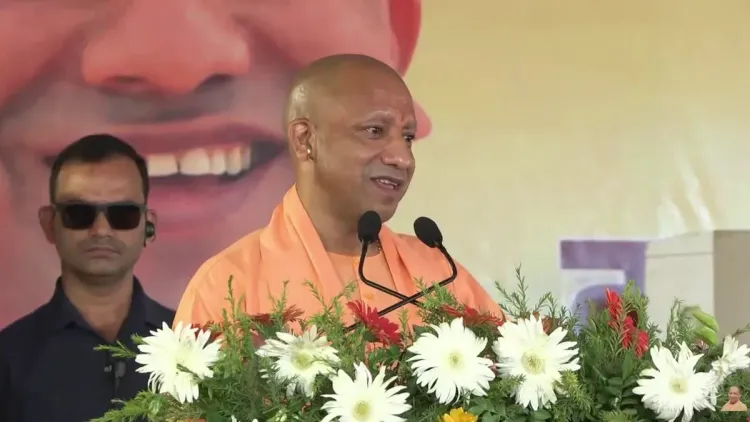
Synopsis
Uttar Pradesh Chief Minister Yogi Adityanath has described the consecration of the Ram Mandir in Ayodhya by Prime Minister Narendra Modi as the most joyous moment in the life of every true Indian, reaffirming the temple's centrality to the BJP government's cultural narrative.
Key Takeaways
CM Yogi Adityanath posted on 29 May 2026 calling the Ram Mandir pran pratishtha the most joyous moment for every true Indian.
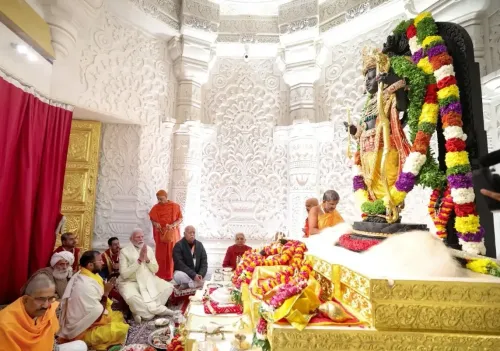
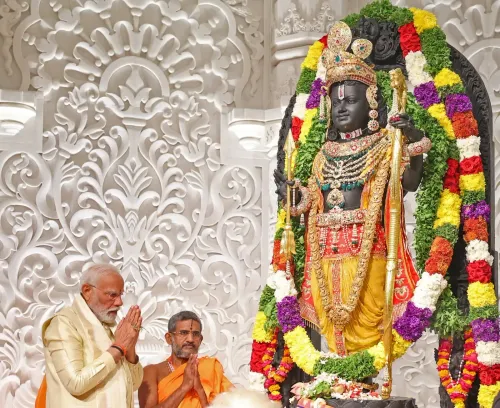
The consecration ceremony was performed by PM Narendra Modi on 22 January 2024 at Ayodhya .
The Supreme Court of India allocated the disputed site for temple construction in November 2019 .
PM Modi laid the Ram Mandir foundation stone in August 2020 ; the Shri Ram Janmabhoomi Teerth Kshetra trust oversees the project.
The Uttar Pradesh government is pursuing further phases of Ayodhya temple complex and tourism infrastructure development.
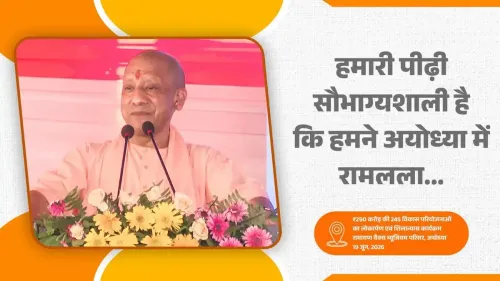
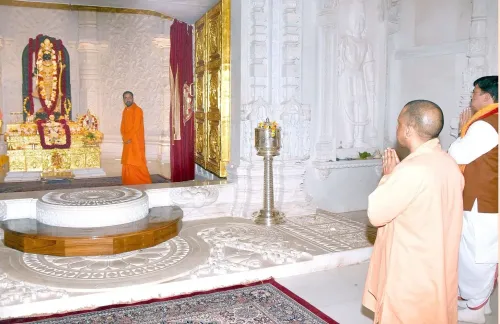
Uttar Pradesh Chief Minister Yogi Adityanath on 29 May 2026 invoked the consecration of the Ram Mandir in Ayodhya as the most joyous moment in the life of every true Indian, paying tribute to Prime Minister Narendra Modi who performed the historic ceremony. The post, shared on X, reflects the continuing centrality of the Ayodhya Ram Mandir in the BJP-led government's cultural and political narrative.
Context
In his post, CM Yogi Adityanath wrote — 'कोई भी सच्चा भारतीय अपने जीवन का सबसे आनंददायक क्षण वह मानता है' ['Every true Indian considers it the most joyous moment of their life'] — when the construction of Shri Ram Mandir at Shri Ayodhya Dham and the pran pratishtha [consecration] ceremony was accomplished by the 'revered hands' of Prime Minister Narendra Modi. The post was accompanied by a video, reinforcing the devotional and commemorative tone.
The remark is a direct homage to the 22 January 2024 consecration event, when PM Modi performed the pran pratishtha ritual at the newly constructed temple, marking the culmination of a decades-long movement centred on Ayodhya.
Policy Backdrop
The path to the Ram Mandir was shaped by a landmark November 2019 Supreme Court of India verdict that allocated the disputed Ayodhya site for the construction of a Hindu temple. The Shri Ram Janmabhoomi Teerth Kshetra trust was subsequently established to oversee construction and management of the temple complex.
PM Modi laid the foundation stone in August 2020, and construction proceeded under the watch of both the central government and the Uttar Pradesh government led by CM Yogi Adityanath. The temple's completion has been framed by the BJP as the fulfilment of a civilisational promise tied to the Ram Janmabhoomi movement that gained national momentum through the 1980s and 1990s.
Stakeholders and Impact
For Hindu devotees and BJP supporters, the Ram Mandir represents the restoration of a sacred site of immense religious and cultural significance. Ayodhya residents and the broader pilgrimage economy have experienced substantial transformation following the temple's inauguration, with the Uttar Pradesh government pursuing parallel infrastructure upgrades to accommodate increased footfall.
The post by CM Yogi Adityanath also reinforces the personal and political bond between the Uttar Pradesh government and PM Modi, positioning the temple's consecration as a shared achievement of the BJP-led administration at both the state and central levels.
What's Next
Further phases of the Ayodhya temple complex development — including associated tourism and pilgrimage infrastructure — remain on the agenda of the Uttar Pradesh government. CM Yogi Adityanath's continued public invocation of the Ram Mandir's significance signals that Ayodhya's development will remain a defining policy and cultural priority for the state administration in the months ahead.
Point of View
Anchoring the Ram Mandir's legacy firmly to PM Modi's personal role and, by extension, to the BJP's governance record. By framing the consecration as a universal Indian experience rather than a partisan one, the messaging seeks to broaden its emotional reach beyond the party's core base. This fits a consistent pattern in which the BJP-led state and central governments have woven the Ayodhya temple into official narratives of heritage restoration and national identity. The continued invocation of the January 2024 ceremony well after the event suggests it remains a durable political and cultural asset for the administration.
NationPress
24 Sept 2026
Frequently Asked Questions
When was the Ram Mandir pran pratishtha ceremony held in Ayodhya?
The pran pratishtha ceremony at the Ram Mandir in Ayodhya was held on 22 January 2024 , performed by Prime Minister Narendra Modi .
What did CM Yogi Adityanath say about the Ram Mandir?
CM Yogi Adityanath said that every true Indian considers the construction and consecration of the Ram Mandir in Ayodhya , accomplished by PM Modi , as the most joyous moment of their life.
Who oversees the Ram Mandir in Ayodhya?
The Shri Ram Janmabhoomi Teerth Kshetra trust, established after the 2019 Supreme Court verdict , oversees the construction and management of the Ram Mandir in Ayodhya .
What was the Supreme Court verdict on the Ayodhya temple?
In November 2019 , the Supreme Court of India delivered a verdict allocating the disputed Ayodhya site for the construction of a Hindu temple dedicated to Lord Ram .
What is the significance of Ayodhya for Hindus?
Ayodhya is regarded as the birthplace of Lord Ram and is one of the holiest cities in Hinduism; the Ram Mandir built there holds deep religious and cultural significance for millions of Hindu devotees across India and the world.