CM Bhajanlal highlights Jal Jeevan Mission gains at Bhilwara chaupal
Synopsis
Chief Minister Bhajanlal Sharma addressed the Gram Vikas Chaupal in Bhilwara on 6 June 2026, crediting PM Modi's Jal Jeevan Mission for ending the drudgery rural women faced fetching water from wells and delivering piped water to homes across Rajasthan.
Key Takeaways
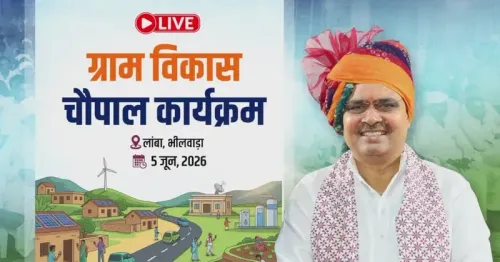
CM Bhajanlal Sharma spoke at the Gram Vikas Chaupal in Gram Panchayat Lamba, Bhilwara on 6 June 2026 .
He highlighted that rural women and daughters previously faced significant hardship fetching water from wells.
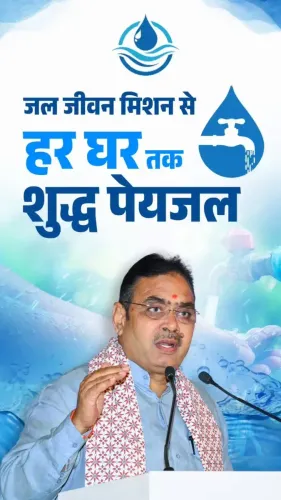
The Har Ghar Nal Se Jal campaign under PM Narendra Modi is credited with delivering piped water to rural homes.
The Jal Jeevan Mission was launched nationally in August 2019 to provide functional household tap connections in rural India.
Rajasthan , with its arid geography, is among the key focus states for the mission's implementation.
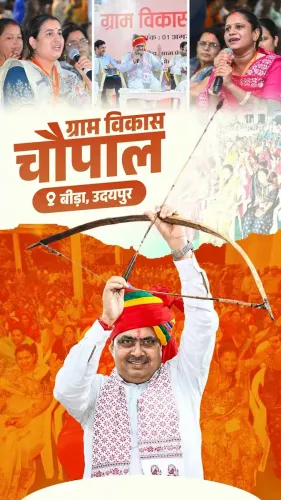
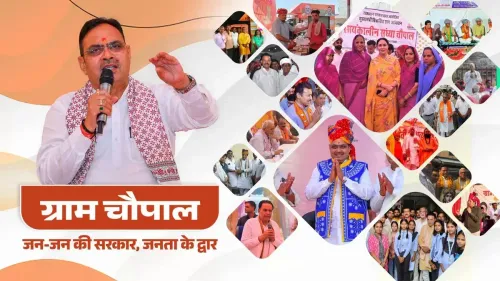
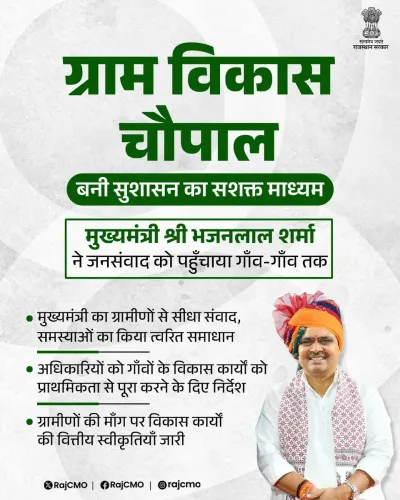
The Gram Vikas Chaupal format is used to communicate scheme delivery directly to rural communities.
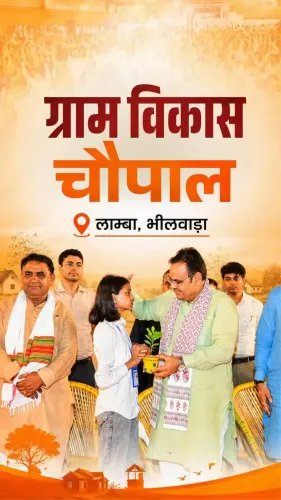
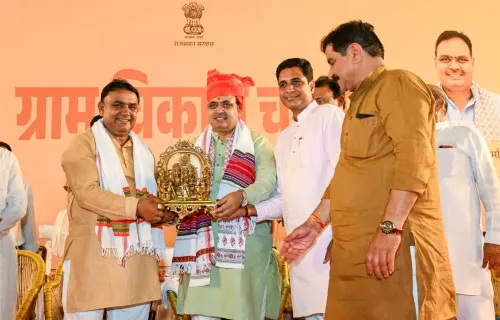
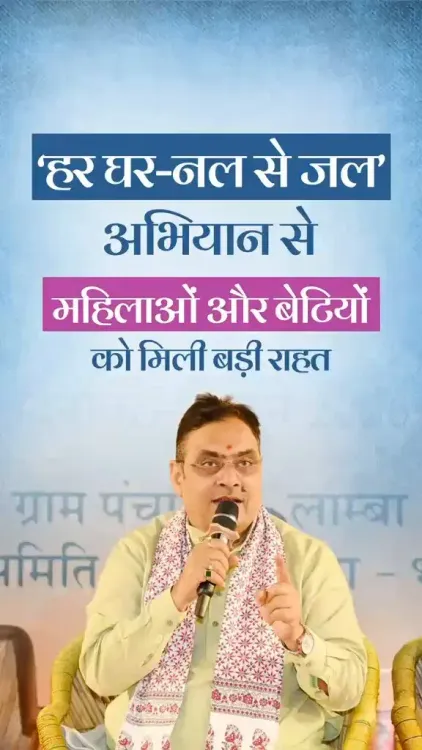
Chief Minister Bhajanlal Sharma addressed the Gram Vikas Chaupal programme at Gram Panchayat Lamba in Bhilwara on Saturday, 6 June 2026, highlighting how the central government's tap-water scheme has transformed daily life for rural women and families across Rajasthan's villages.
What was said
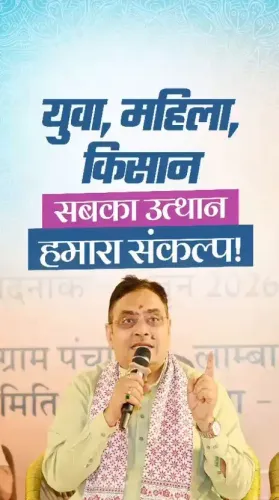
Speaking at the village outreach event, CM Sharma recalled the hardship that women and daughters in rural households once faced fetching water from wells. 'पहले गांवों में परिवार की महिलाओं और बेटियों को कुएं से पानी लाने में काफी परेशानियों का सामना करना पड़ता था' — ('Earlier, women and daughters of families in villages had to face a great deal of hardship bringing water from wells') — he said, framing the contrast with present-day access.
He credited Prime Minister Narendra Modi's leadership and the Har Ghar Nal Se Jal campaign for ensuring that piped water now reaches homes across the district, providing, in his words, 'great relief to every family.'
Context
The Gram Vikas Chaupal is a state-level village outreach programme designed to bring government functionaries face-to-face with rural communities and communicate the delivery of development schemes at the grassroots. The Bhilwara district, with its extensive rural habitations, is among the areas targeted under water-supply expansion drives in Rajasthan.
CM Sharma has led Rajasthan since December 2023, and his administration has consistently aligned state implementation with centrally sponsored rural welfare programmes.
Policy backdrop
The Jal Jeevan Mission (JJM) was launched by the Government of India in August 2019 with the goal of providing a functional household tap connection to every rural home in the country. It built on the earlier National Rural Drinking Water Programme and is among the flagship schemes of the Modi government.
The mission specifically targets the reduction of drudgery associated with water collection — a burden that falls disproportionately on women and girls in rural India. Rajasthan, given its arid geography and historically low rural water coverage, has been a key focus state for JJM rollout.
Stakeholders and impact
Rural women and village households are the primary beneficiaries cited in the Chief Minister's remarks. Household tap connections reduce the time and physical effort spent on water collection, with downstream benefits for health, education, and women's economic participation.
The Chaupal format allows local residents to interact directly with officials and provides the state government a platform to communicate scheme outcomes to communities who are direct recipients of the programme.
What's next
Attention will turn to updated Jal Jeevan Mission coverage data for Rajasthan districts, which would provide a measurable picture of how many rural households have received functional tap connections since the scheme's launch. Any state budget announcements on supplementary water infrastructure — particularly for arid and remote panchayats — will be watched as an indicator of how the state government plans to sustain and deepen these gains.
Point of View
Felt change onto a specific policy, making abstract scheme data personal and relatable. This pattern of outreach events doubling as political communication has become a consistent feature of BJP-ruled states seeking to consolidate rural support ahead of local body and assembly cycles. The forward signal to watch is whether updated coverage data for Rajasthan backs the narrative of widespread delivery, or whether gaps in remote panchayats complicate the picture.
NationPress
24 Sept 2026
Frequently Asked Questions
What is the Jal Jeevan Mission and how does it work in Rajasthan?
The Jal Jeevan Mission is a central government scheme launched in August 2019 to provide functional household tap connections for drinking water in rural areas across India. In Rajasthan, the state government implements the mission in coordination with the Union government, targeting villages and gram panchayats — including arid and remote habitations — to install piped water supply to individual homes.
What is the Gram Vikas Chaupal programme in Rajasthan?
The Gram Vikas Chaupal is a state-level village outreach programme in Rajasthan where government officials and the Chief Minister interact directly with rural communities to communicate the delivery of development and welfare schemes at the grassroots level.
What did CM Bhajanlal Sharma say at Bhilwara about water supply?
CM Bhajanlal Sharma said that women and daughters in rural families earlier faced great hardship fetching water from wells, but that the Har Ghar Nal Se Jal campaign under PM Narendra Modi has now brought piped water to homes, providing major relief to every family.
Which district in Rajasthan did CM Bhajanlal visit for the Gram Vikas Chaupal?
CM Bhajanlal Sharma visited Gram Panchayat Lamba in Bhilwara district of Rajasthan on 6 June 2026 to address the Gram Vikas Chaupal programme.
How does the Jal Jeevan Mission benefit rural women in India?
The Jal Jeevan Mission benefits rural women by providing piped water directly to households, eliminating the need to travel to wells or distant water sources. This reduces the physical burden and time spent on water collection, which has traditionally fallen on women and girls in rural communities.