CM Bhajanlal Launches Bharat Taxi to Turn Drivers into Owners
Synopsis
Rajasthan Chief Minister Bhajanlal Sharma launched the Bharat Taxi scheme on 26 July 2026 at Jaipur's Bhagwat Singh Mehta Auditorium, pledging to transform taxi drivers into vehicle owners and boost their economic confidence and livelihood security.
Key Takeaways
CM Bhajanlal Sharma launched the Bharat Taxi scheme on 26 July 2026 in Jaipur .
The scheme aims to convert taxi drivers from hired operators into vehicle owners.
The launch was held at the Bhagwat Singh Mehta Auditorium, OTS .
CM Sharma said the transition would multiply drivers' self-confidence and work motivation.
The initiative targets informal transport workers dependent on fleet owners or ride-hailing platforms.
Financing partnerships, beneficiary criteria, and phased rollout details are yet to be announced.
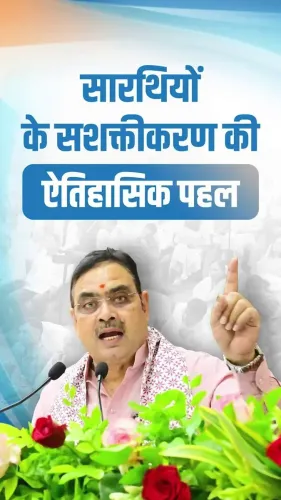
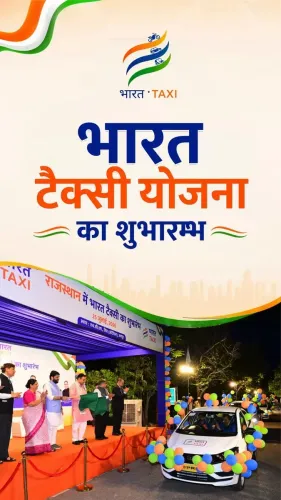
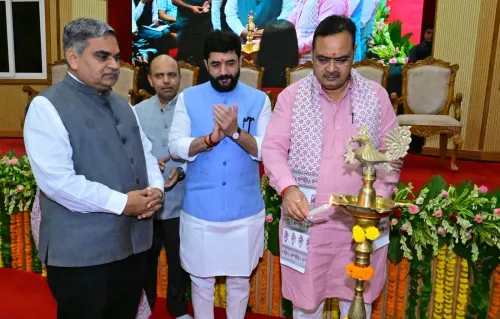
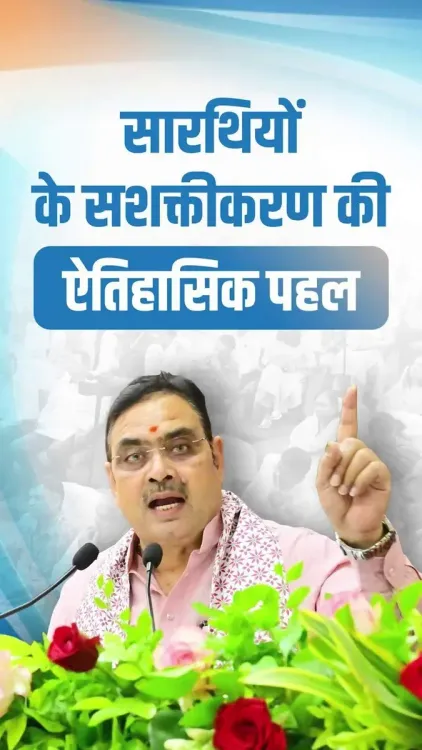
Rajasthan Chief Minister Bhajanlal Sharma on Sunday, 26 July 2026, addressed the launch ceremony of the Bharat Taxi initiative at the Bhagwat Singh Mehta Auditorium, OTS, Jaipur, declaring that the scheme would transform taxi drivers from mere operators into vehicle owners.
Speaking at the event, CM Sharma said, 'jo sarathi the, ve ab malik ban rahe hain' — 'those who were charioteers are now becoming owners.' He added that this transition would multiply their self-confidence and their drive to work manifold.
Context
The Bharat Taxi scheme is a state initiative designed to enable taxi drivers in Rajasthan to transition from hired operators to vehicle owners. The programme targets workers in the informal transport sector, a segment that has long faced income instability and dependence on fleet operators or ride-hailing platforms for their livelihood.
The launch was held at the Bhagwat Singh Mehta Auditorium at the OTS (Officers' Training School) complex in Jaipur, a venue regularly used for major government functions in the state.
Policy Backdrop
Driver ownership models have gained traction across Indian states as a policy tool to improve earnings and economic dignity for informal transport workers. Subsidised financing, cooperative structures, and tie-ups with financial institutions have been the common levers used to make vehicle ownership viable for low-income drivers.
Rajasthan's Bharat Taxi programme fits into this broader national pattern, reflecting a policy shift away from platform-dependent gig arrangements toward asset-backed livelihoods for drivers. The initiative is expected to cover details such as beneficiary selection criteria, financing partnerships, and a phased rollout across the state.
Stakeholders and Impact
The primary beneficiaries of Bharat Taxi are taxi drivers currently working as hired hands for fleet owners or aggregator platforms. Ownership of their vehicles would give them greater control over their working hours, earnings, and long-term financial security.
For the state government, the scheme aligns with its stated goal of strengthening the economic base of workers in the unorganised sector. If implemented at scale, it could meaningfully improve income stability for a significant segment of Rajasthan's urban and semi-urban transport workforce.
What's Next
The government is expected to release further details on the financing model, eligibility norms, and the number of beneficiaries to be covered under the first phase of Bharat Taxi. Observers will watch whether the scheme includes partnerships with public-sector banks or non-banking financial companies to provide affordable vehicle loans to drivers.
The programme's rollout will be a key test of CM Bhajanlal Sharma's administration's ability to deliver on its economic empowerment agenda for informal workers, ahead of the state's evolving political landscape.
Point of View
A voter segment that straddles urban and rural Rajasthan. By framing drivers as future owners rather than perpetual wage earners, the scheme taps into a potent aspirational narrative that resonates with the BJP's broader 'self-reliance' messaging. However, the scheme's real impact will hinge on the affordability of financing and the depth of implementation — areas where similar programmes in other states have historically struggled. The political dividend will only materialise if beneficiaries see tangible ownership transfers, not just ceremonial launches.
NationPress
26 Jul 2026
Frequently Asked Questions
What is the Bharat Taxi scheme in Rajasthan?
Bharat Taxi is a Rajasthan government initiative launched on 26 July 2026 to help taxi drivers transition from hired operators to vehicle owners, improving their income stability and economic independence.
Who launched the Bharat Taxi scheme?
Rajasthan Chief Minister Bhajanlal Sharma launched the Bharat Taxi scheme at the Bhagwat Singh Mehta Auditorium, OTS, Jaipur, on 26 July 2026.
What did CM Bhajanlal Sharma say at the Bharat Taxi launch?
CM Sharma said that those who were once charioteers — hired drivers — are now becoming owners, and that this shift would greatly increase their self-confidence and motivation to work.
Who benefits from the Bharat Taxi scheme?
Taxi drivers in Rajasthan working as hired hands for fleet operators or ride-hailing platforms are the primary beneficiaries, as the scheme aims to help them own their vehicles.
How does Bharat Taxi compare to similar schemes in other states?
Several Indian states have run driver ownership programmes using subsidised loans and cooperative models. Rajasthan's Bharat Taxi follows this pattern, though specific financing details are yet to be announced.