CM Bhajanlal's Rajasthan Govt Lists 5 Top Priorities
Synopsis
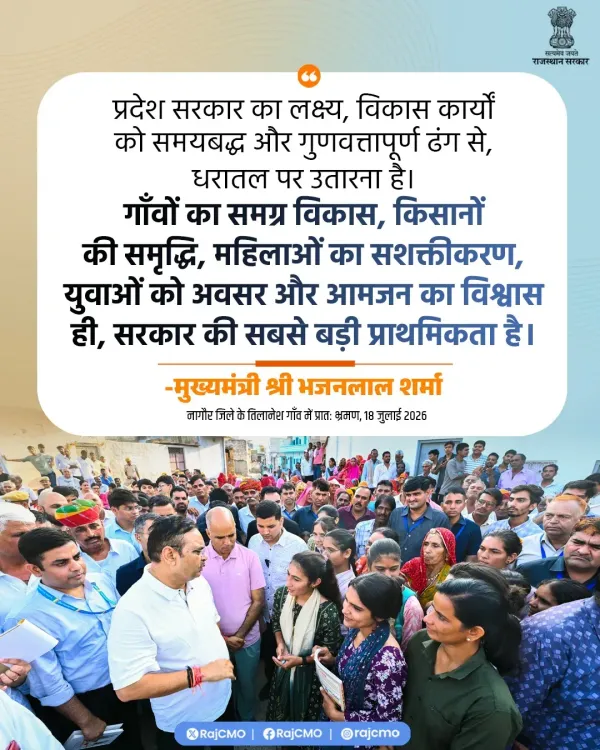
The Chief Minister's Office of Rajasthan on 18 July 2026 reaffirmed CM Bhajan Lal Sharma's five-pillar governance agenda: holistic village development, farmer prosperity, women's empowerment, youth opportunities, and public trust — framed under the hashtag 'Our Leading Rajasthan'.
Key Takeaways
The Chief Minister's Office of Rajasthan posted on 18 July 2026 reaffirming the state government's five core priorities.
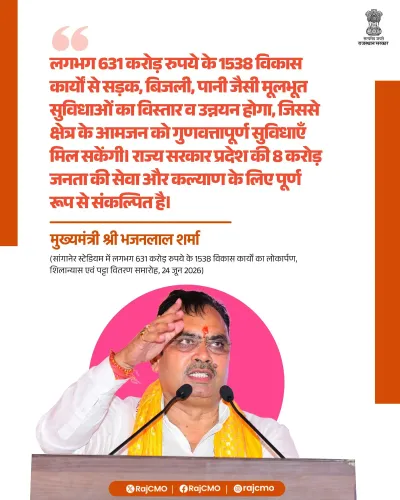
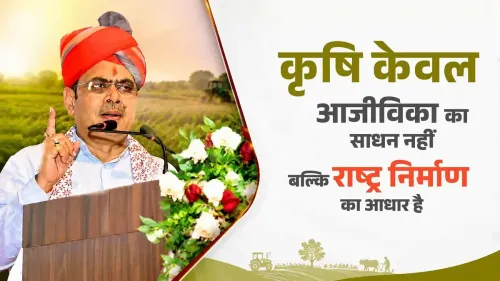
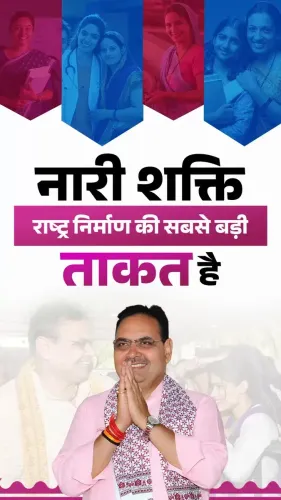
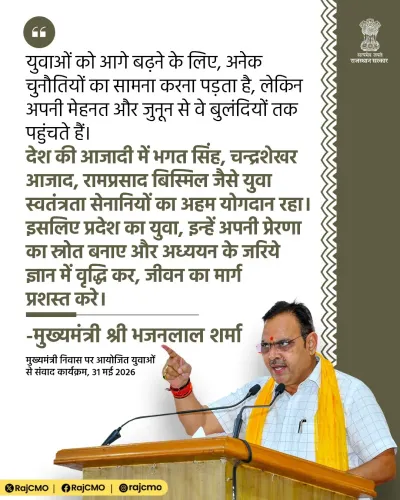
CM Bhajan Lal Sharma's administration lists village development, farmer prosperity, women's empowerment, youth opportunities, and public trust as its foremost goals.
The post was tagged #आपणो_अग्रणी_राजस्थान ('Our Leading Rajasthan'), the government's ongoing development campaign.
The BJP won Rajasthan's assembly election in December 2023 , with rural welfare and women's self-help groups as central manifesto pledges.
State-level farmer welfare and rural housing schemes have been implemented building on central programmes such as PM-KISAN and PMAY-Gramin .
Budget allocations and scheme rollouts in the next assembly session will be the key test of these stated priorities.
The Chief Minister's Office of Rajasthan, the official handle of the state government, on Saturday, 18 July 2026, reaffirmed that holistic village development, farmer prosperity, women's empowerment, youth opportunities, and public trust remain the administration's foremost priorities.
Context
The post, attributed to the office of Chief Minister Bhajan Lal Sharma, was shared under the hashtag #आपणो_अग्रणी_राजस्थान ('Our Leading Rajasthan'), a campaign tagline the Rajasthan government has used to frame its development narrative since the BJP came to power in December 2023. The message, in Hindi, translates as: 'Holistic development of villages, prosperity of farmers, empowerment of women, opportunities for youth, and the trust of the common people — these are the government's biggest priorities.'
The statement is a concise articulation of the five pillars that CM Sharma's administration has repeatedly cited as the backbone of its governance agenda since taking office after the party's assembly election victory.
Policy Backdrop
The BJP's 2023 Rajasthan election manifesto had foregrounded rural infrastructure, direct farmer income support, and women's self-help groups as binding electoral pledges. In the first year of the government, state-level farmer welfare measures and rural housing schemes were rolled out, building on central programmes such as PM-KISAN and PMAY-Gramin.
Rajasthan is a predominantly agrarian state with a large rural population, making village development and agricultural prosperity not merely political talking points but structural policy imperatives. The state's vast geography also makes targeted outreach to women and youth in remote districts a logistical challenge that successive governments have grappled with.
Such priority statements from BJP-governed states typically surface ahead of budget sessions or mid-term reviews of flagship rural schemes, signalling to both party workers and the electorate that core manifesto commitments remain on track.
Stakeholders and Impact
The five groups named — rural communities, farmers, women, youth, and the general public — together constitute the overwhelming majority of Rajasthan's population. For farmers, the priority framing implies continued attention to irrigation, crop insurance, and minimum support price access. For women, it signals ongoing investment in self-help groups, skill training, and safety programmes.
Youth-focused priorities typically translate into employment generation, skill-development initiatives, and startup support at the state level. The explicit mention of 'public trust' (आमजन का विश्वास) is a political signal as much as a governance one, suggesting the administration is conscious of the need to maintain credibility ahead of future electoral cycles.
What's Next
Observers will watch the Rajasthan state budget and the next assembly session for concrete allocations that back up these stated priorities — particularly fresh tranches for village infrastructure, new phases of women's empowerment schemes, and youth employment programmes. The framing under #आपणो_अग्रणी_राजस्थान suggests the government intends to build a sustained communications campaign around these five themes as it moves into the mid-term phase of its tenure.
How effectively the administration translates this priority statement into measurable outcomes — in rural incomes, women's participation in the workforce, and youth employment rates — will likely shape the political conversation in Rajasthan as the next assembly election approaches.
Point of View
The Sharma administration acknowledges that perception management is as much a part of its agenda as programme implementation. This mirrors a broader BJP pattern across states of using social media to maintain narrative continuity between electoral cycles.
NationPress
19 Jul 2026
Frequently Asked Questions
What are CM Bhajan Lal Sharma's top priorities for Rajasthan?
CM Bhajan Lal Sharma's stated top priorities for Rajasthan are holistic village development, farmer prosperity, women's empowerment, opportunities for youth, and earning the trust of the common people.
What does 'Aapno Agrani Rajasthan' mean?
'Aapno Agrani Rajasthan' is a Hindi-Rajasthani phrase meaning 'Our Leading Rajasthan.' It is the Bhajan Lal Sharma government's campaign tagline for its development agenda.
When did Bhajan Lal Sharma become Chief Minister of Rajasthan?
Bhajan Lal Sharma became Chief Minister of Rajasthan in December 2023 after the BJP won the state assembly election.
What schemes is the Rajasthan government implementing for farmers?
The Rajasthan government has implemented state-level farmer welfare measures building on central schemes such as PM-KISAN and PMAY-Gramin. Specific new programme details are expected to be announced in upcoming budget sessions.
What is the Rajasthan government's policy on women's empowerment?
The Rajasthan government has cited women's empowerment as a core priority, with a focus on self-help groups, skill training, and safety programmes, in line with the BJP's 2023 election manifesto pledges.