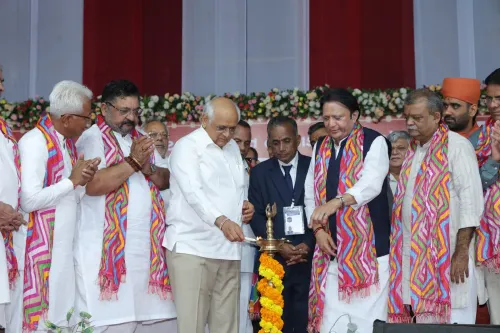
CM Bhupendra Patel breaks ground for Rs 223 cr neuroscience institute in Ahmedabad
Synopsis
Gujarat CM Bhupendra Patel broke ground on a Rs 223.10 crore Institute of Neurosciences and Research Centre at Ahmedabad's Civil Medicity Campus on 24 October 2026, promising world-class brain and spine care at affordable rates under one public roof.
Key Takeaways
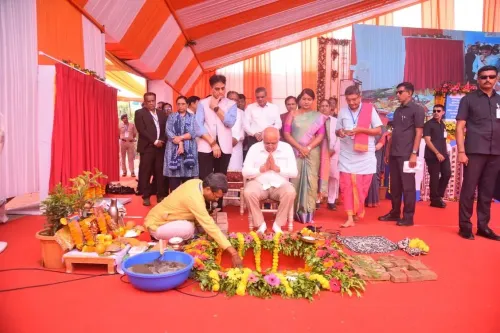
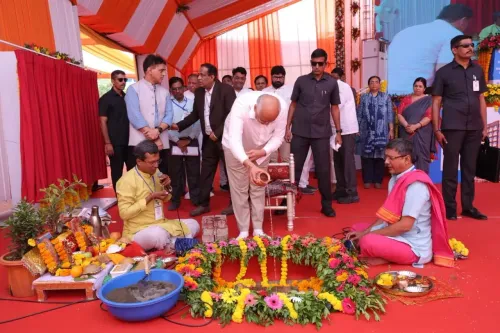
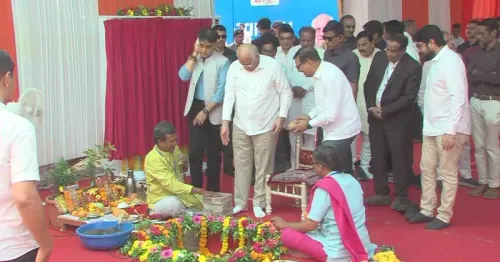
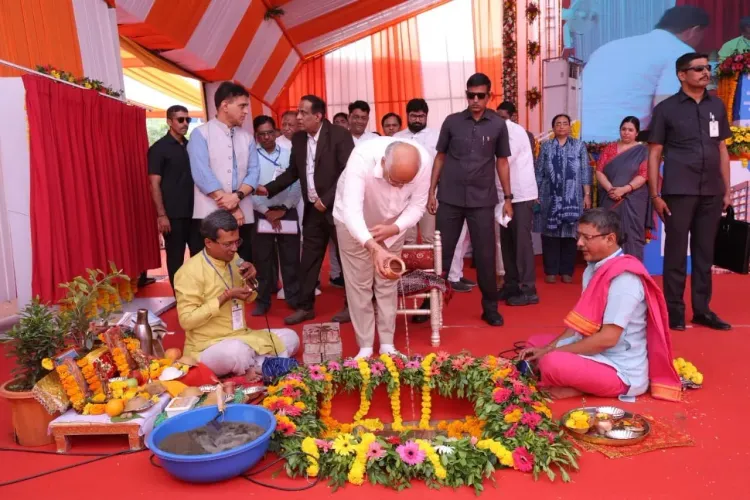
CM Bhupendra Patel performed the bhoomi pujan (ground-breaking) for the new neuroscience institute on 24 October 2026 .
The project is estimated to cost Rs 223.10 crore and is located at Ahmedabad's Civil Medicity Campus .
The institute will house specialised operation theatres, advanced ICUs, world-class technology, and a dedicated research wing.
It is designed to provide affordable treatment for serious brain and spinal cord conditions to patients who cannot access costly private care.
The facility is part of Gujarat's broader post-2017 strategy to build super-specialty tertiary care within existing government hospital campuses.
Project completion timeline and equipment procurement are the key milestones to watch going forward.
A city long known for its formidable civil hospital network just got a glimpse of what public healthcare could look like in the next decade. Gujarat Chief Minister Bhupendra Patel performed the ground-breaking ceremony on Saturday, 24 October 2026, for an 'Institute of Neurosciences and Research Centre' at Ahmedabad's Civil Medicity Campus — a facility designed to bring world-class brain and spine care under a single government roof at affordable rates.
Posting in Gujarati, CM Patel described the Rs 223.10 crore project as 'tabbibī kṣetre adyatan infrastructure' — a significant step towards building cutting-edge medical infrastructure in the state. The institute, he said, will be equipped with world-class technology, specialised operation theatres, advanced ICUs, and dedicated research facilities, ensuring that patients suffering from serious brain and spinal cord conditions receive the best treatment at reasonable rates, all under one roof.What the new institute will offer brain and spine patients
The planned facility sits inside the Civil Medicity Campus, Ahmedabad's sprawling public healthcare complex that has steadily grown into a hub for super-specialty government care. The new neuroscience centre is designed to end the exhausting, expensive cycle that currently forces families dealing with strokes, spinal injuries, or complex neurological conditions to chase private hospitals — often at prohibitive cost or to travel out of state entirely.
Specialised operation theatres and advanced ICU bays are central to the blueprint. A research wing signals that the facility is being conceived not merely as a service centre but as a knowledge institution — one that could eventually shape neurology training and clinical protocols for the broader state system.
Gujarat's multi-year push to build tertiary care at home
This ground-breaking does not arrive in isolation. Since 2017, the Gujarat government has pursued a deliberate strategy of converting existing civil hospital campuses into full medicity complexes with super-specialty blocks — in neuroscience, oncology, and cardiology — rather than building parallel private-style referral chains. Successive state budgets have channelled funds into this model, with the explicit goal of reducing out-of-state referrals for the most complex cases.
The Civil Medicity Campus in Ahmedabad is the centrepiece of that vision: a public institution that, block by block, is acquiring the diagnostic and surgical depth that once existed only in elite private hospitals. The neuroscience institute is the latest and, by capital outlay, one of the largest additions to that campus.
Affordable care as the political and policy promise
CM Patel was explicit about the equity dimension, stating that treatment for serious brain and spinal diseases will be available to needy patients at the best and most reasonable rates — 'sāmānya nāgarikō māṭe āśīrvādarūp' (a blessing for ordinary citizens), as he put it. That framing matters: neurosurgery and neurointensive care are among the most financially devastating medical episodes a middle-class or low-income family can face, and the absence of affordable public options has long pushed patients towards crushing private hospital bills or medical debt.
Key milestones to track from here include the project's construction timeline, equipment procurement — especially advanced imaging and intraoperative technology — and how the new institute integrates with the existing civil hospital's referral pathways to ensure patients actually reach it.
Point of View
Signalling a deliberate shift from incremental upgrades to flagship-scale investment in public tertiary care. By anchoring the facility within an existing government campus and emphasising affordable pricing, the government is making a pointed contrast with the private-hospital model that dominates high-end neurology and neurosurgery. Politically, the announcement reinforces CM Patel's positioning as a delivery-focused administrator, continuing the infrastructure-and-welfare narrative the BJP has built in Gujarat over successive terms. The research component — if staffed and funded adequately — could also elevate the state's standing in clinical neuroscience training, with long-term implications for specialist supply across western India.
NationPress
24 Oct 2026
Frequently Asked Questions
What is the Institute of Neurosciences and Research Centre in Ahmedabad?
It is a planned government super-specialty facility at Ahmedabad's Civil Medicity Campus focused on treatment and research for brain and spinal cord disorders, estimated to cost Rs 223.10 crore, with its foundation stone laid by CM Bhupendra Patel on 24 October 2026.
How much will the Ahmedabad neuroscience institute cost?
The project is estimated to cost approximately Rs 223.10 crore, as stated by Gujarat Chief Minister Bhupendra Patel at the ground-breaking ceremony.
Where is the new neuroscience institute being built in Gujarat?
The institute will be built at the Civil Medicity Campus in Ahmedabad, Gujarat's largest city and the main hub of its public healthcare system.
What facilities will the Ahmedabad neuroscience centre have?
According to CM Patel, the centre will be equipped with world-class technology, specialised operation theatres, advanced ICUs, and dedicated research facilities for brain and spine patients.
Why is Gujarat building a public neuroscience hospital?
The state has been expanding super-specialty public care since 2017 to reduce costly out-of-state referrals and provide affordable treatment for complex neurological conditions to ordinary citizens who cannot afford private hospitals.