Akhilesh Yadav deploys 'PDA Praharis' to guard every vote
Synopsis
Samajwadi Party president Akhilesh Yadav has spotlighted his party's 'PDA Praharis' — booth-level volunteers pledged to ensure every OBC, Dalit and minority voter casts a ballot — as the party ramps up ground-level mobilisation ahead of the 2027 Uttar Pradesh assembly elections.
Key Takeaways
Akhilesh Yadav posted on 24 October 2026 highlighting the role of PDA Praharis in securing voter turnout.
The resolve stated: 'not a single vote should decrease, not a single vote should be cut.' PDA stands for Pichhda (OBC), Dalit and Alpsankhyak (minority) — the social coalition at the heart of Samajwadi Party's electoral strategy since 2012 .
Booth-level Prahari volunteers are tasked with tracking and mobilising PDA-aligned voters across Uttar Pradesh's 403 constituencies .
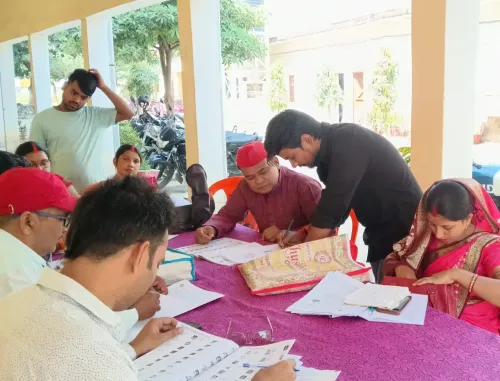
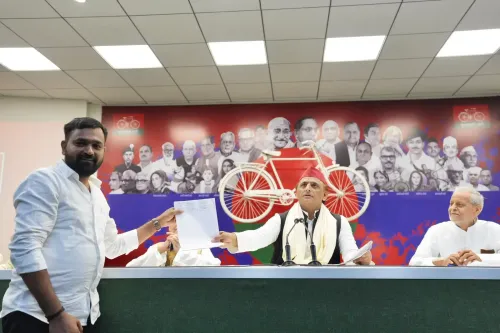
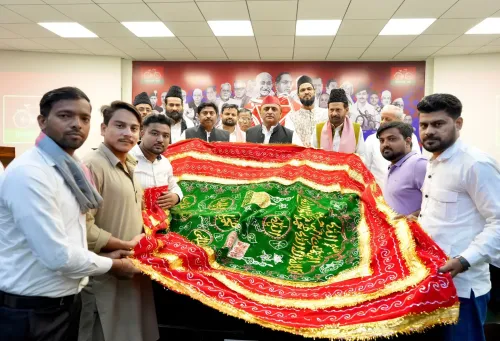
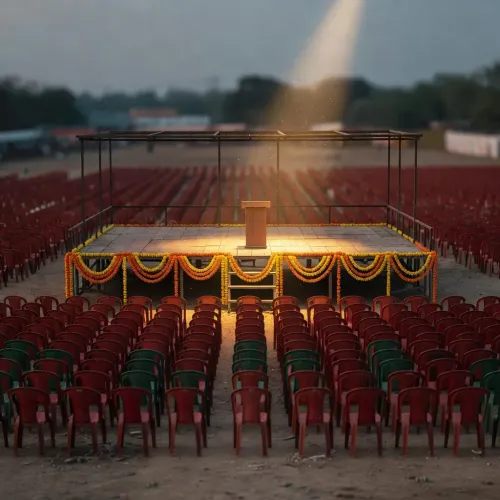
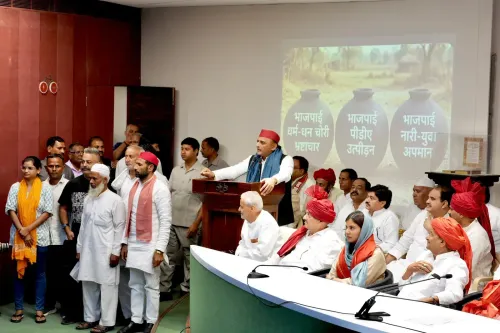
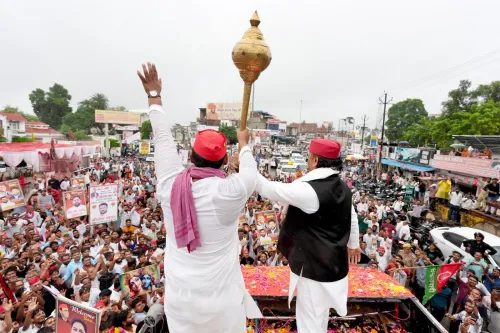
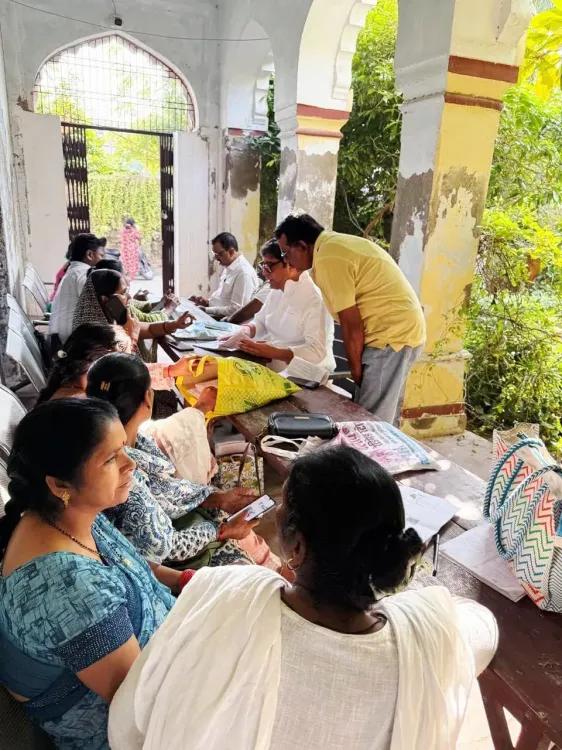
The post was accompanied by four images , signalling active ground-level operations already underway.
The mobilisation is framed as a direct counter to the BJP's established booth management infrastructure in the state.
Not a single vote lost, not a single vote cut — that is the battle cry Samajwadi Party president Akhilesh Yadav is sounding as his party's ground force fans out across Uttar Pradesh ahead of the 2027 assembly elections. On Saturday, 24 October 2026, Yadav posted a message on X spotlighting the role of 'PDA Praharis' — dedicated booth-level volunteers tasked with ensuring every voter in the party's core coalition actually casts a ballot.
The post, in Hindi, reads: 'PDA Praharis hain, woh har voter ka mat sunishchit karne mein lagatar madad kar rahe hain kyunki unka sankalp hai: ek bhi vote na ghate, ek bhi vote na kate' — roughly, 'The PDA Praharis are continuously helping to ensure every voter's vote is cast, because their resolve is: not a single vote should decrease, not a single vote should be cut.'
What the PDA coalition means for UP politics
The PDA — shorthand for Pichhda (OBC), Dalit and Alpsankhyak (minority) — is not a new invention. Samajwadi Party first deployed this social coalition architecture during the 2012 Uttar Pradesh assembly elections, when it swept to power with a commanding majority. The formula rests on consolidating three historically marginalised blocs into a single, disciplined electoral force large enough to overcome the BJP's formidable organisational machine.
The 'Prahari' concept — sentinels or guardians — is the operational arm of that strategy. Booth-level workers are assigned to track registered voters, remind them of polling dates, and physically accompany reluctant or first-time voters to polling stations. In a state with 403 assembly constituencies and millions of PDA-aligned voters spread across dense rural belts, even a marginal improvement in turnout per booth can swing marginal seats.
Why booth management is the real battleground
The BJP's dominance in Uttar Pradesh over the past decade has rested as much on its booth-level Shakti Kendra network as on its political messaging. Samajwadi Party's explicit counter is to match that granular reach within its own voter base. The language Akhilesh Yadav uses — 'not a single vote should decrease, not a single vote should be cut' — signals a two-front concern: voter apathy on one side, and vote-splitting or suppression on the other.
The party's post accompanies four images, suggesting visual documentation of Prahari activity on the ground — a deliberate signal that the mobilisation is already operational, not merely aspirational.
With the 2027 Uttar Pradesh assembly elections drawing closer, the Samajwadi Party's ability to translate PDA arithmetic into actual ballot-box numbers will be the defining test of this strategy. The Praharis are already counting.
Point of View
Rather than out-spend, a ruling party with deep state resources. By framing booth workers as 'sentinels' with a moral resolve — not a single vote lost — the Samajwadi Party is attempting to convert social coalition identity into operational discipline, something that proved decisive in 2012 but has been harder to sustain since. The dual anxiety embedded in the slogan — votes 'decreasing' (apathy) and votes 'being cut' (splitting or suppression) — reveals where the party believes its losses have historically leaked. Whether the Praharis can close those leaks at scale across 403 constituencies will be the real measure of SP's organisational revival heading into 2027.
NationPress
24 Oct 2026
Frequently Asked Questions
Who are PDA Praharis in Samajwadi Party?
PDA Praharis are booth-level volunteers of the Samajwadi Party tasked with ensuring that every voter from the PDA coalition — OBC, Dalit and minority communities — actually casts their vote on election day.
What does PDA stand for in Samajwadi Party?
PDA stands for Pichhda (Other Backward Classes), Dalit and Alpsankhyak (minority) — the three social blocs whose consolidation forms the core electoral strategy of the Samajwadi Party in Uttar Pradesh.
When did Samajwadi Party first use the PDA coalition strategy?
The Samajwadi Party deployed the PDA social coalition formula during the 2012 Uttar Pradesh assembly elections, when it won a decisive majority in the state.
What are the 2027 Uttar Pradesh assembly elections?
The 2027 Uttar Pradesh assembly elections will decide the government for India's most populous state, with 403 seats at stake. Samajwadi Party is the principal opposition to the ruling BJP.
Why is booth-level management important in UP elections?
Uttar Pradesh has 403 constituencies spread across dense rural areas, meaning even small improvements in voter turnout per booth can swing close contests. Both the BJP and Samajwadi Party invest heavily in booth-level networks to mobilise their respective voter bases.