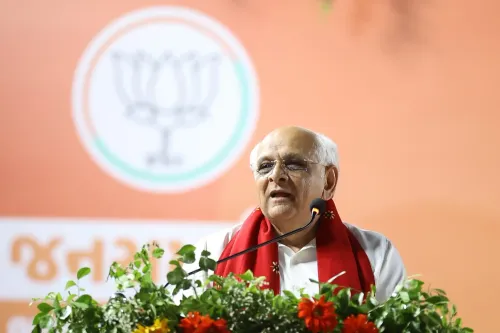
CM Bhupendra Patel Greets Gandhinagar on Foundation Day
Synopsis
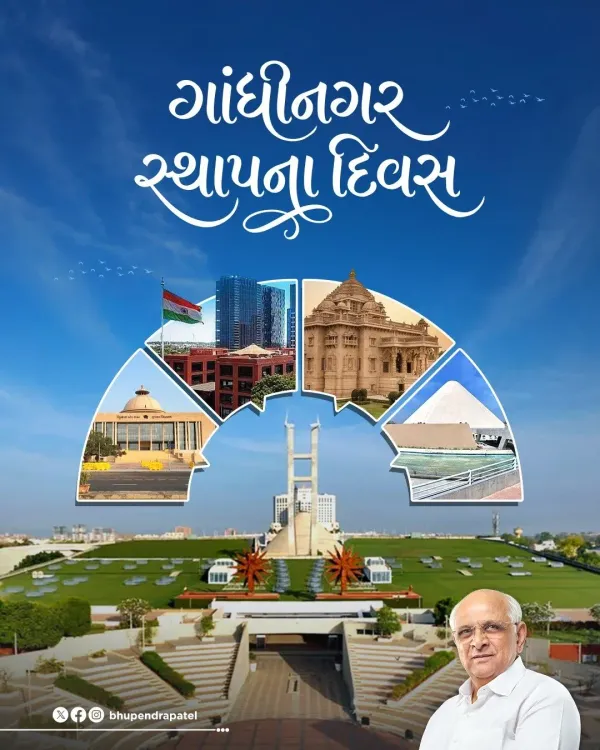
Gujarat Chief Minister Bhupendra Patel greeted Gandhinagar on its foundation day, celebrating the planned capital's identity as a green city and hub of governance, education, and modern infrastructure, and wishing it continued growth alongside environmental preservation.
Key Takeaways
Gujarat CM Bhupendra Patel posted foundation-day greetings for Gandhinagar on 2 August 2026 .
He described Gandhinagar as the 'heart of Gujarat' and centre of the state's good governance and administrative system.
Gandhinagar was planned as Gujarat's purpose-built capital after the state's formation in 1960 , and inaugurated in 1965 .
The city is recognised as a 'Green City' for its wide tree-lined avenues and sector-based urban layout.
CM Patel highlighted the capital's growing stature as an education hub and model of modern infrastructure.
He expressed hope that Gandhinagar would continue scaling new heights of development while preserving its environment.
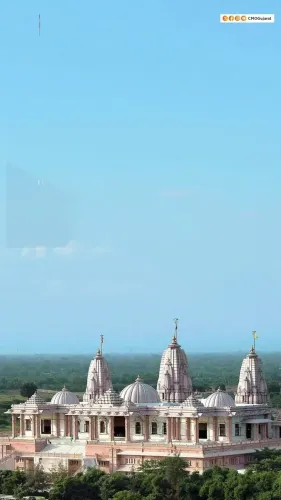
Gujarat's purpose-built capital turns another year older — and Gujarat Chief Minister Bhupendra Patel marked the occasion on Sunday, 2 August 2026, with warm wishes for Gandhinagar, saluting the city's identity as a green, well-planned hub of governance, education, and modern infrastructure.
Posting in Gujarati, the Chief Minister described Gandhinagar as 'ગ્રીન સિટી' — 'Green City' — and called it the 'heart of Gujarat and the centre of the state's good governance and administrative system.' He expressed hope that the capital would continue to scale new heights of development while preserving its environment.
A capital by design, not by accident
Gandhinagar was not inherited — it was engineered. When Gujarat was carved out as a separate state in 1960, its government initially operated from Ahmedabad. The decision to build a dedicated capital on the western bank of the Sabarmati river reflected an ambition to create a city that embodied planned governance from the ground up. The new capital was inaugurated in 1965, laid out in numbered sectors with wide tree-lined avenues that earned it the 'Green City' tag it still carries today.
That legacy of deliberate urban planning is central to how successive Gujarat administrations have framed the city's identity — not merely as a seat of power, but as a replicable model of orderly, sustainable urbanisation.
Education hub, infrastructure showcase
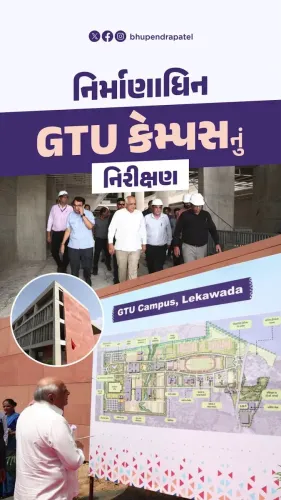
CM Patel's message pointed beyond greenery to Gandhinagar's expanding role as an education hub and a showcase for modern infrastructure. The capital region hosts several national-level institutions and has seen steady growth in campuses and connectivity projects that successive state governments have positioned as evidence of Gujarat's development model in action.
The Chief Minister's wish — that Gandhinagar keep climbing 'new peaks of development alongside environmental conservation' — echoes a recurring theme in state messaging: that ecological stewardship and economic ambition are not in tension but in tandem.
Gandhinagar's foundation day is a reminder that India's federal experiment includes cities built to govern — and that how a capital grows says something about how a state chooses to be seen.
Point of View
But CM Patel's framing of Gandhinagar as simultaneously a governance centre, green city, and education hub reflects a deliberate state branding exercise that the BJP-led Gujarat government has sustained across administrations. Positioning the capital as a model of planned urbanisation serves a dual purpose: it reinforces Gujarat's claim to being a development template for the rest of India, and it anchors the ruling party's identity to visible, tangible city-building. As Indian states compete for investment and institutional prestige, the narrative around planned capitals like Gandhinagar carries weight beyond ceremonial tribute.
NationPress
2 Aug 2026
Frequently Asked Questions
When was Gandhinagar established as Gujarat's capital?
Gandhinagar was planned after Gujarat's formation as a separate state in 1960 and was inaugurated as the capital in 1965 , replacing Ahmedabad as the seat of state government.
Why is Gandhinagar called a Green City?
Gandhinagar earned the 'Green City' title for its sector-based urban layout featuring wide, tree-lined avenues and extensive green spaces built into the city's original design.
What did CM Bhupendra Patel say on Gandhinagar Foundation Day 2026?
CM Patel described Gandhinagar as the heart of Gujarat and the centre of its good governance system, and expressed hope that the city would continue to develop while preserving its environment.
What institutions make Gandhinagar an education hub?
Gandhinagar hosts several national-level academic and research institutions in its capital region, a base that successive Gujarat governments have expanded as part of the city's identity as an education and knowledge hub.
What is the significance of Gandhinagar Foundation Day?
Foundation Day marks the anniversary of Gandhinagar's establishment as Gujarat's purpose-built administrative capital, a milestone that state leaders use to highlight the city's growth in governance, infrastructure, and sustainability.