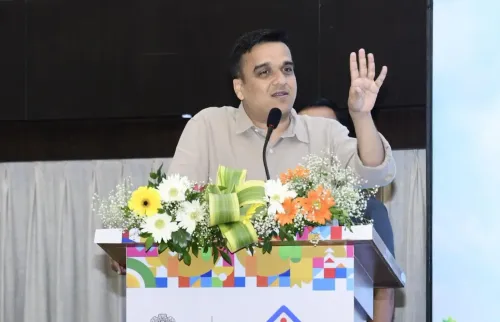
CM Bhupendra Patel Hails Gujarat's Swachh Survekshan 2025-26 Wins
Synopsis
Gujarat swept the 10th Swachh Survekshan 2025-26 Awards: Ahmedabad-Sanand ranked No. 1 nationally under the Swachh Shehar Jodi initiative, Surat placed 2nd in the Super Swachh League, and Vadodara was named Gujarat's Cleanest City. CM Bhupendra Patel credited Safai Mitras, civic bodies, and citizens for making cleanliness a Jan Andolan.
Key Takeaways
Ahmedabad and Sanand ranked No.
1 nationally under the Swachh Shehar Jodi initiative, pairing a large mentor city with a smaller mentee town.
Surat secured 2nd position nationwide in the Super Swachh League , a category for cities with a consistent top-tier cleanliness track record.
Vadodara was honoured as the Cleanest City of Gujarat at the same ceremony.
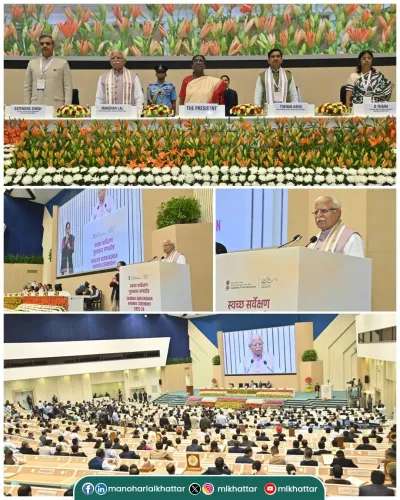
President Droupadi Murmu conferred the awards; Union Minister Manohar Lal Khattar was acknowledged for support to urban cleanliness programmes.
The Swachh Survekshan annual ranking survey has run since 2016 as the competitive engine of the Swachh Bharat Mission , launched in 2014 .
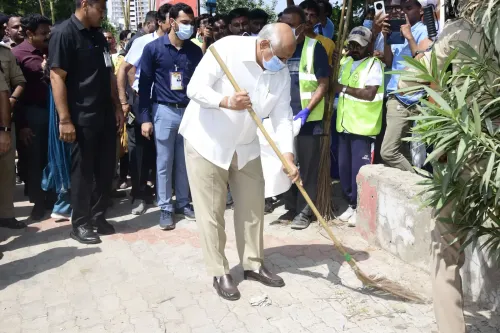
CM Patel credited Safai Mitras , municipal teams, and Gujarat citizens for sustaining cleanliness as a mass public movement.
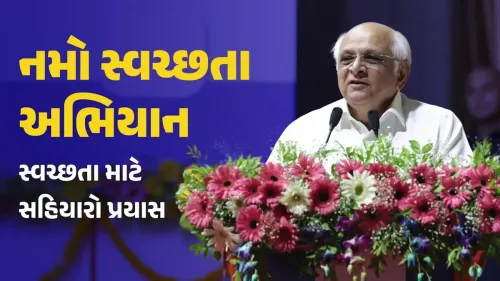
Gujarat's cities swept the podium again — and this time, the story runs deeper than a trophy. Gujarat Chief Minister Bhupendra Patel on Thursday, November 12, 2026, celebrated a clutch of top national honours at the 10th Swachh Survekshan 2025–26 Awards, marking yet another year the state's urban landscape outranked rivals across India.
Ahmedabad–Sanand's No. 1 finish and what the Jodi model means
The headline result: Ahmedabad and Sanand claimed the No. 1 rank nationally under the 'Swachh Shehar Jodi' initiative — a programme designed to pair a large mentor city with a smaller mentee town, lifting both together on sanitation indicators. The pairing of Gujarat's commercial capital with the smaller Sanand is a live demonstration of that idea paying off at the highest level.
The Swachh Shehar Jodi model, rolled out under the broader Swachh Bharat Mission framework, works on a simple but powerful premise: bigger cities with mature waste-management systems guide their smaller neighbours, sharing infrastructure know-how and administrative lessons. When both cities rank first together, the mentoring loop closes.
Surat's Super Swachh League silver and Vadodara's clean sweep
Surat secured 2nd position nationwide in the elite 'Super Swachh League' category — a tier reserved for cities that have consistently topped earlier Swachh Survekshan cycles and compete at a higher threshold of evaluation. For Surat, which has featured among India's cleanest cities in multiple successive rankings, this is a continuation of a long, unbroken run.
Vadodara was separately honoured as the Cleanest City of Gujarat. Three Gujarat cities — Ahmedabad, Surat, Vadodara — landing major national or state recognitions in a single ceremony is the kind of result that underlines a systemic, not accidental, performance pattern.
From Jan Andolan to twelve years of rankings
The Swachh Bharat Mission was launched by Prime Minister Narendra Modi in 2014 with a declared goal of ending open defecation and transforming urban sanitation. The Swachh Survekshan annual survey followed in 2016 as the competitive engine of that drive — ranking thousands of cities on waste processing, cleanliness indicators, and citizen feedback. A decade on, the survey has become India's largest urban governance competition, with cities investing heavily in their sanitation infrastructure partly to move up the rankings.
President Droupadi Murmu conferred the awards at the ceremony, with Union Minister Manohar Lal Khattar — who heads the Ministry of Housing and Urban Affairs — present in a support role that CM Patel acknowledged directly. Patel credited the wins not to government alone, but to Safai Mitras (frontline sanitation workers), municipal teams, and Gujarat's citizens, calling cleanliness a genuine 'Jan Andolan' — a people's movement.
That framing matters: the Swachh Bharat Mission was always conceived as a behavioural change programme, not just an infrastructure one. When a Chief Minister cites citizen ownership alongside civic bodies, it reflects the original design intent of the scheme still being activated at the state level.
The next Survekshan cycle will test whether Gujarat can hold all three cities at the top simultaneously — and whether the Swachh Shehar Jodi model spreads to other state pairings across India.
Point of View
Amplifying Prime Minister Modi's flagship mission into a replicable state-level brand. The Swachh Shehar Jodi model is particularly notable: by institutionalising mentoring between large and small cities, it attempts to prevent the common pattern where gains cluster in mega-cities while smaller towns lag. For Union Minister Khattar at Housing and Urban Affairs, Gujarat's performance provides a showcase he can hold up to other states as the next Survekshan cycle begins. The larger question is whether competitive rankings alone can sustain behavioural change, or whether infrastructure investment must now do the heavier lifting.
NationPress
12 Nov 2026
Frequently Asked Questions
What is Swachh Survekshan and how does it rank cities?
Swachh Survekshan is an annual survey launched in 2016 under the Swachh Bharat Mission that ranks Indian cities on cleanliness, waste management, and citizen feedback indicators. Cities compete across different population-size categories, with top performers recognised at a national awards ceremony.
What is the Swachh Shehar Jodi initiative?
Swachh Shehar Jodi is a programme that pairs a larger, high-performing mentor city with a smaller mentee town to collaboratively improve sanitation outcomes. Ahmedabad was paired with Sanand under this initiative and the duo ranked No. 1 nationally at the 10th Swachh Survekshan 2025-26 Awards.
What is the Super Swachh League in Swachh Survekshan?
The Super Swachh League is an elite category within Swachh Survekshan for cities that have consistently ranked at the top in previous editions. Surat secured 2nd position nationally in this category at the 10th Swachh Survekshan 2025-26 Awards.
Who gave out the Swachh Survekshan 2025-26 Awards?
President Droupadi Murmu conferred the Swachh Survekshan 2025-26 Awards. Union Minister Manohar Lal Khattar, who heads Housing and Urban Affairs, was also acknowledged for his support to urban cleanliness programmes.
Which Gujarat cities won at Swachh Survekshan 2025-26?
Three Gujarat cities won major honours: Ahmedabad and Sanand ranked No. 1 nationally under the Swachh Shehar Jodi initiative, Surat ranked 2nd nationally in the Super Swachh League, and Vadodara was named the Cleanest City of Gujarat.