CM Bhupendra Patel joins BJP's 'Save Democracy' march in Ahmedabad
Synopsis
Gujarat Chief Minister Bhupendra Patel and Union Minister JP Nadda led a BJP padyatra in Ahmedabad on 27 October 2026 under the 'Save Democracy, Remove Anarchy' campaign, pledging to defeat opposition 'mob-rule' and advance PM Modi's Viksit Bharat vision.
Key Takeaways
Gujarat CM Bhupendra Patel and Union Minister JP Nadda jointly participated in a BJP padyatra in Ahmedabad on 27 October 2026 .
The march was held under the campaign slogan 'Loktantra Bachao, Arajkata Hatao' — 'Save Democracy, Remove Anarchy.' CM Patel accused the opposition of attempting to 'weaken the foundations of democracy' and promoting bheedtantra (mob-rule) for political gain.
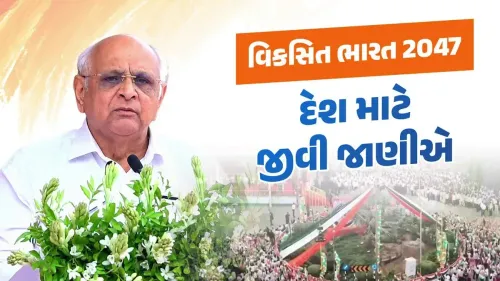
The BJP framed the march around PM Narendra Modi's Viksit Bharat @2047 development vision as the national goal the party is defending.
The event follows an established BJP pattern of organising street-level counter-campaigns during periods of opposition political mobilisation.
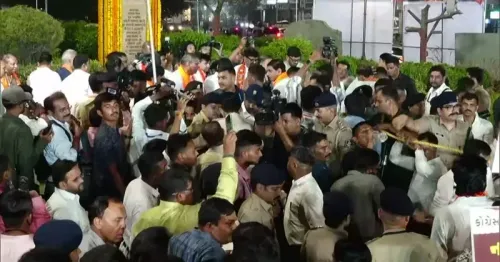
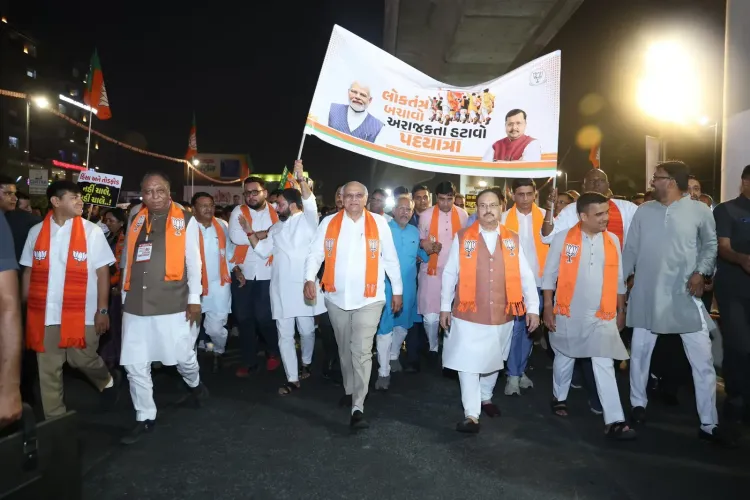
Thousands of saffron-clad marchers filled the streets of Ahmedabad on Tuesday, 27 October 2026, as Gujarat Chief Minister Bhupendra Patel joined a BJP-organised padyatra (foot march) under the banner 'Loktantra Bachao, Arajkata Hatao' — 'Save Democracy, Remove Anarchy' — reaffirming what the party called an unwavering commitment to democratic values and national progress.
JP Nadda leads the march through Gujarat's largest city
Union Minister J.P. Nadda, a former national president of the Bharatiya Janata Party, walked alongside CM Patel and a large contingent of party workers in what the BJP framed as a public affirmation of democratic resolve. The march drew participation from across Gujarat's BJP ranks, projecting organisational strength on home turf.
CM Patel posted directly from the event, writing that participants 'renewed the pledge to strengthen democracy in the country.' The visual of two of the party's most senior figures walking shoulder-to-shoulder on Ahmedabad's streets was a deliberate signal — democracy, the BJP argued, is defended not just in Parliament but on the ground.
The opposition in the crosshairs of BJP's 'anarchy' charge
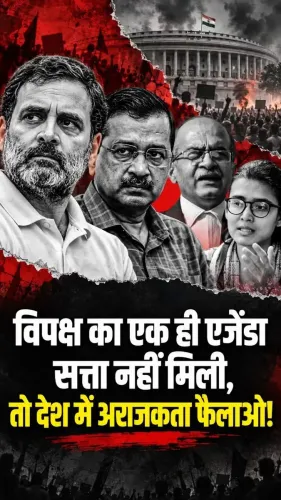
The march's messaging did not stop at celebration. CM Patel's post drew a sharp line: the opposition, he wrote, is making 'a wicked attempt to weaken the foundations of democracy and spread anarchy, encouraging mob-rule in its lust for power' — and the people, he declared, will never accept it.
He described forces spreading 'corruption and anarchy' as 'negative forces' that will 'never succeed' while Prime Minister Narendra Modi leads the country toward the Viksit Bharat vision. That phrase — bheedtantra, or mob-rule — has become a recurring BJP rhetorical device to characterise opposition street protests as illegitimate pressure on democratic institutions.
Viksit Bharat as the march's ideological spine
The Viksit Bharat @2047 framework, first articulated by PM Modi in 2022–2023, targets developed-nation status for India by the centenary of its independence. The BJP has increasingly positioned this long-horizon goal as the unifying national purpose that opposition 'anarchy' threatens to derail.
CM Patel closed with a declaration that carries the cadence of a campaign slogan: 'Loktantra sarvopari chhe' — 'Democracy is supreme' — and that India's march of progress, powered by public trust, will continue uninterrupted, defeating those who oppose the national interest.
A playbook deployed across states — and what comes next
The Ahmedabad padyatra fits a pattern the BJP has refined over the past decade: when opposition mobilisation peaks, the party responds with its own street-level counter-narrative, packaging governance achievements inside a democracy-versus-anarchy frame. Similar marches and campaigns have been organised in multiple states, with local leaders amplifying the central message.
Whether Gujarat's demonstration triggers matching mobilisations by BJP units in other states — and how opposition parties choose to respond — will define the next few weeks of this political cycle.
Point of View
' the party forces opponents onto the defensive over intent rather than policy. Bringing JP Nadda to Gujarat gives the campaign national stature while reinforcing CM Patel's standing as a trusted Modi-era administrator. Threading the march through the Viksit Bharat framework is deliberate: it ties a political counter-offensive to a governance aspiration, making any opposition response look like resistance to development itself. The durability of this frame will depend on whether the BJP can sustain the 'democracy defender' mantle as electoral cycles approach.
NationPress
27 Oct 2026
Frequently Asked Questions
What is the 'Save Democracy, Remove Anarchy' campaign by BJP?
It is a BJP-organised political campaign and street march — padyatra — aimed at countering what the party characterises as opposition-driven anarchy and mob-rule threatening democratic institutions. The Ahmedabad edition was held on 27 October 2026 with CM Bhupendra Patel and Union Minister JP Nadda as key participants.
Who participated in the BJP padyatra in Ahmedabad on 27 October 2026?
Gujarat Chief Minister Bhupendra Patel and Union Minister J.P. Nadda led the march alongside a large number of BJP workers in Ahmedabad .
What is Viksit Bharat and why did BJP mention it at the padyatra?
Viksit Bharat @2047 is PM Narendra Modi's vision to make India a developed nation by the centenary of its independence. The BJP invoked it at the march to frame the 'Save Democracy' campaign as a defence of the country's long-term development agenda against opposition disruption.
What does 'bheedtantra' mean in BJP's political messaging?
Bheedtantra literally means 'mob-rule' or governance by crowd pressure. The BJP uses it to characterise opposition-led street protests as an illegitimate attempt to override democratic and electoral mandates.
Is BJP holding similar democracy marches in other states?
The BJP has an established pattern of organising matching counter-mobilisation campaigns across states during periods of heightened opposition activity. Whether the Ahmedabad padyatra triggers similar events elsewhere in October–November 2026 is the key thing to watch.