CM Bhupendra Patel joins Seva Setu camp in Gandhidham
Synopsis
Gujarat Chief Minister Bhupendra Patel joined the 'Seva Setu' outreach programme in Gandhidham on 26 September 2026, marking PM Modi's 25 years of public service by distributing assistive aids to divyangjan and personally engaging with welfare scheme beneficiaries.
Key Takeaways
CM Bhupendra Patel participated in the Seva Setu camp organised by Gandhidham Municipal Corporation on 26 September 2026 .
The event marked 25 years of public service by Prime Minister Narendra Modi , spanning his Gujarat CM tenure from 2001 and his Prime Ministerial term from 2014 .
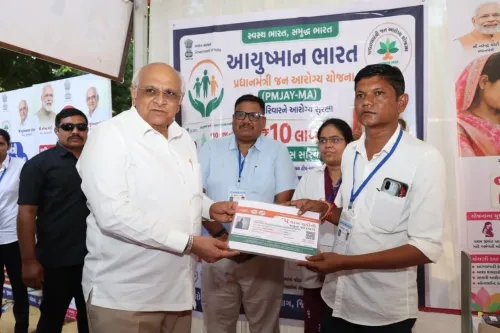
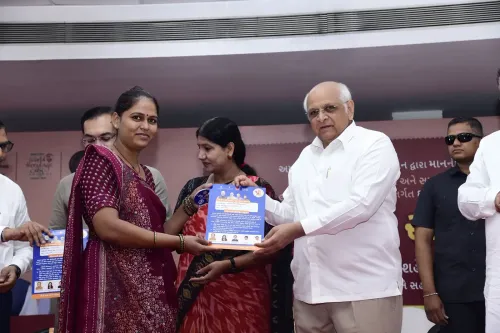
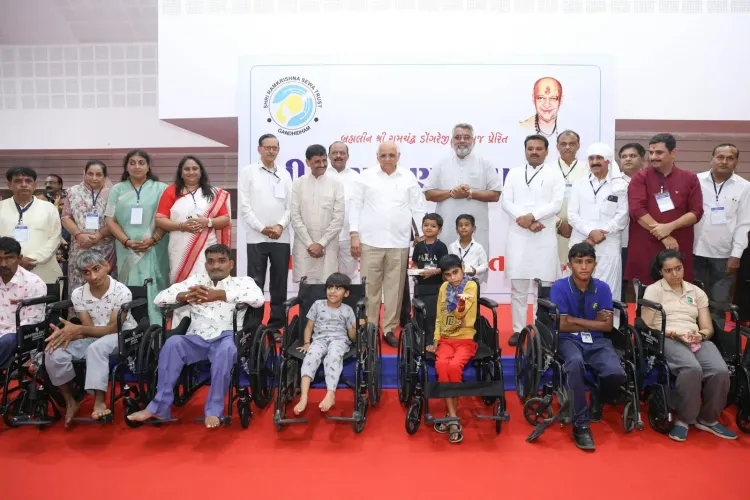
CM Patel inspected scheme stalls, held direct conversations with beneficiaries, and distributed assistive aids to divyangjan (persons with disabilities).
The event was held under the #SevaSankalpAbhiyaan banner, focused on transparent, last-mile government scheme delivery.
The Seva Setu format brings multiple welfare schemes to a single on-site location, reducing the burden on citizens to navigate multiple offices.
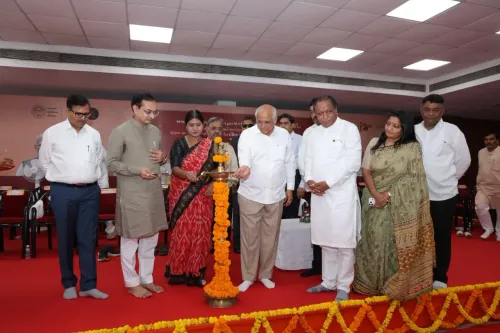
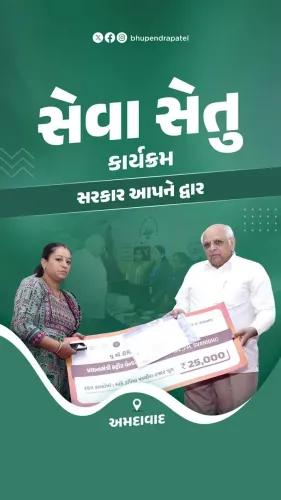
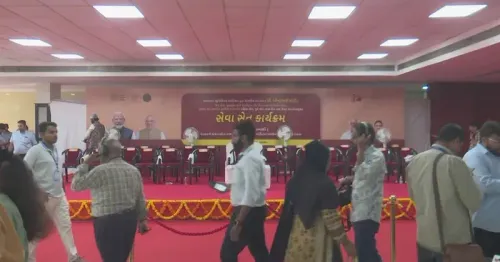
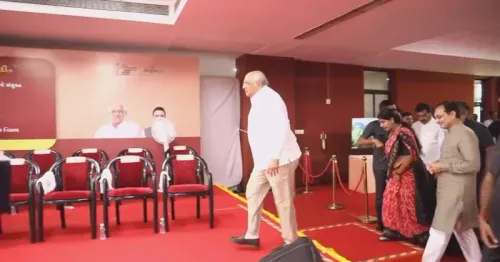
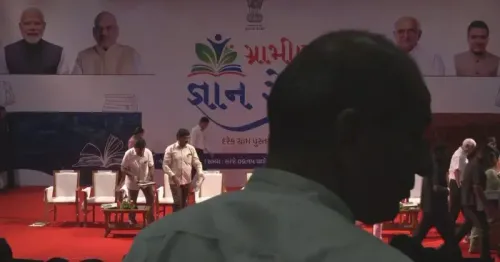
On the occasion of 25 years of public service by Prime Minister Narendra Modi, Gujarat Chief Minister Bhupendra Patel participated in the 'Seva Setu' outreach programme organised by the Gandhidham Municipal Corporation on Saturday, 26 September 2026 — taking the government's welfare machinery directly to citizens on the ground.
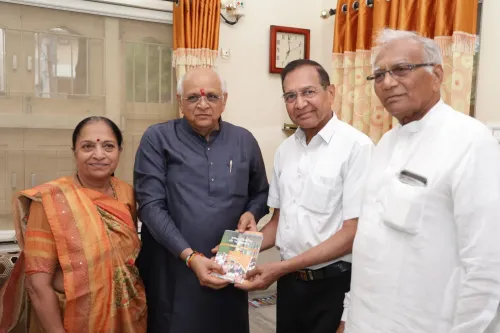
Posting in Gujarati, CM Patel wrote that he inspected various scheme stalls, held 'aatmiya samvad' — warm, direct conversations — with beneficiaries, and distributed assistive aids to citizens and divyangjan (persons with disabilities). The message was unambiguous: governance must reach the last person, on the spot, with full transparency.
What the Seva Setu camp delivered in Gandhidham
The Seva Setu model is designed as a single-window, on-site delivery mechanism — scheme stalls set up in one place so that citizens do not have to navigate multiple offices. CM Patel walked the stalls, spoke with beneficiaries directly, and oversaw the distribution of assistive devices to persons with disabilities. The format deliberately collapses the distance between policy and person.
The event was framed under the #SevaSankalpAbhiyaan banner — a campaign centred on the commitment to transparent, last-mile public service delivery across Gujarat. The Gandhidham Municipal Corporation, which administers one of Kutch district's most commercially active urban centres, hosted the camp as part of a broader civic outreach push.
Modi's 25 years — the governance arc being celebrated
Narendra Modi became Chief Minister of Gujarat in 2001, a role he held until 2014 when he assumed office as Prime Minister. The 25-year milestone being marked in 2026 encompasses both his Gujarat tenure and his years at the Centre — a run defined, in BJP's framing, by emphasis on direct benefit transfers, digital governance, and visible scheme delivery.
The 'su-shasan aur janseva' (good governance and public service) vocabulary that CM Patel invoked in his post is the same idiom that has anchored Gujarat's governance identity for over two decades. Seva Setu camps sit squarely within that tradition — governance not as paperwork, but as a field event.
Kutch's Gandhidham as the setting
Gandhidham, located in Kutch district, is a planned city built to rehabilitate Sindhi refugees after Partition and has grown into a major logistics and industrial hub. Holding a citizen-welfare camp here — where economic activity is high but social service gaps can still be acute — underlines the government's stated intent to reach every strata, not just the most visible constituencies.
The rollout of further Seva Setu camps across Gujarat municipalities is expected, with state authorities likely to review scheme implementation outcomes from each camp as part of the broader Seva Sankalp Abhiyaan cycle. When a Chief Minister walks the stalls himself, the message down the administrative chain is hard to miss.
Point of View
Field-level governance — a model the BJP has consistently used to translate welfare spending into political capital. By pegging the event to Modi's 25-year milestone, the party reinforces a continuity narrative that connects the Chief Minister's current administration to the Prime Minister's original Gujarat laboratory. The direct distribution of assistive aids to divyangjan, a group with high symbolic weight in welfare politics, signals that the Seva Sankalp Abhiyaan is not merely administrative but carefully curated for both impact and optics. Watch for whether this camp format expands systematically across Kutch and other districts, or remains episodic — that distinction will reveal how deeply the model is institutionalised versus event-driven.
NationPress
26 Sept 2026
Frequently Asked Questions
What is the Seva Setu programme in Gujarat?
Seva Setu is a government outreach initiative where scheme stalls are set up at a single on-site location, allowing citizens to access multiple welfare benefits directly without visiting different offices. It is designed to ensure last-mile, transparent delivery of government schemes.
Why was the Seva Setu camp held in Gandhidham on 26 September 2026?
The camp was organised by the Gandhidham Municipal Corporation to mark 25 years of public service by Prime Minister Narendra Modi, who began his governance career as Gujarat Chief Minister in 2001. It was held under the Seva Sankalp Abhiyaan campaign.
What did CM Bhupendra Patel do at the Gandhidham Seva Setu event?
CM Patel inspected various scheme stalls, held direct conversations with beneficiaries, and distributed assistive aids to citizens and divyangjan — persons with disabilities — at the camp.
What is the Seva Sankalp Abhiyaan?
Seva Sankalp Abhiyaan is a campaign promoting the commitment to transparent public service and last-mile delivery of government welfare schemes, particularly at the grassroots level across Gujarat.
Where is Gandhidham located and why is it significant?
Gandhidham is a planned city in Kutch district, Gujarat, originally built for Sindhi refugees post-Partition and now a major logistics and industrial hub. Holding a welfare camp there highlights the government's intent to reach both economically active and socially underserved populations.