Sonowal visits Prerana, Modi's Vadnagar school, calls it future-ready
Synopsis
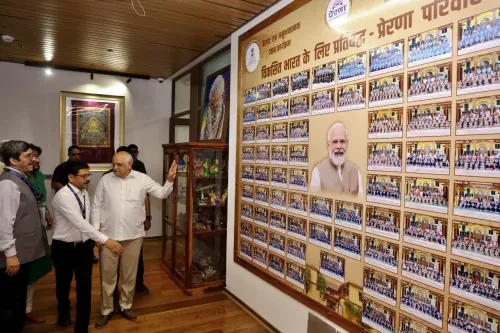
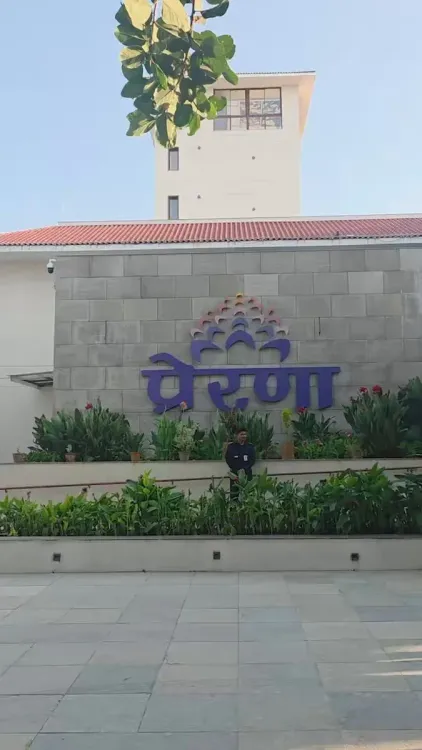
Union Minister Sarbananda Sonowal visited Prerana in Vadnagar, Gujarat — PM Modi's alma mater founded in 1888 — praising its transformation into a technology-integrated, experiential-learning institution that he called a future-ready launchpad for young India.
Key Takeaways
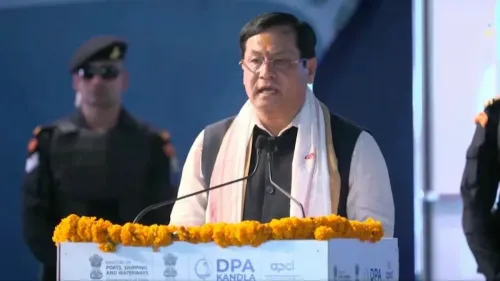
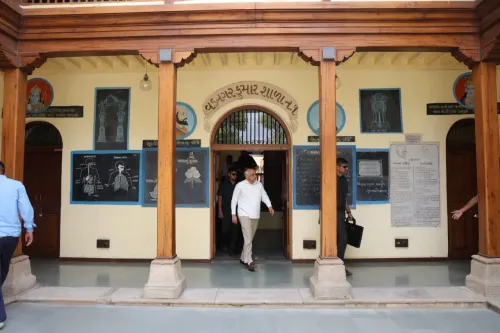
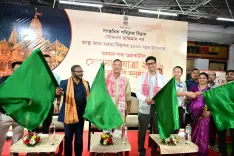
Sarbananda Sonowal , Union Minister of Ports, Shipping and Waterways, visited Prerana school in Vadnagar, Gujarat on 26 September 2026 .
The school, founded in 1888 , is where Prime Minister Narendra Modi received his early education.
Sonowal described Prerana as a 'future-ready launchpad' where heritage, technology, and experiential learning converge.
The visit aligns with the National Education Policy 2020 's emphasis on modernising legacy school infrastructure and experiential pedagogy.
The framing reflects a recurring BJP pattern of connecting Modi's biographical landmarks to national education reform narratives.
Experts and policymakers will watch for NEP-aligned upgrade programmes targeting pre- 1950 schools following such high-profile visits.
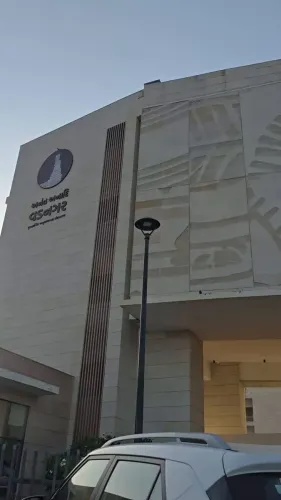
Where a Prime Minister's story began, a Union Minister now sees a blueprint for modern India. Union Minister of Ports, Shipping and Waterways Sarbananda Sonowal visited Prerana in Vadnagar, Gujarat — the school where Prime Minister Narendra Modi received his early education — and described it as a 'future-ready launchpad for young India where heritage meets technology and experiential learning.'
A school rooted in 1888, reimagined for 2026
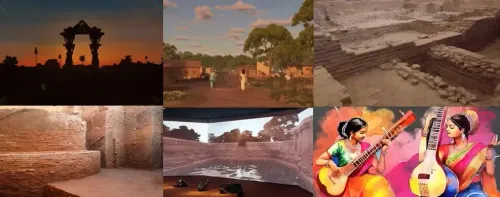
Prerana's origins trace back to 1888, making it well over a century old. Sonowal noted that the institution has transformed dramatically from those roots, evolving into a model that blends India's cultural heritage with hands-on, technology-driven pedagogy. The framing maps closely onto the National Education Policy 2020, which placed explicit emphasis on experiential learning and the modernisation of legacy school infrastructure across the country.
Vadnagar, a town in Mehsana district, Gujarat, carries significant biographical weight as the birthplace of Prime Minister Modi. The school associated with his formative years has, in recent years, become a symbolic reference point for conversations around India's educational transformation — a personal origin story repurposed as national narrative.
Heritage-meets-technology as a BJP policy motif
Sonowal's visit fits a broader, recurring pattern among senior BJP leaders: pilgrimages to institutions linked to Modi's early life, used to amplify themes of educational renewal. The message is consistent — India's oldest schools need not be its most outdated. Gujarat's state-level school modernisation drive, active since the 2010s, provided early ground for precisely this argument, and the NEP-2020 framework gave it a national canvas.
The phrase 'future-ready launchpad' signals something specific: not mere renovation, but a fundamental shift in what a legacy school is expected to deliver — digital infrastructure, project-based learning, and a curriculum that treats India's historical roots as an asset rather than a constraint.
What Prerana's reinvention signals for legacy schools
The broader question Sonowal's visit implicitly raises is replicability. India has thousands of pre-independence schools whose infrastructure and pedagogy have lagged decades behind their founding ambitions. Whether the Prerana model — or whatever policy architecture underpins it — can scale to those institutions is the real test. Watch for central or state government announcements on NEP-aligned upgrade programmes targeting pre-1950 schools, and any parliamentary or budget-session discussions on experiential learning infrastructure funding.
For now, a cabinet minister standing inside a 138-year-old school and calling it a glimpse of India's educational future is a carefully composed image — and in Indian politics, carefully composed images rarely travel alone.
Point of View
The NEP 2020, to the Prime Minister's personal origin story in order to lend it both emotional resonance and political authority. The 'heritage meets technology' framing is not incidental; it is a direct response to critiques that modernisation erases cultural continuity, positioning the BJP's education policy as an additive rather than a disruptive force. At a time when the government is pushing for measurable NEP implementation milestones, high-visibility visits by cabinet ministers to symbolic institutions serve as soft-power pressure on state governments to accelerate school upgrades. Whether the Prerana model can be institutionalised at scale, or remains a showcase exception, will ultimately determine the policy's legacy.
NationPress
26 Sept 2026
Frequently Asked Questions
What is Prerana school in Vadnagar?
Prerana is a school in Vadnagar, Mehsana district, Gujarat, founded in 1888 , where Prime Minister Narendra Modi received his early education. It has been modernised to integrate technology and experiential learning while retaining its historical character.
Why did Sarbananda Sonowal visit Vadnagar?
Sarbananda Sonowal , Union Minister of Ports, Shipping and Waterways, visited Prerana school in Vadnagar to experience its educational transformation firsthand and highlighted it as a model of heritage-meets-technology learning aligned with India's NEP 2020 goals.
What is the connection between PM Modi and Vadnagar?
Vadnagar in Gujarat's Mehsana district is the birthplace of Prime Minister Narendra Modi , and Prerana is the school where he began his formal education.
How does this visit relate to the National Education Policy 2020?
The National Education Policy 2020 prioritises experiential learning, integration of cultural heritage with technology, and modernisation of school infrastructure — exactly the qualities Sonowal highlighted at Prerana, making the visit a visible endorsement of NEP implementation.
What does 'future-ready launchpad' mean in the context of Prerana school?
Sonowal used the phrase 'future-ready launchpad' to describe Prerana's evolution from a 19th-century institution into one equipped with digital tools, hands-on pedagogy, and heritage-informed curriculum — a template for how India's oldest schools can be reimagined for 21st-century learners.