Tejashwi writes to Bihar CM on faculty shortage at 211 new degree colleges
Synopsis
Tejashwi Prasad Yadav has written to Bihar's Chief Minister demanding urgent faculty appointments at 211 new block-level degree colleges, warning that thousands of rural and low-income students are attending institutions without teachers in Urdu, Persian, Arabic, Maithili, and Sanskrit — turning a major education expansion into a hollow promise.
Key Takeaways
Tejashwi Prasad Yadav wrote to Bihar Chief Minister Nitish Kumar on 26 September 2026 demanding immediate faculty recruitment.
The letter targets 211 newly established degree colleges across Bihar's blocks, primarily serving rural and low-income students.
Vacancies highlighted cover Urdu, Persian, Arabic, Maithili , and Sanskrit — subjects central to Bihar's linguistic heritage.
Yadav demanded an official notification of sanctioned posts, a transparent recruitment drive, and interim teaching arrangements in the meantime.
The RJD leader framed the issue as one of educational access and cultural preservation, not merely employment.
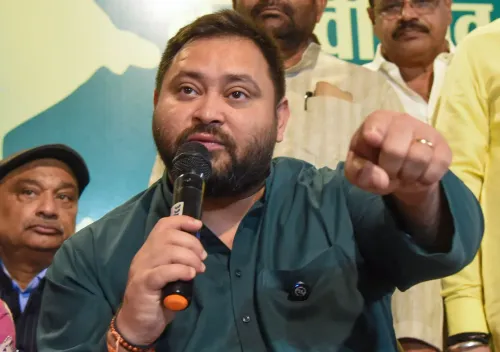
Rashtriya Janata Dal (RJD) National Working President and Leader of the Opposition in Bihar, Tejashwi Prasad Yadav, has written to Chief Minister Nitish Kumar urging immediate recruitment of Assistant Professors for 211 newly established degree colleges spread across various blocks of the state. The letter, sent on 26 September 2026, highlights a staffing vacuum at institutions primarily serving students from rural areas and economically weaker sections.
What Tejashwi Has Demanded
In his letter, Yadav called on the Bihar government to issue an official notification detailing the number of sanctioned posts without delay, so that the formal recruitment process can be set in motion. He specifically pressed for appointments in Urdu, Persian, Arabic, Maithili, and Sanskrit — disciplines he described as integral to Bihar's linguistic and cultural identity.
Yadav also demanded that interim teaching arrangements be put in place to ensure classes in these subjects are not disrupted while regular appointments are being processed. He insisted the entire recruitment drive must follow a transparent, time-bound procedure.
Why These Subjects Matter
The RJD leader argued that the absence of qualified faculty in Urdu, Persian, Arabic, Maithili, and Sanskrit goes beyond an employment shortfall — it directly affects students' right to instruction in their chosen disciplines and threatens the preservation of Bihar's rich linguistic traditions. Maithili, notably, holds constitutional recognition under the Eighth Schedule of the Indian Constitution, making its academic infrastructure a matter of policy significance.
Yadav said that students from remote and low-income backgrounds, who make up the majority of enrolments at these block-level colleges, stand to lose the most if faculty positions remain vacant.
The Broader Context
The establishment of 211 degree colleges in previously underserved blocks represents a significant expansion of Bihar's higher education footprint. However, critics argue that infrastructure without adequate faculty renders the push largely symbolic. This is not the first time Bihar's new colleges have drawn attention for staffing gaps — similar concerns were raised when earlier batches of block-level colleges were opened without full teaching complements.
The RJD's letter comes ahead of the state's academic calendar crunch, adding political pressure on the ruling National Democratic Alliance (NDA) government to demonstrate operational progress on its education expansion agenda.
What the Government Must Do Next
Yadav has urged the Bihar government to complete the following steps within a stipulated timeframe: release the official notification for sanctioned Assistant Professor posts; begin the recruitment process immediately; and arrange temporary teaching cover in the interim. The ball is now in the government's court, and its response — or silence — will likely shape opposition messaging on education in the run-up to the next electoral cycle.
Point of View
But Tejashwi's letter exposes the recurring gap between infrastructure creation and functional delivery. Opening 211 colleges without filling teaching posts — particularly in constitutionally recognised languages like Maithili — is a policy failure hiding behind a headline number. The opposition's demand for a transparent, time-bound recruitment process is reasonable, but it also serves a political purpose: putting the NDA government on the defensive over education outcomes ahead of the next electoral cycle. The real test is whether the Bihar government moves from announcement to appointment, or leaves another cohort of rural students in classrooms without teachers.
NationPress
26 Sept 2026
Frequently Asked Questions
Why has Tejashwi Prasad Yadav written to the Bihar Chief Minister?
Tejashwi Prasad Yadav wrote to Chief Minister Nitish Kumar demanding the urgent recruitment of Assistant Professors for 211 newly established degree colleges across Bihar's blocks. He flagged that vacancies in subjects such as Urdu, Maithili, Persian, Arabic, and Sanskrit are depriving students — particularly from rural and economically weaker sections — of quality instruction.
Which subjects are most affected by the faculty shortage in Bihar's new degree colleges?
The most acute vacancies are in Urdu, Persian, Arabic, Maithili, and Sanskrit. Tejashwi Yadav described these as essential to Bihar's linguistic and cultural diversity, noting that Maithili holds constitutional recognition under the Eighth Schedule of the Indian Constitution.
What specific steps has Tejashwi demanded from the Bihar government?
He has asked the government to issue an official notification listing sanctioned Assistant Professor posts, begin the recruitment process immediately through a transparent and time-bound procedure, and arrange temporary teaching cover so that classes are not disrupted until permanent appointments are made.
How many degree colleges are affected?
A total of 211 newly established degree colleges spread across various blocks of Bihar are affected. These institutions were set up to expand higher education access in previously underserved areas but are currently operating with significant faculty shortages.
Who is most at risk from the faculty shortage?
Students from rural areas and economically weaker sections are most at risk, as they form the primary enrolment base at these block-level colleges. Without qualified teachers in key subjects, their access to higher education and instruction in their chosen disciplines is directly compromised.