Joshi Launches Seva First Innovation Challenge for South India Youth
Synopsis
Union Minister Pralhad Joshi virtually launched the Seva First Innovation Challenge for South Indian students as part of the Seva Sankalp Abhiyan, marking PM Modi's 25 years of public service, calling the students' enthusiasm a message the PM himself should hear.
Key Takeaways
Union Consumer Affairs Minister Pralhad Joshi launched the Seva First Innovation Challenge on September 26, 2026 .
The challenge is part of the Seva Sankalp Abhiyan , marking PM Narendra Modi's 25 years of public service .
The launch included virtual participation from educational institutions across entire South India .
The initiative aims to help young students find innovative solutions to real-world challenges.
The challenge follows the tradition of earlier government youth innovation programmes such as the Atal Innovation Mission (launched 2016 ).
A possible extension of the challenge to other regions of India is being watched as a next step.
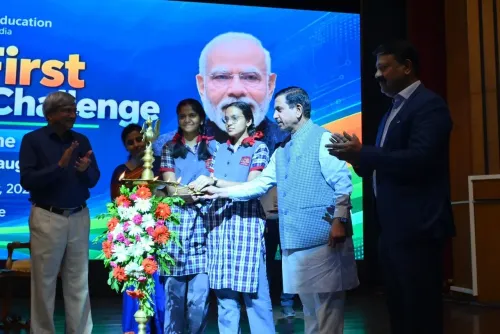
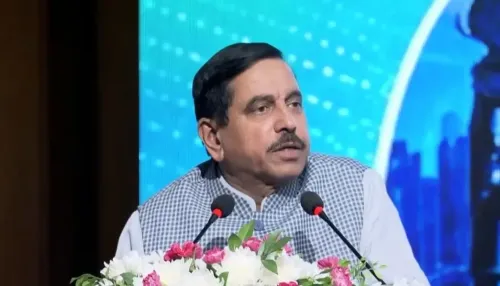
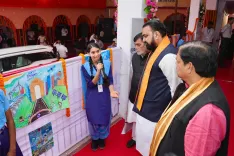
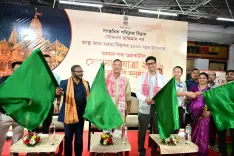
Young students across South India got their first shot at a national innovation stage on Saturday, September 26, 2026, when Union Consumer Affairs Minister Pralhad Joshi virtually launched the Seva First Innovation Challenge — an initiative designed to channel student energy into real-world problem-solving, and timed to mark Prime Minister Narendra Modi's 25 years of public service.
A challenge born from 25 years of Modi's public life
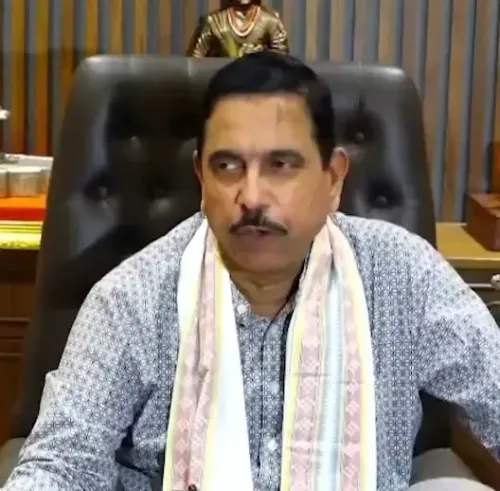
The challenge is being rolled out under the Seva Sankalp Abhiyan, a campaign framing PM Modi's silver jubilee in public service as an occasion for nationwide outreach and youth engagement. Minister Joshi, interacting virtually with students from educational institutions spread across the entire southern region, described the enthusiasm in the room — or rather, on the screens — as the clearest signal yet that this generation is ready. 'The enthusiasm shown by these kids while I interacted with them, told me to convey to Hon'ble PM that they are ready for the challenge,' he posted on X.
The virtual format allowed participation from institutions spanning multiple states across South India, giving the launch an immediate pan-regional footprint rather than a single-city rollout.
Innovation challenges as a policy playbook
This is not the first time the Indian government has leaned on student networks to find grassroots solutions. The Atal Innovation Mission, launched in 2016, established the template — pushing innovation and entrepreneurship into school and college ecosystems at scale. The Seva First Innovation Challenge fits squarely within that lineage, using a commemorative campaign as both a mobilisation hook and a delivery mechanism.
The pattern of region-wise virtual engagement — seen across earlier national student initiatives — suggests the South India rollout may be the first leg of a broader, phased expansion. What comes next will be worth watching: whether winning solutions get implementation pathways, and whether the challenge travels north, east, and west in the weeks ahead.
What the students signalled back
Joshi's framing was notably personal — he spoke not of policy metrics but of a message he wanted to carry directly to the Prime Minister. That rhetorical move, positioning young participants as senders of a signal to PM Modi, underlines the campaign's dual purpose: a genuine innovation exercise, and a political tribute structured around a milestone in one leader's career. The two goals are not mutually exclusive — and if the challenge delivers real solutions, the distinction may matter less than the results.
Twenty-five years is a long arc in any public life. The real measure of this anniversary initiative will be whether the ideas sparked in those virtual classrooms today find their way into the world tomorrow.
Point of View
' the campaign achieves a neat alignment of brand and policy. The South India launch geography is also deliberate: the BJP has invested heavily in expanding its southern footprint, and a pan-South student initiative creates organic points of contact with a demographic the party has historically found harder to reach. Whether the innovation challenge yields substantive solutions or remains primarily symbolic will determine how durably it lands in the policy record.
NationPress
26 Sept 2026
Frequently Asked Questions
What is the Seva First Innovation Challenge?
The Seva First Innovation Challenge is a student-focused initiative launched under the Seva Sankalp Abhiyan to encourage young people from educational institutions to develop innovative solutions to real-world problems, timed to mark PM Narendra Modi's 25 years of public service.
What is the Seva Sankalp Abhiyan?
The Seva Sankalp Abhiyan is a campaign marking Prime Minister Narendra Modi's 25 years of public service, combining service-themed outreach with youth engagement programmes across India.
Which states are included in the South India launch of the challenge?
The launch covered educational institutions across the entire South India region, though the post does not specify individual states by name.
How is the Seva First Innovation Challenge different from older government innovation schemes?
The challenge builds on the foundation of programmes like the Atal Innovation Mission launched in 2016, but is tied specifically to the Seva Sankalp Abhiyan commemorative campaign and uses a virtual format for regional engagement.
Will the Seva First Innovation Challenge expand to other parts of India?
That is a key question to watch — the South India rollout is positioned as the first regional leg, and an extension to other regions is widely anticipated, though no formal announcement has been made yet.