CM Bhupendra Patel marks Modi's 25 years in public service
Synopsis
On Independence Day 2026, Gujarat CM Bhupendra Patel marked 25 years since Narendra Modi became Gujarat Chief Minister on 7 October 2001, invoking the 'Vikas bhi, Virasat bhi' philosophy and framing Modi's leadership arc as a model of good governance for the nation.
Key Takeaways
Gujarat CM Bhupendra Patel posted a tribute to PM Narendra Modi on Independence Day, 15 August 2026 .
Modi was sworn in as Gujarat Chief Minister on 7 October 2001 , making 2026 the year his public service arc completes 25 years .
Patel invoked the phrase 'Vikas bhi, Virasat bhi' — 'Development as well as Heritage' — as the defining philosophy of Modi's leadership.
The post frames Gujarat's governance model as the origin point of national policy directions pursued after Modi became Prime Minister in 2014 .
CM Patel described Modi's leadership as an 'outstanding example of good governance' for the entire country.
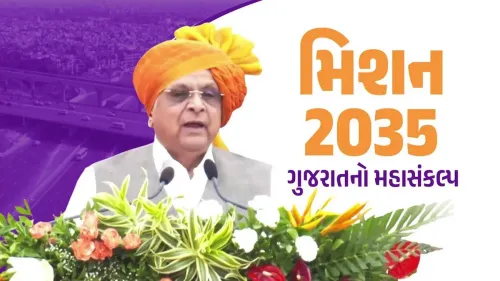
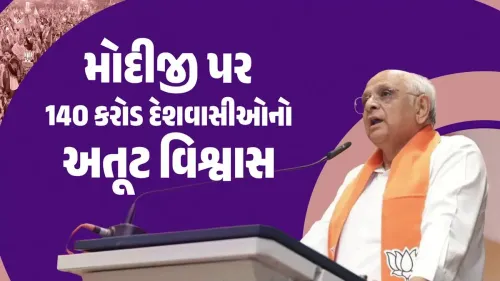
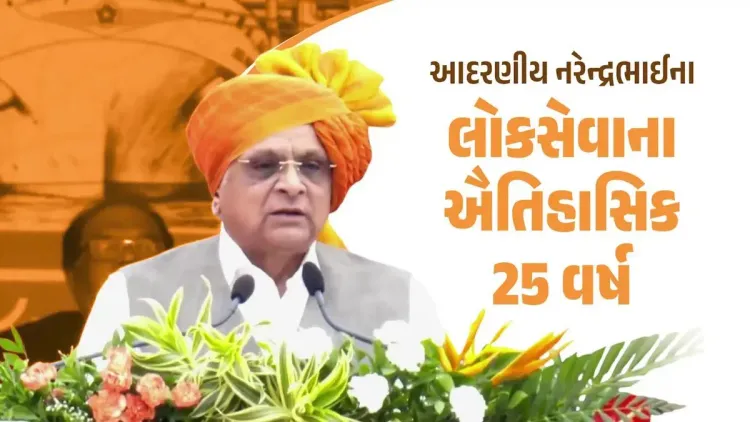
On Independence Day, 15 August 2026, Gujarat Chief Minister Bhupendra Patel paid tribute to Prime Minister Narendra Modi, marking a milestone that stretches back a quarter-century — to the day a then-unknown BJP administrator walked into Gandhinagar's seat of power and rewrote what Indian state governance could look like.
Writing in Gujarati, CM Patel invoked the phrase 'Vikas bhi, Virasat bhi' ('Development as well as Heritage') — the dual-track philosophy that has defined the Modi era. He noted that Modi assumed charge as Chief Minister of Gujarat on 7 October 2001, and that 25 historic years of national service are now being completed under his 'unwavering and fearless leadership.'
From Gandhinagar to New Delhi: the arc of 25 years
Narendra Modi was sworn in as Gujarat's Chief Minister on 7 October 2001, stepping into office in extraordinary circumstances — just weeks after a devastating earthquake had struck the state. What followed was a decade-plus of governance in Gujarat that became a reference point in Indian political discourse: infrastructure buildout, investor summits, and an administrative style that prioritised delivery metrics over coalition arithmetic.
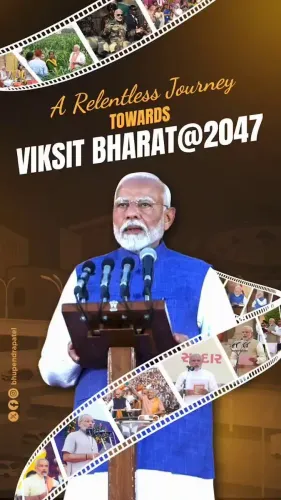
That model — often labelled the 'Gujarat model' — travelled to New Delhi when Modi became Prime Minister in 2014. Schemes designed or piloted at the state level found national scale. The 'Vikas bhi, Virasat bhi' framing, blending economic ambition with cultural pride, became a recurring motif in the Union government's communications, from heritage corridor projects to digital infrastructure drives.
Why Independence Day is the chosen stage
CM Patel's choice to post this tribute on 15 August is deliberate. Independence Day in India is not merely ceremonial — it is the political calendar's most resonant backdrop, when governance narratives are measured against national aspiration. Framing 25 years of Modi's leadership against that backdrop amplifies the tribute beyond party loyalty into the register of nation-building.
The post lands at a moment when the BJP is consolidating a political identity that ties state-level governance successes directly to the Prime Minister's personal brand — a through-line from Gujarat 2001 to India 2026. For CM Patel, himself a Modi loyalist who succeeded him in the chief minister's chair, the tribute also reinforces continuity: the same governance philosophy, the same state, a new steward.
Twenty-five years is a long arc in Indian politics. How the next chapter is written — in policy, in elections, in the broader 'Vikas bhi, Virasat bhi' ledger — is the question Independence Day 2026 quietly puts on the table.
Point of View
Using Independence Day as the highest-visibility stage available. By anchoring the '25 years' narrative to 7 October 2001 — Modi's Gujarat swearing-in — the party draws a direct line from state-level administration to national transformation, reinforcing the idea that India's current policy direction is the logical culmination of a Gujarat experiment. For Patel, who occupies the very chair Modi once held, the tribute also signals institutional continuity and personal loyalty — both valuable political currencies heading into any future electoral cycle.
NationPress
15 Aug 2026
Frequently Asked Questions
When did Narendra Modi become Chief Minister of Gujarat?
Narendra Modi was sworn in as Chief Minister of Gujarat on 7 October 2001 , a position he held until he became Prime Minister of India in 2014.
What does 'Vikas bhi, Virasat bhi' mean?
'Vikas bhi, Virasat bhi' translates to 'Development as well as Heritage' in English. It is a phrase associated with PM Modi's governance philosophy, emphasising simultaneous economic progress and cultural preservation.
Why did CM Bhupendra Patel post a tribute to Modi on Independence Day 2026?
Gujarat CM Bhupendra Patel used Independence Day 2026 to mark the completion of 25 years of PM Modi's public service, counting from his assumption of the Gujarat chief ministership on 7 October 2001 .
Who is Bhupendra Patel?
Bhupendra Patel is the current Chief Minister of Gujarat and a senior BJP leader. He succeeded Narendra Modi's political lineage in the state and is known as a close loyalist of PM Modi.
What is the 'Gujarat model' of governance?
The 'Gujarat model' refers to the governance approach developed under Modi's chief ministership in Gujarat from 2001 , characterised by infrastructure development, investor-friendly policies, and administrative efficiency — later scaled nationally after 2014 .