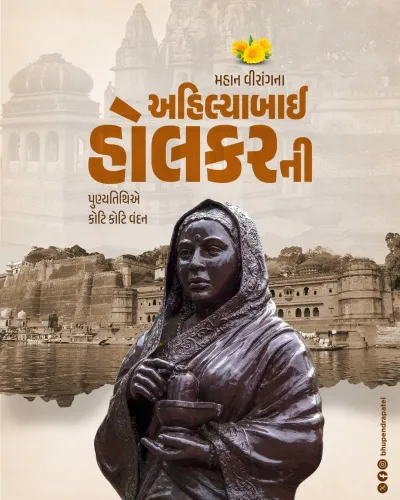
CM Bhupendra Patel pays tribute to Ahilyabai Holkar on her punyatithi
Synopsis
Gujarat Chief Minister Bhupendra Patel marked the punyatithi of 18th-century Holkar ruler Ahilyabai Holkar on August 13, 2026, praising her restoration of pilgrimage sites, public welfare works, and role as a symbol of women's leadership in Indian history.
Key Takeaways
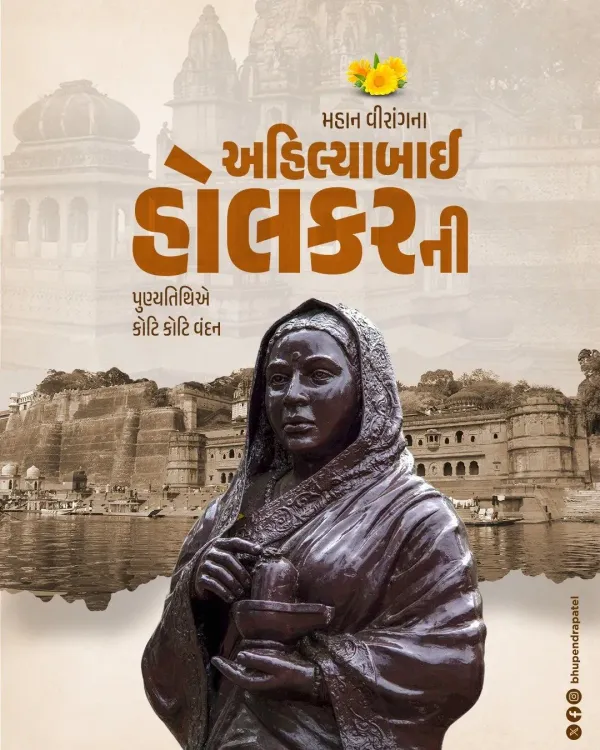
Gujarat CM Bhupendra Patel paid tribute to Maharani Ahilyabai Holkar on her death anniversary, August 13, 2026 .
Ahilyabai Holkar ruled the Holkar dynasty of Indore from 1767 to 1795 , one of India's most celebrated female rulers.
She is credited with restoring temples and ghats at Varanasi , Dwarka , and Rameshwaram , among other pilgrimage sites.
CM Patel described her as a symbol of narishakti and praised her governance, justice, and religious devotion.
BJP leaders across India routinely observe her August 13 punyatithi as part of a broader emphasis on India's civilizational heritage.
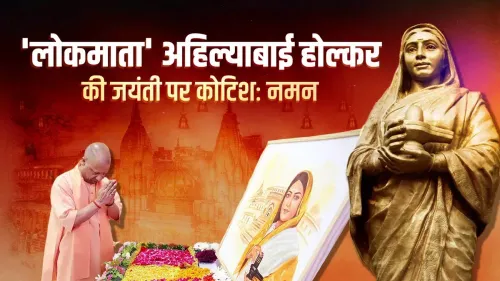
On the death anniversary of one of India's most revered 18th-century rulers, Gujarat Chief Minister Bhupendra Patel offered a heartfelt tribute to Maharani Ahilyabai Holkar on Thursday, August 13, 2026, honouring her legacy of temple restoration, public welfare, and women's empowerment.
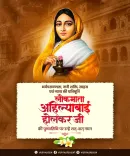
Posting in Gujarati, CM Patel described Ahilyabai as 'punyashlok' — a soul of sacred merit — and as a symbol of 'narishakti', or women's power. He wrote of her role in glorifying Sanatan Dharma and called her contributions to India's cultural heritage 'unforgettable,' citing the restoration of sacred pilgrimage sites, the construction of ghats, and wide-ranging public welfare works across the country.
The queen who rebuilt India's sacred landscape
Ahilyabai Holkar ruled the Holkar dynasty of Indore from 1767 to 1795 — nearly three decades of governance that left a physical imprint on India's religious geography. She funded the restoration of temples and ghats at major pilgrimage centres including Varanasi, Dwarka, and Rameshwaram, sites that remain central to Hindu worship today. Her reign is remembered not just for piety, but for a sharp administrative hand: justice, order, and a consistent focus on the welfare of ordinary people.
A BJP pattern of civilizational remembrance
CM Patel's tribute is part of a well-established commemorative tradition among BJP-governed states, where Ahilyabai Holkar's August 13 punyatithi draws formal acknowledgement from senior leaders. The invocation of her legacy — temple conservation, dharma-rooted governance, and female leadership — fits squarely within a broader political emphasis on India's pre-colonial civilizational heritage. For a party that has made tirtha site conservation and cultural restoration central to its public identity, Ahilyabai represents a historical anchor: a woman ruler who embodied those values centuries before they became policy debates.
CM Patel specifically highlighted her 'good governance, love of justice, religious devotion, and spirit of women's empowerment' as ideals for all — a framing that bridges the historical and the contemporary without announcing any specific new initiative.
Ahilyabai Holkar died on August 13, 1795. More than two centuries later, her ghats still stand at the river's edge, and her name still draws salutes from the highest offices of Indian public life. That durability is the tribute itself.
Point of View
These annual commemorations serve as soft ideological signalling, normalising the link between pre-colonial dharmic governance and present-day BJP policy priorities. Whether that framing translates into concrete heritage or women's welfare outcomes remains the more consequential question.
NationPress
13 Aug 2026
Frequently Asked Questions
Who was Ahilyabai Holkar?
Ahilyabai Holkar was an 18th-century ruler of the Holkar dynasty of Indore who governed from 1767 to 1795. She is celebrated for restoring temples and ghats at major Hindu pilgrimage sites including Varanasi, Dwarka, and Rameshwaram, and for her just and welfare-oriented administration.
When is Ahilyabai Holkar's punyatithi observed?
Ahilyabai Holkar's punyatithi — her death anniversary — is observed on August 13 each year. She died on August 13, 1795.
Why did CM Bhupendra Patel pay tribute to Ahilyabai Holkar?
Gujarat Chief Minister Bhupendra Patel paid tribute on her August 13 punyatithi, honouring her legacy of temple restoration, public welfare, good governance, and women's empowerment — values he described as ideals for all.
What temples or ghats did Ahilyabai Holkar restore?
Ahilyabai Holkar funded the restoration of temples and ghats at several major pilgrimage centres across India, including Varanasi, Dwarka, and Rameshwaram, leaving a lasting imprint on India's religious heritage infrastructure.
Why do BJP leaders frequently tribute Ahilyabai Holkar?
BJP leaders regularly invoke Ahilyabai Holkar's legacy because she represents a historical example of dharma-rooted governance, temple conservation, and female leadership — themes central to the party's emphasis on India's civilizational and cultural heritage.