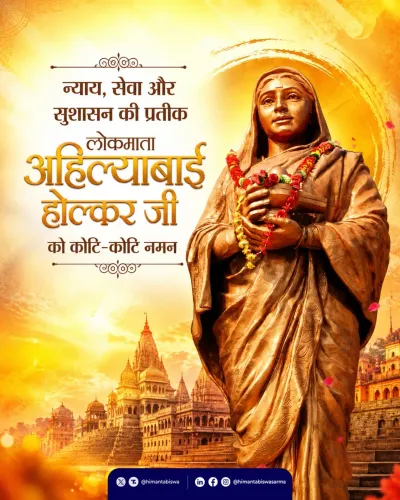
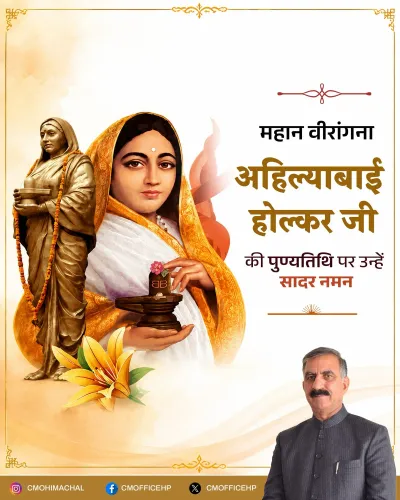
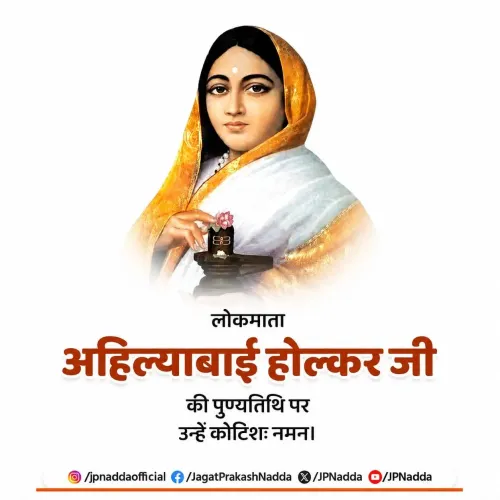
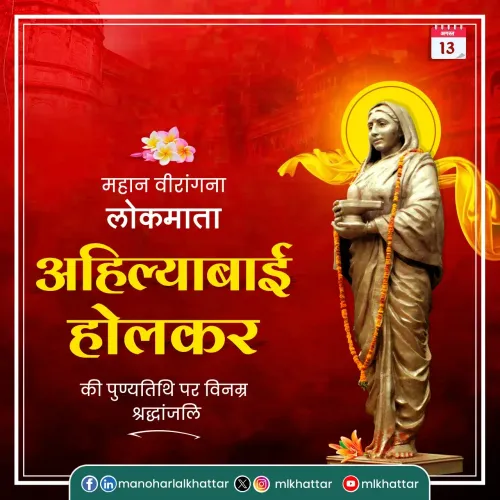
CM Samrat Choudhary pays tribute to Ahilyabai Holkar on death anniversary
Synopsis
Bihar Chief Minister Samrat Choudhary marked the death anniversary of 18th-century Malwa ruler Ahilyabai Holkar on 13 August, honouring her as an enduring symbol of women's power, just governance, and public welfare in a post on X.
Key Takeaways
Bihar CM Samrat Choudhary paid tribute to Ahilyabai Holkar on her death anniversary, 13 August 2026 .
He described her as an unmatched example of women's power (Nari Shakti), good governance, and public welfare .
Ahilyabai Holkar was an 18th-century ruler of the Malwa kingdom , celebrated for temples, ghats, roads, and welfare works across central India.
Her anniversary draws tributes from leaders across parties, reflecting her status as a cross-partisan historical icon.
Invoking Ahilyabai aligns with a broader BJP narrative linking India's cultural heritage to contemporary women's empowerment themes.
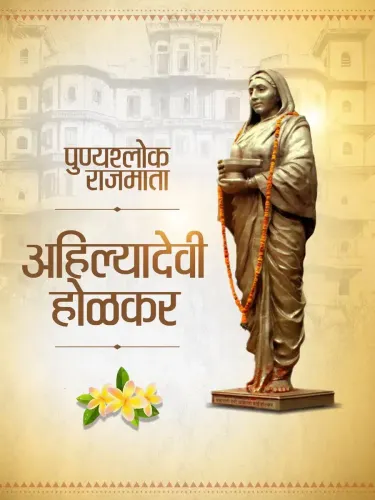
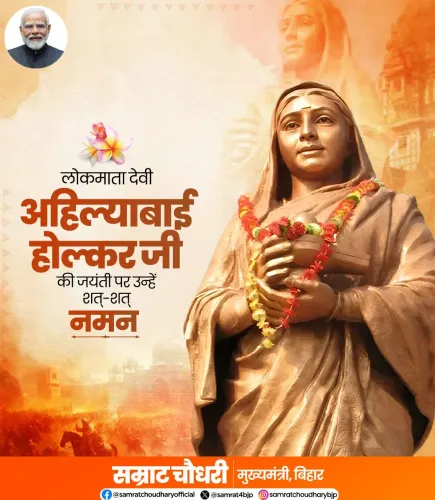
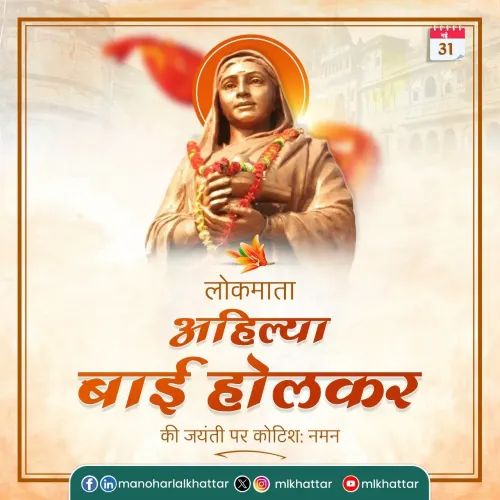
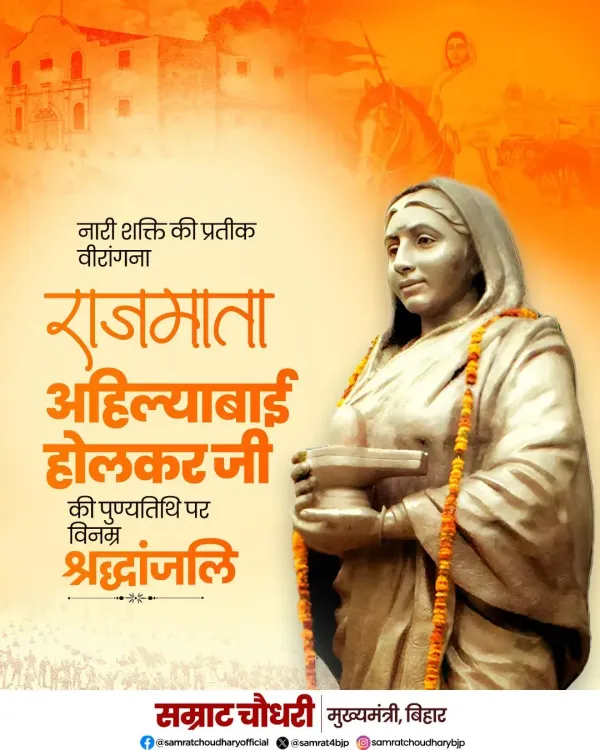
On the death anniversary of one of India's most celebrated historical rulers, Bihar Chief Minister Samrat Choudhary on Thursday, 13 August paid homage to Veerangana Rajmata Ahilyabai Holkar, calling her an unparalleled example of women's power, good governance, and public welfare.
Posting in Hindi, CM Choudhary wrote: 'नारी शक्ति, सुशासन और लोककल्याण की अद्वितीय मिसाल' — 'an unmatched symbol of women's power, good governance, and public welfare' — and offered his 'humble tribute' (विनम्र श्रद्धांजलि) to the 18th-century queen, adding that her sacrifice, service, and dedication to the people 'will continue to inspire society forever.'
Who was Ahilyabai Holkar?
Ahilyabai Holkar ruled the Malwa kingdom in central India during the 18th century and is remembered as one of the subcontinent's most consequential pre-colonial administrators. She commissioned temples, ghats, roads, and rest houses across a vast geography — many of which still stand — and governed with a reputation for direct public access and impartial justice.
Her death anniversary falls on 13 August, and it draws tributes from political leaders across the spectrum every year. The consistency of that pattern says something: Ahilyabai sits in a rare category of historical figures claimed by no single party, her legacy broad enough to anchor conversations about women's leadership, cultural heritage, and the idea of a welfare state rooted in Indian tradition.
Why her legacy resonates in today's political discourse
Invoking Ahilyabai Holkar has become a fixture in contemporary political messaging on women's empowerment and pre-colonial governance — a shorthand for the argument that India's tradition of strong women leaders predates the modern era by centuries. For BJP leaders in particular, her story fits neatly into a broader cultural-heritage narrative that the party has championed at both state and national levels.
CM Choudhary's tribute, brief but pointed, places him within that tradition — and signals to Bihar's electorate that the values of service and welfare she embodied remain live political currency.
Three centuries on, a queen from Malwa still shapes the vocabulary of Indian politics. That is a legacy few rulers anywhere in the world can match.
Point of View
Identity, and historical pride are live electoral forces. The consistency of such tributes, year after year, also reflects how the BJP has systematically built a calendar of historical commemorations that keeps heritage themes in circulation between election cycles.
NationPress
27 Sept 2026
Frequently Asked Questions
When is Ahilyabai Holkar's death anniversary?
Ahilyabai Holkar's death anniversary falls on 13 August each year. She was an 18th-century ruler of the Malwa kingdom in central India, and the day is widely observed with tributes from political and cultural figures across India.
Who was Ahilyabai Holkar and why is she famous?
Ahilyabai Holkar was an 18th-century queen of the Malwa kingdom in central India. She is celebrated for her administrative reforms, extensive public works — including temples, ghats, and roads — and her reputation for just, welfare-oriented governance that benefited ordinary people across a wide region.
What did Bihar CM Samrat Choudhary say about Ahilyabai Holkar?
Bihar CM Samrat Choudhary called Ahilyabai Holkar 'an unmatched symbol of women's power, good governance, and public welfare' and offered his humble tribute on her death anniversary, saying her dedication to service 'will continue to inspire society forever.'
Why do Indian politicians pay tribute to Ahilyabai Holkar?
Ahilyabai Holkar is regarded as a pan-Indian historical icon whose legacy spans women's leadership, welfare governance, and cultural heritage — themes that resonate across party lines. Her anniversary on 13 August has become a regular occasion for political tributes, particularly from leaders emphasising India's tradition of strong women rulers.
What is the significance of Nari Shakti in Indian political discourse?
'Nari Shakti' — women's power — is a recurring theme in Indian political messaging, used to highlight women's leadership in both historical and contemporary contexts. Figures like Ahilyabai Holkar are frequently invoked as evidence that India's tradition of empowered women leaders predates the modern era by centuries.