CM Chandrababu Reviews Net Zero Homes in Kuppam
Synopsis
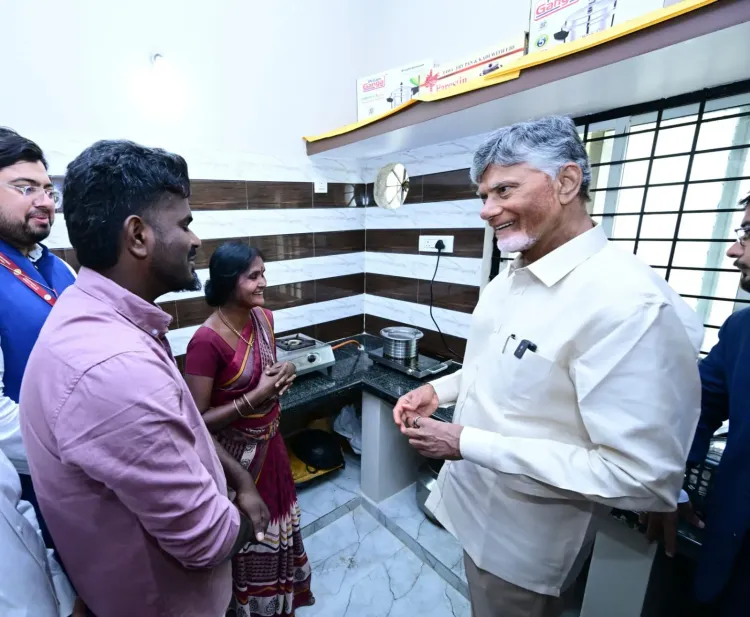
Chief Minister Chandrababu Naidu inspected net-zero model households in Nalgampalli during a Kuppam constituency tour on 4 July 2026, reviewing solar rooftops, water conservation and composting systems, and ordered officials to scale the model across Kuppam, targeting over 54,000 SC, ST, BC and OC families.
Key Takeaways
CM Nara Chandrababu Naidu visited net-zero homes in Nalgampalli, Kuppam on 4 July 2026 .
Installations reviewed include solar rooftop panels, solar induction cooktops, water conservation units, kitchen composting, and terrace gardens.
Officials reported that the rooftop solar expansion will benefit 7,489 SC/ST families , 39,215 BC families , and 7,381 OC families in Kuppam.
Naidu directed that the Nalgampalli model be used as a case study to extend net-zero practices across the entire Kuppam constituency.
District Collector Sumit Kumar and other officials participated in the inspection.
The initiative builds on Andhra Pradesh's earlier solar policy lineage and targets marginalised communities through subsidised green-energy installations.
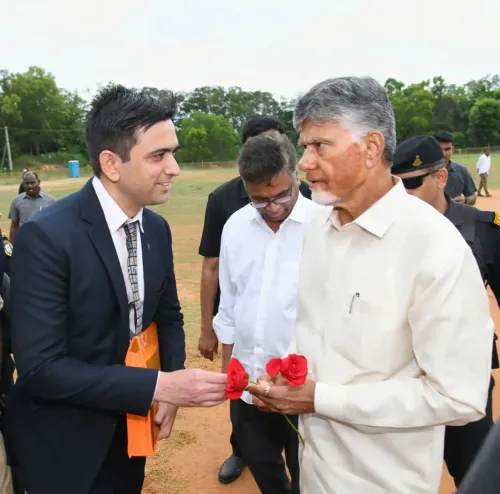
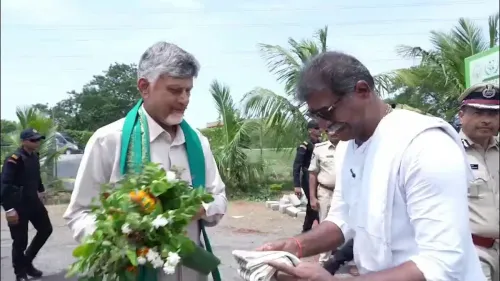
Chief Minister Nara Chandrababu Naidu on Saturday, 4 July 2026, visited net-zero model households in Nalgampalli as part of a tour of the Kuppam Assembly constituency in Chittoor district, Andhra Pradesh. The Chief Minister's Office of Andhra Pradesh announced that Naidu personally inspected homes implementing the state's net-zero living policy, examining installations that include solar rooftop panels, solar induction cooktops, water conservation systems, kitchen composting units, and terrace gardens.
Context
During the visit, officials briefed CM Naidu on the scope of the programme in Kuppam. According to the Chief Minister's Office, the rooftop solar expansion is designed to benefit 7,489 SC and ST families, 39,215 BC families, and 7,381 OC families across the constituency. District Collector Sumit Kumar and other senior officials accompanied the Chief Minister during the inspection.
Naidu directed officials to treat the Nalgampalli model as a case study and scale the net-zero approach across the entirety of Kuppam. The instruction signals an intent to move the programme from a localised demonstration to a constituency-wide rollout.
Policy Backdrop
The net-zero household initiative is part of Andhra Pradesh's broader push toward decentralised renewable energy and sustainable living at the grassroots level. The policy combines rooftop solar generation, organic waste management through composting, micro-level water conservation, and food production via terrace gardening — all within a single household framework.
The current drive builds on a lineage of solar policy in the state. Andhra Pradesh's Solar Policy of 2015, introduced during Naidu's earlier tenure, had set targets for grid-connected rooftop solar and decentralised renewable installations across rural areas. The present net-zero model extends that ambition into constituency-level demonstration projects with an explicit focus on marginalised communities.
Stakeholders and Impact
The programme's beneficiary structure prioritises Scheduled Caste, Scheduled Tribe, and Backward Class households, reflecting a deliberate effort to direct green energy subsidies toward economically vulnerable sections. Subsidised rooftop solar installations reduce household electricity bills while contributing to the state's carbon reduction targets.
Beyond energy, the integrated model — combining composting, water conservation, and terrace gardening — is designed to lower household expenditure on food and water while reducing organic waste entering municipal systems. The Nalgampalli cluster now serves as a replicable template for other segments of the constituency.
What's Next
Officials are expected to issue district-level rollout orders extending the Nalgampalli net-zero model to other villages and urban pockets within Kuppam. Budget allocations and tender announcements for scaled rooftop solar procurement will be closely watched as indicators of the pace of expansion.
If the Kuppam rollout proceeds as directed, the model could inform similar constituency-level green-living programmes across Andhra Pradesh, positioning the state as a reference point for community-scale net-zero initiatives in India's southern region.
Point of View
The government is effectively building a proof-of-concept that can be cited in future budget and scheme announcements. The explicit targeting of SC, ST and BC households signals an attempt to align environmental policy with social equity messaging, a combination that carries electoral as well as administrative weight. If the Kuppam model is formally institutionalised, it could set a precedent for constituency-level net-zero mandates elsewhere in Andhra Pradesh.
NationPress
4 Jul 2026
Frequently Asked Questions
What is the net zero policy in Andhra Pradesh?
The net-zero policy in Andhra Pradesh promotes carbon-neutral households by combining solar rooftop panels, solar induction cooktops, water conservation systems, kitchen composting, and terrace gardening in individual homes.
What did CM Chandrababu Naidu do in Kuppam on 4 July 2026?
CM Chandrababu Naidu visited net-zero model homes in Nalgampalli during a Kuppam constituency tour, reviewed green-living installations, and directed officials to scale the Nalgampalli model across the entire Kuppam constituency.
How many families will benefit from the Kuppam rooftop solar scheme?
According to officials, the rooftop solar expansion in Kuppam is set to benefit 7,489 SC and ST families, 39,215 BC families, and 7,381 OC families.
What is the Nalgampalli net zero model?
The Nalgampalli net-zero model is a cluster of households in Kuppam constituency that have adopted an integrated package of solar energy, water conservation, composting and terrace gardening, now being used as a template for wider replication.
What is Andhra Pradesh's history with solar energy policy?
Andhra Pradesh introduced a Solar Policy in 2015 under CM Naidu's earlier tenure, setting targets for grid-connected rooftop solar and decentralised rural renewable installations. The current net-zero initiative extends that policy into community-level demonstration projects.