CM Samrat Chaudhary Inspects Nitish Setu in Vaishali
Synopsis
Bihar Chief Minister Samrat Chaudhary inspected the six-lane Nitish Setu bridge in Vaishali on 18 November 2026 and reviewed preparations for Prime Minister Narendra Modi's proposed programme in the state on 21 November 2026.
Key Takeaways
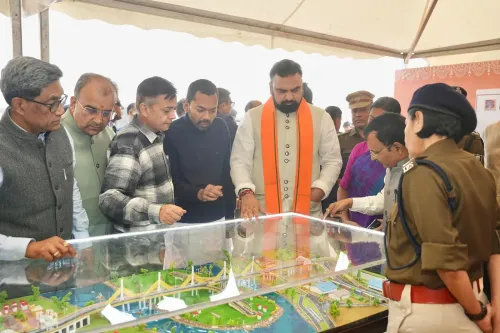
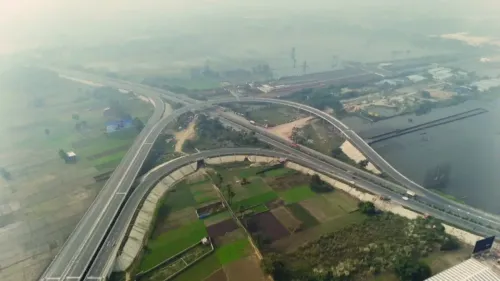
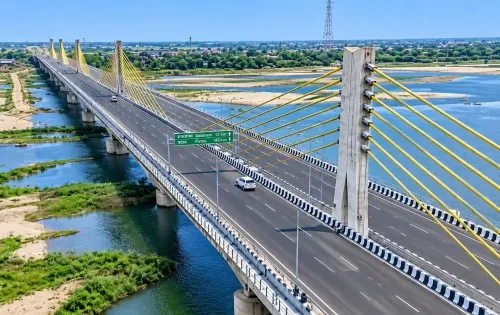
CM Samrat Chaudhary personally visited the Kachhi Dargah–Rajapakkar–Bidupur six-lane bridge (Nitish Setu) in Vaishali on 18 November 2026 .
The bridge is named Nitish Setu after former Bihar CM Nitish Kumar , reflecting continuity in the state's infrastructure programme.
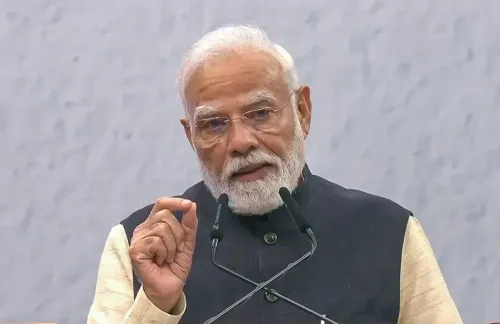
Prime Minister Narendra Modi has a proposed programme in Bihar on 21 November 2026 ; the inspection directly reviewed preparations for it.
The six-lane crossing in Vaishali district is designed to improve connectivity across the river system north of Patna.
Bihar has a consistent pattern of scheduling high-profile central government visits around major connectivity project milestones.
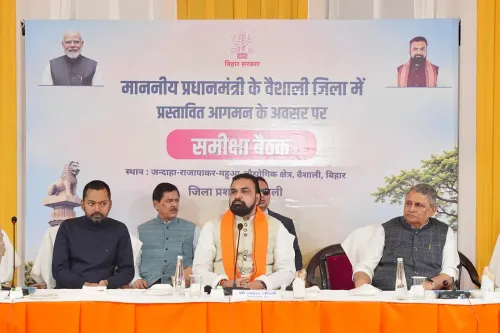
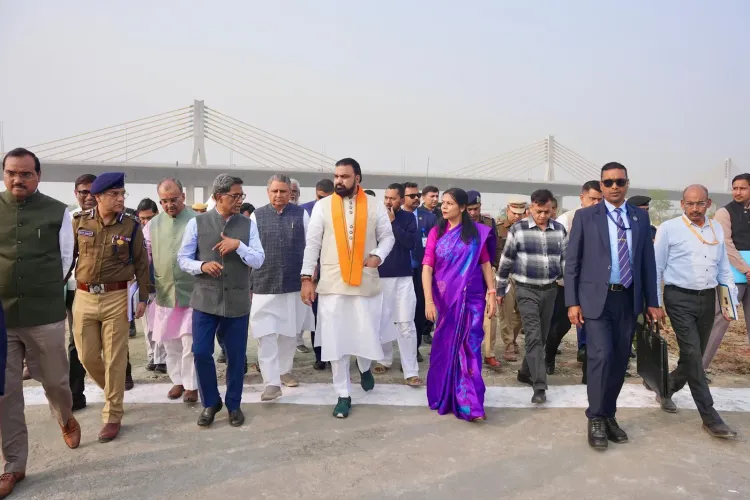
Three days before Prime Minister Narendra Modi is due in Bihar, the state's Chief Minister made a pointed show of readiness. Chief Minister Samrat Chaudhary on Wednesday, 18 November 2026, personally inspected the Kachhi Dargah–Rajapakkar–Bidupur six-lane bridge — officially named Nitish Setu — in Vaishali district, taking stock of construction progress and reviewing preparations for the Prime Minister's proposed visit on 21 November 2026.
A Six-Lane Span Named for a Veteran Builder
The bridge carries the name of Nitish Kumar, Bihar's long-serving former Chief Minister who put large-scale road and river-crossing projects at the centre of the state's revival story from the mid-2000s onward. Naming Nitish Setu after him signals continuity in Bihar's infrastructure ambitions — the state has steadily moved from two-lane ferries and narrow crossings to multi-lane corridors capable of handling modern freight and commuter volumes.
Vaishali district, historically significant and densely populated, sits across the Gandak river system north of Patna. A six-lane crossing at this location would meaningfully cut travel time for thousands of daily commuters and ease the movement of agricultural produce from the region's fertile hinterland.
Modi's 21 November Programme — What the Inspection Signals
Senior state leadership conducting site inspections immediately before a Prime Ministerial visit is standard Bihar protocol — but the Chief Minister showing up personally at a bridge of this scale suggests the structure may feature in the 21 November programme, whether as a formal inauguration or as a backdrop for a broader infrastructure showcase. The post from the Chief Minister's Office of Bihar made clear that reviewing PM Modi's 'proposed programme' was an explicit goal of the day's inspection.
Bihar has routinely used central government visits to unveil or push forward flagship connectivity projects, using the moment to draw national attention to the state's infrastructure gap and the investment required to close it.
Infrastructure as Bihar's Political Currency
Bridge and highway projects occupy an outsized place in Bihar's political economy. The state's flat, river-laced geography means that connectivity — not just electricity or schools — is the visible metric by which governments are judged. A six-lane river bridge is not routine ribbon-cutting; it is a statement about where the state intends to go. With assembly-cycle calculations always in the background, the timing of a Prime Ministerial presence at a project named for a sitting NDA ally carries weight beyond the concrete and steel.
Whether 21 November brings a formal inauguration, a foundation-stone ceremony for a companion project, or simply a high-profile inspection, the Bihar government has signalled it will be ready — and that Nitish Setu will be centre stage.
Point of View
Every bridge inaugurated is a data point in the argument that NDA governance transforms the state. The 21 November date will confirm whether the project is ready for a formal launch or whether it remains a work-in-progress presented as near-complete.
NationPress
18 Nov 2026
Frequently Asked Questions
What is Nitish Setu in Bihar?
Nitish Setu is the official name of the Kachhi Dargah–Rajapakkar–Bidupur six-lane bridge in Vaishali district , Bihar. It is named after former Bihar Chief Minister Nitish Kumar and is designed to improve river-crossing connectivity in the region.
Why did CM Samrat Chaudhary inspect the Nitish Setu bridge?
CM Samrat Chaudhary inspected the bridge on 18 November 2026 to assess its progress and review preparations for Prime Minister Narendra Modi's proposed programme in Bihar on 21 November 2026 , which may include an event related to the bridge.
Where is Vaishali district in Bihar?
Vaishali is a district in central-north Bihar, located north of Patna across the Gandak river system. It is historically significant and densely populated, making a six-lane bridge there a major connectivity upgrade.
Is PM Modi visiting Bihar on 21 November 2026?
According to the Chief Minister's Office of Bihar , Prime Minister Narendra Modi has a proposed programme in Bihar on 21 November 2026 . The exact nature of the event — whether an inauguration or another function — has not been officially confirmed.
Why is Bihar focusing on six-lane bridges?
Bihar's flat, river-laced geography makes river crossings critical to economic activity. The state has prioritised multi-lane bridge and road projects since the mid-2000s to reduce travel times, support agricultural trade, and close its infrastructure gap with other Indian states.