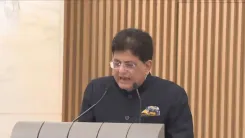
CM Shivakumar Launches Bengaluru Rail Bridge & Infra Works

Synopsis
Chief Minister D.K. Shivakumar inaugurated the Jakkur Railway Overbridge and a Geddalahalli stormwater drain, while laying foundation stones for the IOC Junction rotary flyover and the Baiyappanahalli Railway Overbridge expansion — four infrastructure interventions targeting Bengaluru's traffic and flooding pressure points.
Key Takeaways
Jakkur Railway Overbridge was inaugurated by CM D.K.
Shivakumar on 18 November 2026 , eliminating a key level-crossing bottleneck in northern Bengaluru.
A stormwater drain at Geddalahalli , built perpendicular to railway tracks, was also inaugurated to tackle monsoon flooding in that corridor.
Foundation stones were laid for a Rotary Overbridge at IOC Junction on Maruti Sevanagara Main Road in eastern Bengaluru.
The Baiyappanahalli Railway Overbridge Expansion — a composite scheme — also received a formal groundbreaking at the same event.
The projects continue Karnataka's multi-decade push for grade-separated rail crossings to ease traffic congestion and reduce flood vulnerability across Bengaluru.
Four infrastructure projects in one sweep — Bengaluru got a new dimension in urban development on Wednesday, 18 November 2026, as the Chief Minister's Office of Karnataka announced that Chief Minister D.K. Shivakumar inaugurated and laid foundation stones for a cluster of railway overbridge and stormwater works across the city.
Jakkur overbridge opens, Geddalahalli drain inaugurated
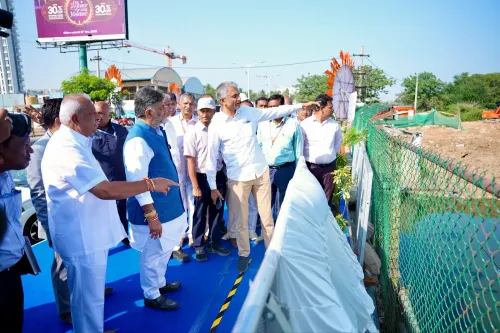
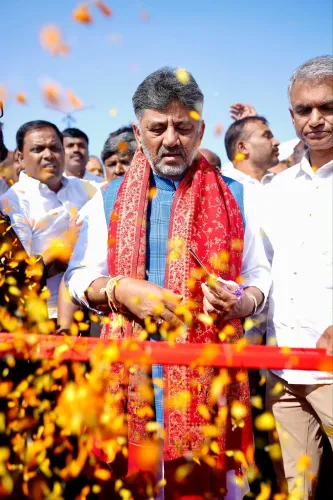
The centrepiece of the event was the Jakkur Railway Overbridge — a grade-separated crossing in northern Bengaluru that eliminates a level-crossing bottleneck long blamed for traffic snarls in that corridor. Alongside it, a stormwater drain constructed perpendicular to the railway tracks at Geddalahalli was inaugurated, addressing the chronic monsoon flooding that has repeatedly inundated that stretch of the city's rail-side neighbourhoods.
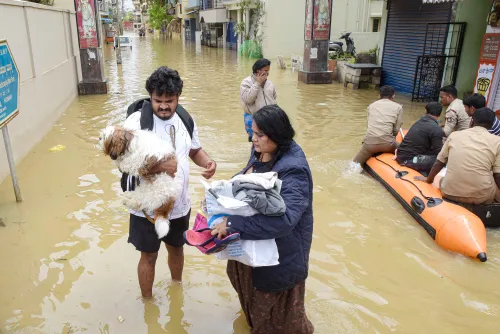
Bengaluru's vulnerability to waterlogging at railway underpasses and low-lying crossings has made stormwater drainage a live political and administrative priority, particularly after successive flooding events during the monsoon season. The Geddalahalli drain represents the state's attempt to tackle that vulnerability structurally rather than reactively.
Rotary flyover at IOC Junction and Baiyappanahalli expansion get the go-ahead
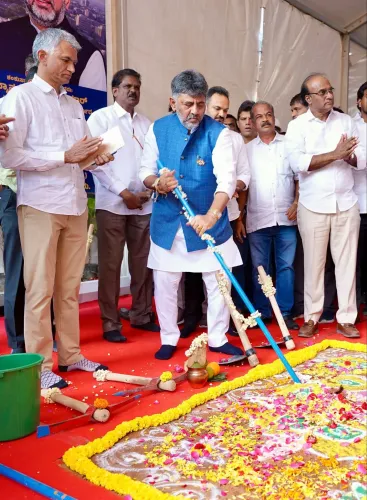
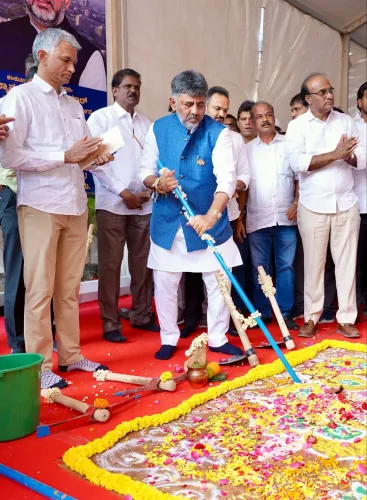
CM Shivakumar also performed the shankusthapane (foundation-stone laying) for a Rotary Overbridge at the IOC Junction on Maruti Sevanagara Main Road — a heavily trafficked arterial that feeds commuters between residential zones and the city's eastern industrial belt. The fourth project is the Baiyappanahalli Railway Overbridge Expansion, a composite scheme that will widen an existing crossing in eastern Bengaluru, an area already under transformation with ongoing metro corridor works.
Karnataka governments across successive administrations have pursued grade-separated crossings at railway lines since the 2010s, recognising that level crossings impose disproportionate delays on a city where Indian Railways freight and passenger lines bisect dense urban neighbourhoods. The current cluster of four projects continues that lineage but signals a renewed pace under the present dispensation.
Why Bengaluru's rail-crossing problem runs deep
Bengaluru, India's IT capital and one of its fastest-growing metros, carries the structural burden of a city whose road network was planned around a far smaller population. Railway crossings — where traffic must halt for passing trains — act as recurring choke points that can cascade into city-wide congestion. Each new overbridge effectively multiplies road capacity at that node without adding a single lane of new road. That arithmetic explains why state agencies, in coordination with Indian Railways, have consistently prioritised these projects even when fiscal space is tight.
The stormwater component adds a second layer of urgency: flooding at railway underpasses has in past monsoons stranded vehicles, disrupted train schedules, and drawn fierce public criticism. Infrastructure that separates road drainage from rail infrastructure addresses both mobility and resilience in one intervention.
Point of View
Associating his tenure with tangible grade-separation and flood-mitigation work in a city that frequently makes national headlines for traffic chaos and waterlogging is strategically sound. The simultaneous inauguration-plus-foundation-stone format also allows the government to book both near-term delivery credit and forward-looking investment optics in one event. What will determine real impact is whether the under-construction projects — particularly the IOC Junction rotary and the Baiyappanahalli expansion — are delivered on schedule and integrated with Bengaluru's expanding metro network.
NationPress
18 Nov 2026
Frequently Asked Questions
What is the Jakkur Railway Overbridge in Bengaluru?
The Jakkur Railway Overbridge is a grade-separated road crossing over the railway line in northern Bengaluru, inaugurated by CM D.K. Shivakumar on 18 November 2026 to eliminate traffic delays caused by the existing level crossing.
What projects did CM DK Shivakumar inaugurate in Bengaluru today?
CM Shivakumar inaugurated the Jakkur Railway Overbridge and the Geddalahalli stormwater drain, and laid foundation stones for the IOC Junction Rotary Overbridge on Maruti Sevanagara Main Road and the Baiyappanahalli Railway Overbridge Expansion on 18 November 2026.
What is the Baiyappanahalli Railway Overbridge Expansion?
It is a composite infrastructure scheme in eastern Bengaluru to widen and upgrade the existing railway overbridge at Baiyappanahalli, an area that also hosts ongoing metro corridor works.
Why does Bengaluru need more railway overbridges?
Bengaluru's dense urban road network is bisected by Indian Railways lines, and level crossings create recurring traffic bottlenecks. Grade-separated overbridges allow road traffic to flow uninterrupted over or under railway tracks, significantly reducing congestion.
What is the Geddalahalli stormwater drain and why is it significant?
The Geddalahalli stormwater drain is a drainage channel built perpendicular to the railway tracks at Geddalahalli in Bengaluru. It was inaugurated to address chronic monsoon flooding that inundates rail-side neighbourhoods and disrupts traffic in that area.