CM Dhami celebrates Igas eve with Bhaillo at CM residence
Synopsis
Chief Minister Pushkar Singh Dhami marked the eve of Igas — Uttarakhand's post-Diwali hill festival — at his official residence in Dehradun, personally playing Bhaillo and calling on residents and diaspora to pass folk traditions to the next generation.
Key Takeaways
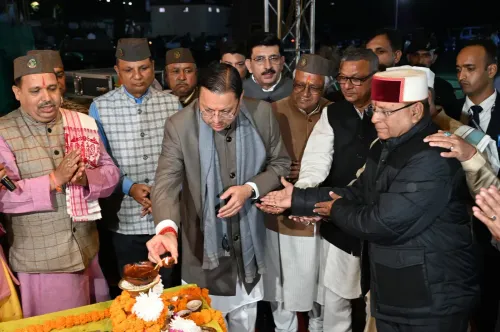
CM Pushkar Singh Dhami participated in Igas eve celebrations at the Chief Minister's residence in Dehradun on 18 November 2026 .
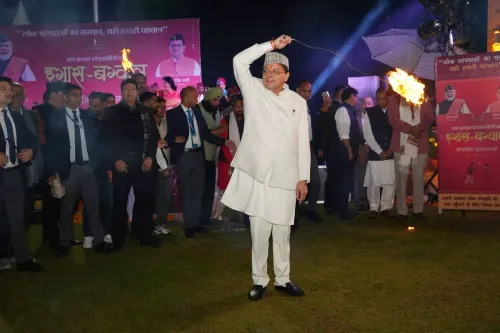
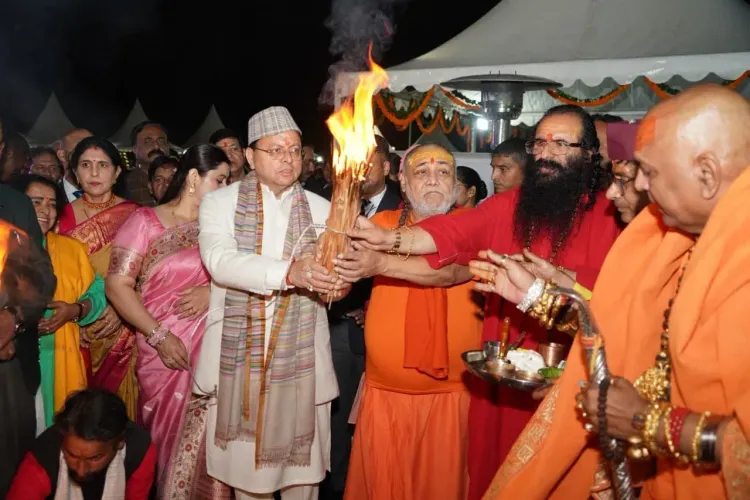
He personally played Bhaillo — a traditional fire-rope game central to the Igas festival — alongside folk songs and dances.
Attendees included Rajya Sabha MP and BJP Uttarakhand president Mahendra Bhatt , Cabinet Minister Ganesh Joshi , MLAs, and senior officials.
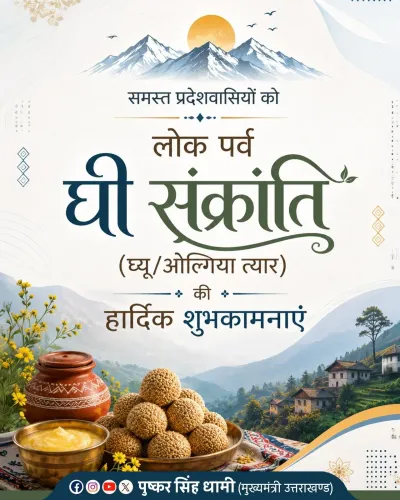
Dhami named five folk festivals — Igas, Harela, Phooldei, Ghee Sankranti, and Uttarayani — as traditions children must be actively introduced to.
He called cultural preservation a shared civic duty and urged the Uttarakhand diaspora to celebrate traditional festivals wherever they live.
The state government reiterated its commitment to conserving folk arts, local languages, and traditional fairs across Uttarakhand.
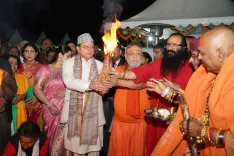
Fire, folk song, and the crackle of bhaillo — a flaming rope swung in circles under the Himalayan sky — marked the eve of Igas at the Chief Minister's residence in Dehradun on Wednesday, 18 November 2026. Chief Minister Pushkar Singh Dhami personally led the celebrations, stepping into the courtyard to play the ancient game himself and signalling to the state that Uttarakhand's hill traditions are worth more than a ceremonial mention.
What Igas is — and why it arrives eleven days after Diwali
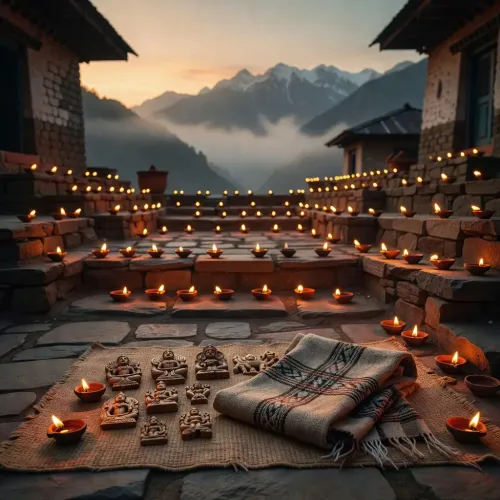
Igas is Uttarakhand's own post-Diwali festival, observed roughly eleven days after the main Diwali night. Legend holds that news of Lord Ram's return to Ayodhya reached the mountains late, so the hills lit their own lamps and danced their own dances on a separate night — a story that has kept the festival alive for centuries. The centrepiece is bhaillo: bundles of ringal grass or pine needles tied to a rope, set alight, and whirled in wide arcs to create spirals of fire against the dark sky — part ritual, part spectacle, entirely Pahari.
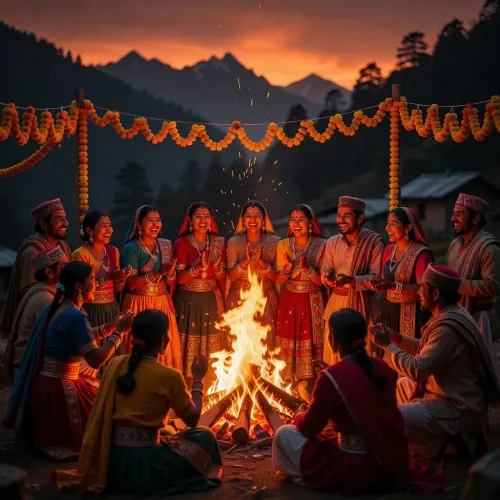
Folk songs called jagar and jhora, traditional dance, and communal feasting complete the celebration. Wednesday's programme at the CM residence brought all of these together — traditional costumes, live folk performances, and an atmosphere the Chief Minister's Office described as a vivid glimpse of the state's 'rich cultural heritage.'
Who was in the courtyard — and what Dhami said
Rajya Sabha MP and BJP Uttarakhand president Mahendra Bhatt, Cabinet Minister Ganesh Joshi, sitting MLAs, other elected representatives, senior officials, and a large gathering of guests attended the event. The cross-party and cross-tier turnout underlined the non-partisan register of the occasion.
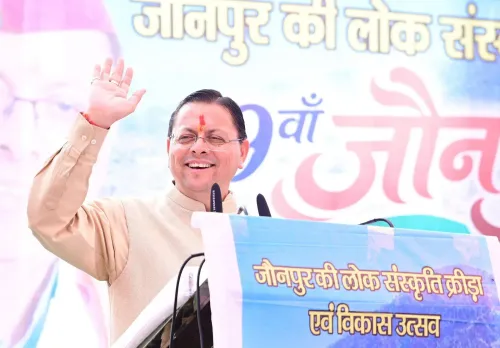
Addressing those present, CM Dhami called Igas 'a symbol of folk culture, faith, tradition, and collective joy' — 'loksanskriti, aastha, parampara aur samuhik ullas ka pratik.' He argued that Uttarakhand's folk festivals are not merely occasions for celebration but expressions of 'cultural identity, social solidarity, and traditional life values.'
He reserved a pointed appeal for the diaspora: Uttarakhandis living across India and abroad, he said, carry the state's cultural identity with them every time they celebrate these festivals in their new cities — and those celebrations become 'a powerful bridge connecting the new generation to their ancestral villages.'
The preservation call: schools, villages, and the next generation
Dhami's remarks went beyond the ceremonial. He named Harela, Phooldei, Ghee Sankranti, and Uttarayani alongside Igas as festivals that children and young people must be introduced to — not just as fun, but as living history. 'If we want folk culture to survive,' he said, 'it cannot be confined to books and organised events; it must be adopted in our homes, our villages, and our social lives.'
He called cultural preservation a shared civic responsibility — not a government monopoly. 'When society itself embraces its traditions, only then can our cultural heritage reach future generations intact.' The state government, he added, is 'continuously working' to conserve folk arts, traditional fairs, folk languages, and historical customs — a commitment that has anchored Uttarakhand's cultural policy since statehood in 2000.
Point of View
Being seen as the custodian of hill traditions carries real political currency, particularly ahead of the state's next electoral cycle. The explicit call to involve schools and diaspora communities moves the gesture beyond symbolism into a soft governance posture — framing cultural continuity as a youth-policy issue. Nationally, this mirrors a broader trend of BJP-led state governments using folk festivals as platforms to reinforce regional pride within the party's cultural nationalist framework. The real test will be whether official celebrations translate into funded schemes for documenting endangered folk arts or integrating Pahari languages into school curricula.
NationPress
18 Nov 2026
Frequently Asked Questions
What is Igas festival in Uttarakhand?
Igas is a traditional post-Diwali folk festival unique to Uttarakhand, celebrated approximately eleven days after Diwali. It is marked by the Bhaillo fire-rope game, folk songs, traditional dances, and communal feasting, and is rooted in the legend that news of Lord Ram's return reached the Himalayan hills later than the plains.
What is Bhaillo and how is it played?
Bhaillo is a traditional Uttarakhand game played during Igas in which bundles of ringal grass or pine needles are tied to a rope, set alight, and swung in circular arcs to create spirals of fire. It is both a ritual and a festive spectacle central to the Igas celebration.
Where did CM Dhami celebrate Igas 2026?
Chief Minister Pushkar Singh Dhami celebrated the eve of Igas 2026 at the Chief Minister's official residence in Dehradun, Uttarakhand, on 18 November 2026.
Which Uttarakhand folk festivals did CM Dhami mention?
CM Dhami specifically named Igas, Harela, Phooldei, Ghee Sankranti, and Uttarayani as folk festivals that children and young people should be actively introduced to in order to preserve Uttarakhand's cultural heritage.
What did CM Dhami say about cultural preservation?
CM Dhami said cultural preservation is a shared civic responsibility — not just the government's duty — and must extend beyond books and official events into homes, villages, and everyday social life. He also called on the Uttarakhand diaspora to celebrate traditional festivals wherever they live and pass them on to the next generation.