CM Samrat Choudhary Hails India-New Zealand FTA Going Live
Synopsis
Bihar CM Samrat Choudhary hailed the implementation of the India-New Zealand Free Trade Agreement on Vijayadashami, crediting PM Modi's leadership and saying the pact opens new opportunities in trade, investment and jobs for farmers, entrepreneurs and India's youth.
Key Takeaways
The India-New Zealand Free Trade Agreement came into effect on Vijayadashami, 19 October 2026 .
Bihar CM Samrat Choudhary credited Prime Minister Narendra Modi 's leadership for the deal.
The pact is expected to expand market access for Indian farmers, exporters, professionals and youth .
Formal negotiations for the India-New Zealand FTA were first launched in 2010 , making this a decade-long diplomatic effort.
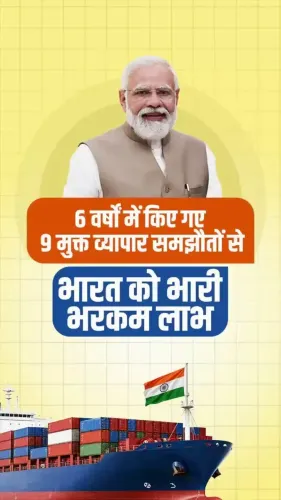
India previously signed similar agreements with the UAE and Australia in 2022 , reflecting a broader Asia-Pacific trade push.
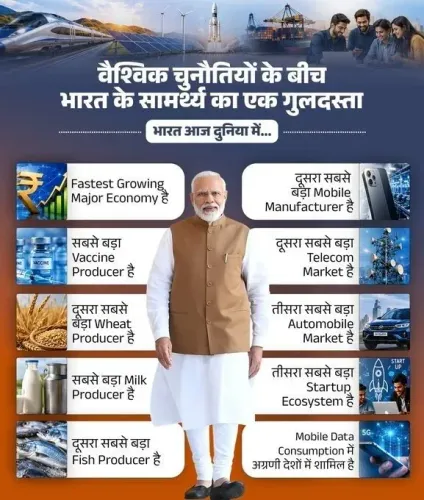
India is the world's fifth-largest economy , and the FTA reinforces its identity as a trusted global trading partner.
On the auspicious occasion of Vijayadashami, a landmark free trade agreement between India and New Zealand came into effect — and Bihar Chief Minister Samrat Choudhary marked the moment with a pointed declaration: 'This is Bharat's Era!' The agreement, he said, charts a new course for India's economic and trade relationships on the world stage.
Posting on Monday, 19 October 2026, CM Choudhary framed the FTA's implementation as a direct product of Prime Minister Narendra Modi's leadership, calling it 'an important step that will give new direction to the country's economic and commercial relations.' The timing — coinciding with Vijayadashami, a day symbolising the victory of good over evil — was clearly deliberate, lending the announcement a celebratory cultural weight.
New Doors for Farmers, Entrepreneurs and Young Professionals
At the heart of CM Choudhary's message is who benefits. He specifically named farmers, entrepreneurs, professionals and youth as the constituencies that stand to gain through expanded trade, investment and employment opportunities. For a state like Bihar — with a large agrarian base and a young, aspirational workforce — this framing is pointed and personal, not just rhetorical.
The India-New Zealand FTA follows a pattern India has built steadily since 2014: signing comprehensive economic pacts with key partners to diversify export markets and embed Indian producers in global supply chains. The agreement with the UAE in 2022 and the Economic Cooperation and Trade Agreement with Australia in the same year set the template — targeting tariff reductions across agriculture, manufacturing and services while chipping away at non-tariff barriers.
A Decade in the Making: The India-New Zealand Trade Arc
Formal negotiations for this bilateral pact were first launched in 2010 — making its eventual implementation a story of long diplomatic patience finally paying off. New Zealand, a developed Asia-Pacific economy with deep strengths in dairy, agriculture and services, represents a strategically complementary partner for India's ambitions as the world's fifth-largest economy.
CM Choudhary described the agreement as a reflection of India's 'economic resilience, its identity as a trusted trading partner, and its growing international influence.' In his words, 'Naya Bharat nit naye keertimann sthapit kar raha hai' — 'New India is setting new records every day.'
India's FTA Push: A Broader Ambition
The New Zealand pact slots into a larger mosaic. India has been systematically engaging developed and emerging economies across the Indo-Pacific and beyond, recognising that deeper trade integration is inseparable from geopolitical weight. The agreement signals that Indian goods — whether agricultural produce, manufactured exports, or professional services — now have structured, lower-barrier access to yet another developed market.
What comes next will be watched closely: initial trade flow statistics, the publication of tariff schedule notifications, and the formation of joint review mechanisms will determine whether the deal's promise translates into measurable gains for the farmers and entrepreneurs CM Choudhary invoked.
If Vijayadashami marks the triumph of light over darkness, India's trade negotiators may well feel that symbolism was earned this year.
Point of View
Publicly championing a national trade agreement signals his alignment with the BJP's economic-nationalism narrative ahead of what remains a politically competitive state landscape. The deliberate Vijayadashami framing — victory, renewal, new beginnings — suggests a concerted effort to invest an economic event with cultural resonance. The real test, as with all FTAs, will arrive in the tariff schedules and trade statistics: whether the deal's promise reaches the farmers and first-generation entrepreneurs Choudhary specifically named.
NationPress
19 Oct 2026
Frequently Asked Questions
What is the India-New Zealand Free Trade Agreement?
The India-New Zealand Free Trade Agreement is a bilateral trade pact designed to reduce tariffs and expand market access for goods and services between the two countries. Formal negotiations began in 2010, and the agreement came into effect on Vijayadashami, 19 October 2026.
Who benefits from the India-New Zealand FTA?
The agreement is expected to benefit Indian farmers, exporters, entrepreneurs, professionals and youth by opening new avenues for trade, investment and employment in New Zealand's developed economy.
What did Bihar CM Samrat Choudhary say about the India-New Zealand FTA?
CM Samrat Choudhary called the FTA's implementation 'an important step that will give new direction to India's economic and commercial relations,' crediting Prime Minister Narendra Modi's leadership and declaring 'This is Bharat's Era!'
How does the India-New Zealand FTA compare to India's other recent trade deals?
It follows a similar template to India's 2022 agreements with the UAE and Australia — targeting tariff reductions across agriculture, manufacturing and services while reducing non-tariff barriers, and reflecting India's broader push to integrate into global supply chains.
Why was the India-New Zealand FTA announced on Vijayadashami?
The FTA came into effect on Vijayadashami 2026, a date that carries cultural significance as a symbol of victory and new beginnings. CM Choudhary and other BJP leaders used the timing to frame the agreement as emblematic of India's rising global stature.