CM Samrat Choudhary Hails India's Record 9-Month FTA Deal
Synopsis
Bihar Chief Minister Samrat Choudhary on 11 July 2026 amplified PM Modi's announcement of a new Free Trade Agreement concluded in a record nine months, promising Indians expanded market access, investment, services, technology, and talent mobility opportunities.
Key Takeaways
Bihar CM Samrat Choudhary shared PM Narendra Modi's statement on a new Free Trade Agreement on 11 July 2026 .
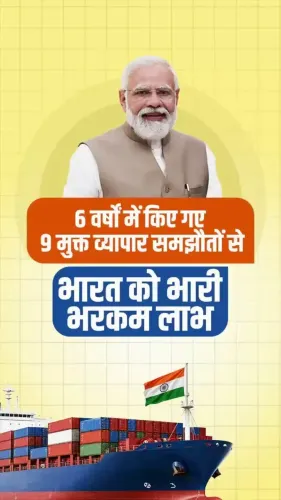
The FTA was concluded in a record 9 months , described as the fastest such bilateral deal of the year.
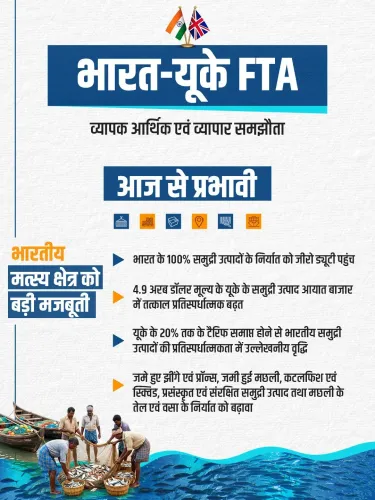
The agreement covers market access, investment, services, technology, and talent mobility .
India's recent FTA track record includes deals with the UAE (2022) and Australia (2022) under a fast-track framework.
Indian exporters and services-sector professionals are among the primary expected beneficiaries.
Parliamentary scrutiny of the agreement text and state-level outreach in Bihar are anticipated next steps.
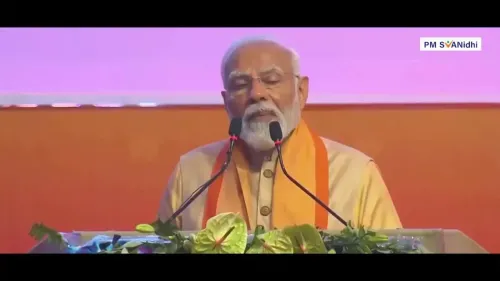
Bihar Chief Minister Samrat Choudhary on Saturday, 11 July 2026, shared remarks by Prime Minister Narendra Modi highlighting a new Free Trade Agreement concluded in a record nine months, calling it a milestone that opens fresh avenues for market access, investment, services, technology, and talent mobility for Indians.
Context
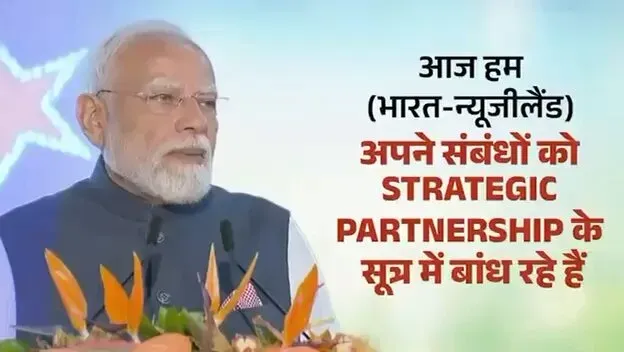
Quoting Prime Minister Modi directly, CM Choudhary relayed the announcement: 'इस वर्ष दोनों देशों के बीच 9 महीनों के रिकॉर्ड समय में Free Trade Agreement हुआ है' ('This year, a Free Trade Agreement has been concluded between the two countries in a record time of 9 months'). The post emphasises that the pact will deliver 'new opportunities in market access, investment, services, technology and talent mobility' for the people of India. CM Choudhary amplified the message as a signal of the central government's economic momentum, tagging PM Modi's official handle.
Policy Backdrop
India has pursued an accelerated trade-agreement strategy under the Modi administration. Notable precedents include the India-UAE Comprehensive Economic Partnership Agreement signed in February 2022 — concluded in roughly two months — and the India-Australia Economic Cooperation and Trade Agreement signed in April 2022 after approximately nine months of negotiations. The nine-month timeline cited in the current post places this new agreement in the same fast-track category that the government has championed as evidence of diplomatic and economic efficiency. Successive Indian governments have sought to diversify trade beyond traditional markets, but the pace of deal-making has visibly increased in recent years, with agreements now covering goods, services, and investment in integrated packages.
Stakeholders and Impact
Indian exporters stand to gain from reduced tariff barriers under the new pact, while professionals in the services sector — including information technology, finance, and healthcare — could benefit from improved talent mobility provisions. For a state like Bihar, whose economy is driven by agriculture, light manufacturing, and a large migrant workforce, improved access to foreign labour markets and investment inflows could carry significant local relevance. CM Choudhary's decision to amplify the announcement reflects a pattern among BJP-governed states of aligning state-level messaging with central government trade diplomacy, positioning state industries to capitalise on new bilateral frameworks.
What's Next
The full text of the agreement is expected to undergo parliamentary scrutiny, where the scope of tariff concessions, services commitments, and intellectual property provisions will face detailed examination. State governments, including Bihar, may roll out outreach programmes to help local exporters, small enterprises, and skilled professionals understand and utilise the new market-access pathways. The speed of ratification and implementation will determine how quickly the promised benefits in investment and talent mobility translate into on-the-ground economic activity.
Point of View
Framing the Modi administration as a decisive dealmaker compared to the years-long negotiations that characterised earlier Indian trade agreements. For Bihar, a state with a vast diaspora and a labour-export economy, the talent mobility provision is the most politically resonant element, and Choudhary's amplification signals that state BJP leaders intend to localise the narrative around national trade gains.
NationPress
9 Oct 2026
Frequently Asked Questions
What is the Free Trade Agreement Bihar CM Samrat Choudhary posted about?
CM Samrat Choudhary shared PM Modi's announcement of a new bilateral Free Trade Agreement concluded in a record nine months in 2026, covering market access, investment, services, technology, and talent mobility.
Which country did India sign the new FTA with in 2026?
The post does not name the partner country. The partner country has not been specified in the announcement shared by CM Choudhary.
Why is nine months considered a record for an Indian FTA?
India's trade agreements have historically taken years to negotiate. The nine-month timeline matches the India-Australia deal of 2022, which was itself considered unusually fast, making such speed a benchmark for the current government's trade diplomacy.
How will the new FTA benefit Bihar?
Bihar stands to benefit particularly from talent mobility provisions, which could open foreign labour markets to skilled and semi-skilled workers from the state, while investment and services provisions may attract capital into local industries.
What happens after India signs a Free Trade Agreement?
After signing, an FTA typically undergoes parliamentary review, legal scrubbing, and ratification before entering into force. State governments may also run outreach programmes to help local businesses utilise new market-access channels.