CM Conrad Sangma Reaffirms Meghalaya's Drug-Free Commitment

Synopsis
On the International Day Against Drug Abuse and Illicit Trafficking, Meghalaya CM Conrad Sangma called for a united community movement against addiction, highlighting the state's DREAM Mission and urging families, youth, civil society and frontline workers to act together to build a drug-free Meghalaya.
Key Takeaways
CM Conrad Sangma marked 26 June 2026 — the International Day Against Drug Abuse and Illicit Trafficking — with a public call for collective action against addiction in Meghalaya .
The DREAM Mission , Meghalaya's state initiative for drug prevention, rehabilitation and recovery, was cited as the vehicle for transforming individual efforts into a unified movement.
Sangma broadened the definition of addiction beyond illicit drugs and alcohol, urging communities to promote healthier choices and break stigma with compassion.
The post tagged Union Minister Dr.
Virendra Kumar of the Ministry of Social Justice and Empowerment, indicating alignment with the national Nasha Mukt Bharat Abhiyan .
Families, faith-based organisations, youth groups, civil society and frontline workers were all named as essential partners in the anti-addiction effort.
Analysts will watch for formal convergence announcements between the DREAM Mission and central drug demand reduction schemes in upcoming budget or review sessions.
Meghalaya Chief Minister Conrad Sangma on Friday, 26 June 2026 marked the International Day Against Drug Abuse and Illicit Trafficking by calling for a unified community movement against addiction, reaffirming the state's commitment to a drug-free Meghalaya through the state-run DREAM Mission.
Context
Posting on the occasion of the United Nations Office on Drugs and Crime (UNODC)-observed annual day, CM Sangma stated: 'The fight against addiction cannot be won by government alone. It takes families, communities, faith-based organisations, youth groups, civil society, frontline workers and every concerned citizen coming together with a shared purpose.' The message was directed at a wide coalition of actors, with Sangma also tagging Union Minister Dr. Virendra Kumar of the Ministry of Social Justice and Empowerment, signalling coordination with the central government's drug demand reduction framework.
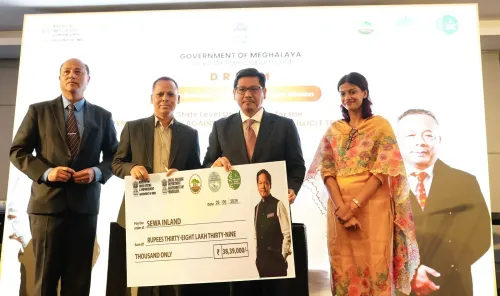
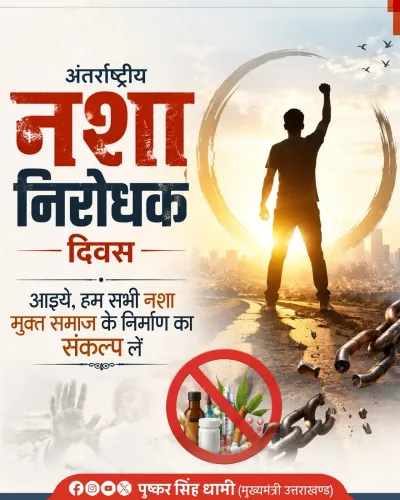
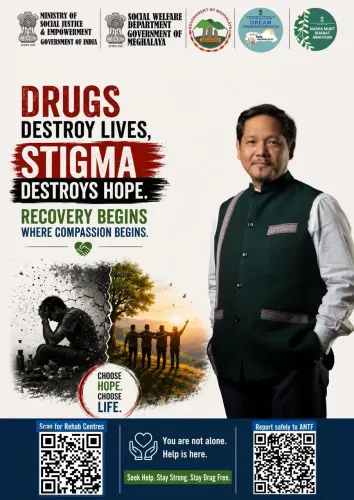
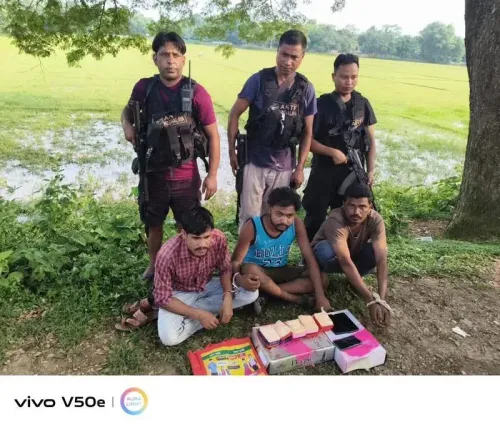
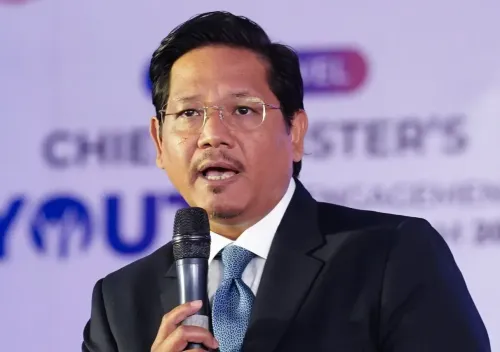
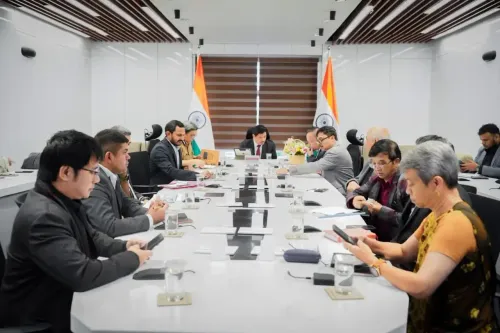
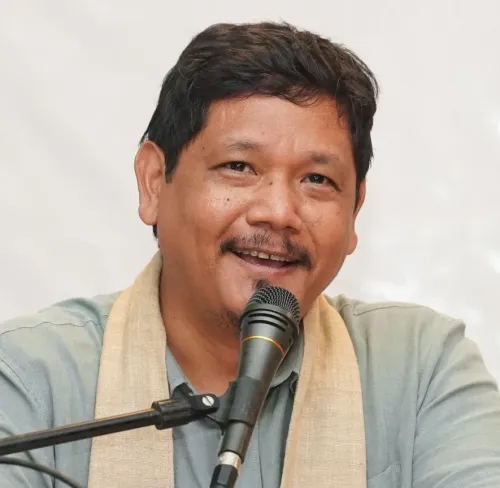
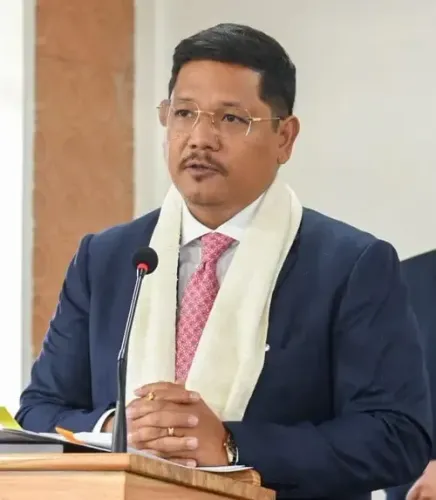
The post, accompanied by four images, broadened the definition of addiction beyond narcotics, noting: 'Addiction is not just about drugs or alcohol. It can take many forms, and every one of us has a role in promoting healthier choices, supporting those in need, and breaking stigma with compassion and understanding.'
Policy Backdrop
Meghalaya's DREAM Mission is the state's flagship initiative for drug prevention, rehabilitation, recovery and community mobilisation against addiction. CM Sangma described it as 'transforming individual efforts into a united movement, supporting prevention, rehabilitation, recovery and hope.' The mission reflects a community-integrated approach that northeastern states have increasingly adopted given the region's vulnerabilities to cross-border trafficking and limited formal treatment infrastructure.
At the national level, the Ministry of Social Justice and Empowerment launched the Nasha Mukt Bharat Abhiyan in August 2020 to coordinate state-level drug demand reduction, and Meghalaya has participated in the centrally sponsored scheme for prevention of alcoholism and substance abuse through de-addiction centres since the early 2010s. Sangma's tagging of Dr. Virendra Kumar, the Union Minister overseeing these national programmes, underscores the state's alignment with the central framework.
Stakeholders and Impact
The Chief Minister's message explicitly named families, communities, faith-based organisations, youth groups, civil society, and frontline health workers as essential partners in the anti-addiction effort. This multi-stakeholder framing is consistent with the broader northeastern model, where government programmes are supplemented by community and faith networks to reach populations underserved by formal healthcare infrastructure.
Sangma's emphasis on 'breaking stigma with compassion and understanding' addresses a well-documented barrier to treatment-seeking in the region. By framing addiction as a societal challenge with many forms — not limited to illicit drugs — the statement seeks to widen the scope of community intervention and reduce the social isolation of those in recovery.
What's Next
Observers will watch for formal evaluation reports on the DREAM Mission's coverage and any announced integration with the Nasha Mukt Bharat Abhiyan during upcoming assembly budget sessions or national review meetings. Sangma's direct outreach to the Union Minister on a high-visibility international occasion suggests the state may be seeking expanded central support or formal convergence between state and national de-addiction programmes. The call to 'build a movement where no one fights alone' signals that community mobilisation will remain central to Meghalaya's anti-drug strategy in the period ahead.
Point of View
The Chief Minister is visibly positioning Meghalaya as a cooperative partner in the Centre's flagship Nasha Mukt Bharat Abhiyan, which could translate into greater resource flows to the state. The emphasis on community and faith-based actors over government machinery reflects a pragmatic acknowledgement of the Northeast's limited formal treatment infrastructure, while also building a broad political constituency around a welfare theme. Framing addiction as a multi-dimensional social challenge — not just a law-enforcement problem — aligns with a global shift in public health discourse and allows the state government to claim ownership of both prevention and rehabilitation outcomes. Whether the DREAM Mission can demonstrate measurable results will determine how durable this political narrative proves to be.
NationPress
26 Jun 2026
Frequently Asked Questions
What is the DREAM Mission in Meghalaya?
The DREAM Mission is Meghalaya's state-level initiative focused on drug prevention, rehabilitation, recovery and community mobilisation against addiction. Chief Minister Conrad Sangma described it as transforming individual efforts into a united movement supporting prevention, rehabilitation, recovery and hope.
What did Conrad Sangma say on International Day Against Drug Abuse 2026?
CM Conrad Sangma reaffirmed Meghalaya's commitment to building a drug-free society, called on families, communities, faith-based organisations, youth groups and civil society to join the fight against addiction, and highlighted the DREAM Mission as the state's primary vehicle for this effort.
What is the International Day Against Drug Abuse and Illicit Trafficking?
It is an annual observance on 26 June, overseen by the United Nations Office on Drugs and Crime (UNODC), dedicated to raising awareness about the global drug problem and strengthening international cooperation against illicit trafficking.
What is the Nasha Mukt Bharat Abhiyan?
The Nasha Mukt Bharat Abhiyan is a national campaign launched in August 2020 by the Ministry of Social Justice and Empowerment to coordinate state-level drug demand reduction, awareness and rehabilitation infrastructure across India.
Why does Meghalaya face particular challenges with drug abuse?
Meghalaya, like other northeastern states, faces documented substance abuse challenges linked to cross-border trafficking routes and limited formal treatment infrastructure, which is why the state has pursued community-based de-addiction models integrating civil society and faith groups.