CM Dhami Backs Cabinet Nod for BHAVYA-Rasayan Chemical Scheme
Synopsis
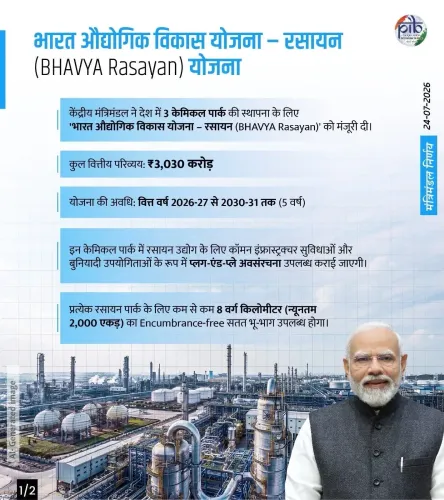
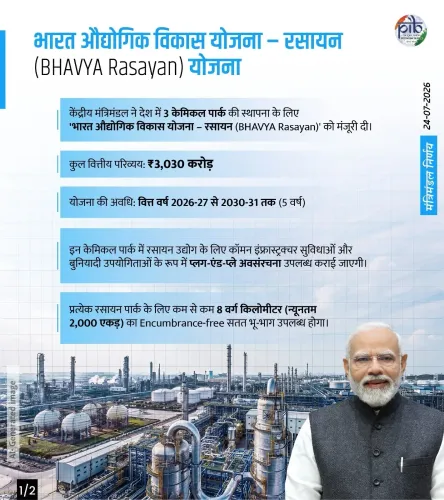
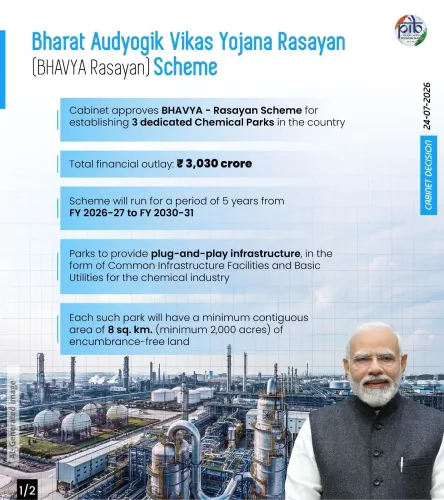
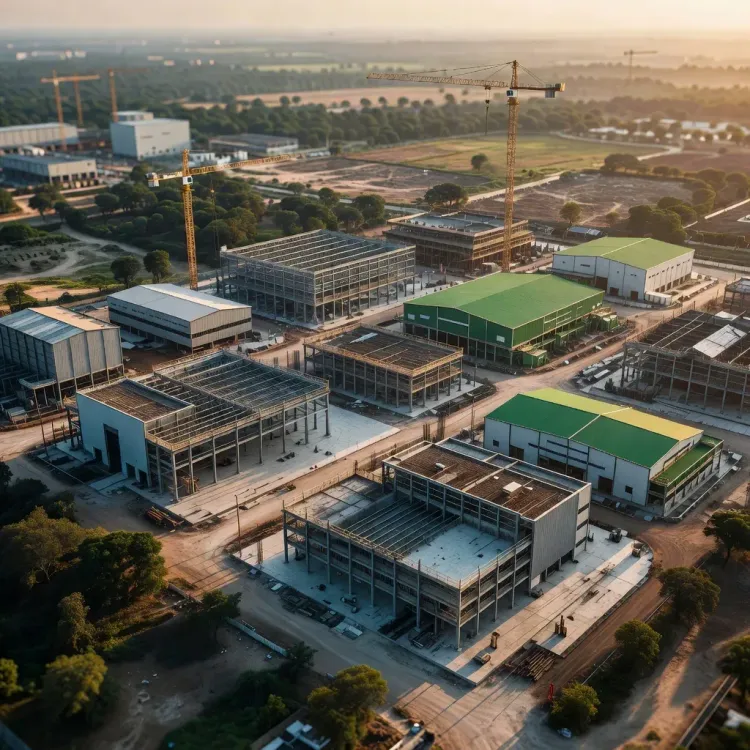
Uttarakhand CM Pushkar Singh Dhami welcomed the Union Cabinet's approval of BHAVYA-Rasayan, a ₹3,030 crore scheme to develop three dedicated chemical parks in India, aimed at boosting exports, cutting import dependence, and driving environment-friendly industrial growth.
Key Takeaways
The Union Cabinet , chaired by PM Narendra Modi , approved the BHAVYA-Rasayan scheme on 24 July 2026 .
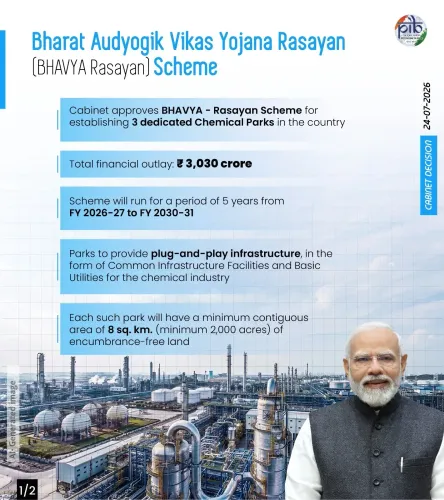
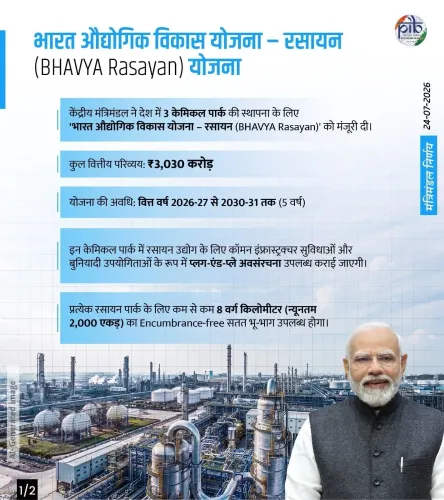
The scheme carries a budget of ₹3,030 crore and will fund three dedicated chemical parks across India.
The parks are designed to provide world-class infrastructure and modern facilities to the chemical sector.
Key goals include boosting chemical exports , reducing import dependence , and promoting environment-friendly industrial development .
Uttarakhand CM Pushkar Singh Dhami publicly welcomed the decision, calling it 'highly commendable.' The scheme continues India's policy lineage from PCPIR (2007) and PLI for chemicals (2020) under the Atmanirbhar Bharat framework.
Uttarakhand Chief Minister Pushkar Singh Dhami on Friday, 24 July 2026, welcomed the Union Cabinet's approval of the Bharat औद्योगिक विकास योजना – रसायन (BHAVYA-Rasayan) scheme, calling the decision 'highly commendable.' The Cabinet, chaired by Prime Minister Narendra Modi, cleared the ₹3,030 crore initiative to develop three dedicated chemical parks across the country with world-class infrastructure.
Context
CM Dhami posted on X in Hindi, stating that the Cabinet meeting held under the chairmanship of Prime Minister Narendra Modi took the decision to approve BHAVYA-Rasayan with the aim of giving 'new momentum to the chemical industry in the country' — 'देश में रसायन उद्योग को नई गति देने के उद्देश्य से' [to give new momentum to the chemical industry in the country]. He described the ₹3,030 crore project as 'ambitious,' noting that the three dedicated chemical parks would provide 'world-class infrastructure and modern facilities.'
The post was tagged #CabinetDecisions, indicating it was part of a broader wave of BJP leaders amplifying Cabinet announcements on social media following the meeting.
Policy Backdrop
India's policy focus on dedicated chemical industry clusters is not new. The Petroleum, Chemicals and Petrochemicals Investment Regions (PCPIR) policy, notified in 2007, first sought to promote integrated chemical industry clusters. Subsequently, Production Linked Incentive (PLI) schemes were extended to chemicals and petrochemicals from 2020 onward under the Atmanirbhar Bharat framework, aimed at encouraging domestic manufacturing and curbing import dependence.
BHAVYA-Rasayan follows this lineage, with CM Dhami noting that the scheme would 'promote exports and reduce dependence on imports' — 'निर्यात को प्रोत्साहन और आयात पर निर्भरता कम करेगी' — while also driving 'environment-friendly industrial development' — 'पर्यावरण अनुकूल औद्योगिक विकास'.
Stakeholders and Impact
The chemical industry and India's export community stand to be the primary beneficiaries of the scheme. The three dedicated chemical parks are expected to attract investment, generate employment, and provide manufacturers with plug-and-play infrastructure, reducing the cost and time of setting up new units.
The emphasis on reducing import dependence is significant: India's chemical sector has historically relied on imports of key raw materials and specialty chemicals, particularly from China. A shift toward domestic production capacity could improve supply-chain resilience for industries ranging from pharmaceuticals to agrochemicals and textiles.
The environmental sustainability component signals an intent to align industrial expansion with India's broader climate commitments, though specific green standards for the parks are yet to be detailed publicly.
What's Next
Attention will now turn to the selection of locations for the three chemical parks and the signing of state-level implementation agreements, which will determine which states — potentially including Uttarakhand — benefit directly from the scheme. Follow-up budget allocations and any incentive structures linked to the parks are also expected to be announced in subsequent fiscal measures.
As a BJP Chief Minister, Dhami's endorsement underscores the party's effort to project the Cabinet's economic decisions as transformative for India's manufacturing ambitions, with BHAVYA-Rasayan potentially becoming a flagship scheme under the broader Make in India narrative heading into the next electoral cycle.
Point of View
CM Dhami positions himself and Uttarakhand within the national industrial development narrative, potentially signalling the state's interest in hosting one of the three chemical parks. The scheme's dual emphasis on export promotion and environmental sustainability reflects a broader attempt to reconcile industrial ambition with India's net-zero commitments, a balance that will be tested when park locations and green standards are finalised.
NationPress
23 Oct 2026
Frequently Asked Questions
What is BHAVYA-Rasayan scheme?
BHAVYA-Rasayan, or Bharat Audyogik Vikas Yojana – Rasayan, is a ₹3,030 crore central government scheme approved by the Union Cabinet to develop three dedicated chemical parks in India with world-class infrastructure, aimed at boosting the domestic chemical industry, promoting exports, and reducing import dependence.
How much money is allocated for BHAVYA-Rasayan?
The Union Cabinet has approved ₹3,030 crore for the BHAVYA-Rasayan scheme, which will fund the development of three dedicated chemical parks across India.
How many chemical parks will be built under BHAVYA-Rasayan?
Three dedicated chemical parks will be developed under the BHAVYA-Rasayan scheme, each intended to provide world-class infrastructure and modern facilities to the chemical industry.
Why did CM Dhami praise the BHAVYA-Rasayan scheme?
Uttarakhand Chief Minister Pushkar Singh Dhami called the Cabinet's approval of BHAVYA-Rasayan 'highly commendable,' saying it would give new momentum to India's chemical industry, promote exports, reduce import dependence, and support environment-friendly industrial development.
Where will the BHAVYA-Rasayan chemical parks be located?
The specific locations for the three chemical parks under BHAVYA-Rasayan have not yet been announced publicly; state-level implementation agreements and site selections are expected to follow the Cabinet approval.