CM Dhami: Science & Tech Are Pillars of Developed Uttarakhand
Synopsis
Chief Minister Pushkar Singh Dhami has declared science, technology and innovation the foundational pillars of a developed Uttarakhand, aligning the state's growth vision with the national Viksit Bharat 2047 framework and signalling a push toward knowledge-driven economic diversification.
Key Takeaways
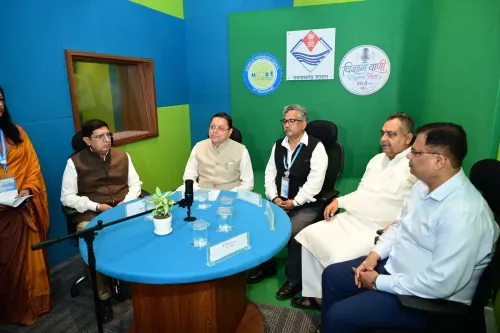
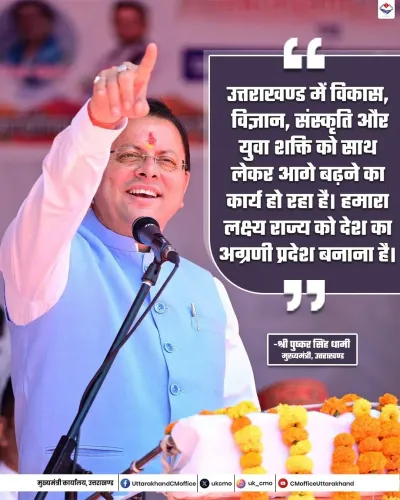
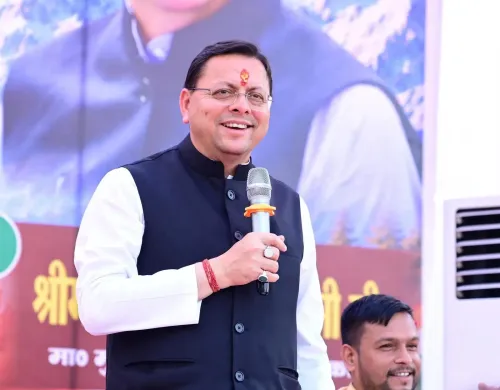
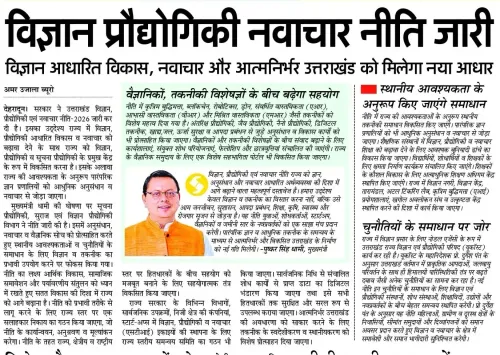
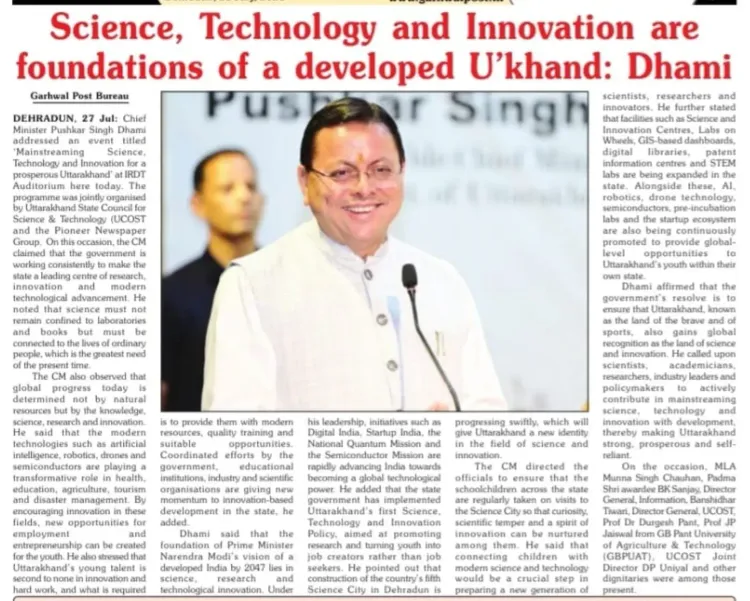
CM Pushkar Singh Dhami stated on 28 July 2026 that science, technology and innovation are the 'cornerstone of a developed Uttarakhand.' The statement was shared via the official Chief Minister's Office account on X, accompanied by four images .
The framing aligns with the national Viksit Bharat 2047 vision, which positions science and technology as drivers of long-term growth.
Tech entrepreneurs and STEM students are identified as the primary stakeholders who stand to benefit from this stated policy direction.
Uttarakhand's Himalayan geography makes knowledge-economy sectors more viable than conventional heavy industrialisation.
Concrete follow-through may emerge through tech park announcements, startup incentives or institutional partnerships in upcoming budget cycles.
The Chief Minister's Office of Uttarakhand on Tuesday, 28 July 2026, shared a statement by Chief Minister Pushkar Singh Dhami declaring that science, technology and innovation are the foundational pillars of a developed Uttarakhand, signalling the state government's intent to anchor its long-term growth strategy in knowledge-driven sectors.
Context
The statement, posted in Hindi — 'Vigyan, Praudyogiki aur Navachar Viksit Uttarakhand ki Aadharshila' ('Science, technology and innovation are the cornerstone of a developed Uttarakhand') — was accompanied by four images, underscoring the official nature of the communication. CM Dhami, who has led the state since 2021, has consistently positioned Uttarakhand's development around diversifying beyond its traditional economic pillars of tourism and agriculture.
The framing closely mirrors the national Viksit Bharat 2047 vision, which places science and technology at the centre of India's ambition to become a developed nation by the centenary of Independence. Uttarakhand's alignment with this vocabulary signals the state's intent to integrate itself into the broader national innovation narrative.
Policy Backdrop
India's Digital India programme, launched in 2015, created a nationwide framework for expanding technology infrastructure and digital public services, encouraging states to build complementary ecosystems. Uttarakhand has since explored IT parks, startup incubators and skill-development programmes as instruments to attract investment and create employment for its educated youth.
As a Himalayan state, Uttarakhand faces distinct infrastructure constraints — difficult terrain, seasonal connectivity disruptions and a dispersed population — that make conventional industrialisation challenging. Technology and innovation-led growth offers a pathway that is less dependent on heavy physical infrastructure and more compatible with the state's ecological sensitivities.
Stakeholders and Impact
Tech entrepreneurs and STEM students stand to be the most direct beneficiaries if the government translates this stated priority into concrete policy measures such as venture funding, incubation centres or partnerships with national research institutions. The statement is also likely to resonate with the state's large pool of engineering and science graduates who currently migrate to metropolitan centres for employment.
Broader civil society and local communities in Dehradun, Haridwar and other urban clusters could benefit from a technology-driven economic push through indirect employment and improved digital public services. Ecologically, a pivot toward knowledge industries over extractive or heavy manufacturing aligns with the state's constitutional obligations as a Himalayan ecosystem steward.
What's Next
Observers will watch for concrete follow-through in the form of new tech park announcements, startup incentive schemes or formal collaborations with institutions such as the Indian Institutes of Technology or the Department of Science and Technology at the Centre. Upcoming state budget sessions and policy conclaves are the most likely venues for translating this political commitment into funded programmes.
If CM Dhami's government backs this vision with measurable allocations and institutional frameworks, Uttarakhand could position itself as a model for how Himalayan states can participate meaningfully in India's emerging knowledge economy — without compromising the environmental character that defines the region.
Point of View
A technology pivot represents a logical, if ambitious, diversification strategy. The statement's real test will lie in budgetary allocations and institutional action, not in the declaration itself. Until concrete schemes emerge, this remains an aspirational signal rather than a policy shift.
NationPress
26 Oct 2026
Frequently Asked Questions
What did CM Pushkar Singh Dhami say about science and technology in Uttarakhand?
CM Pushkar Singh Dhami declared that science, technology and innovation are the foundational pillars — or 'cornerstone' — of a developed Uttarakhand, in an official statement shared on 28 July 2026.
What is the Viksit Uttarakhand vision?
Viksit Uttarakhand refers to the state government's development agenda aimed at building a prosperous Uttarakhand, aligned with the national Viksit Bharat 2047 goal of making India a developed nation by the centenary of Independence.
How does technology fit into Uttarakhand's development plans?
Given its Himalayan geography and ecological constraints, Uttarakhand has been exploring IT parks, startup incubation and skill-development programmes as alternatives to conventional heavy industrialisation, making technology a strategic growth lever.
Who benefits from Uttarakhand's technology and innovation push?
Tech entrepreneurs, STEM graduates and students are the most direct beneficiaries, along with urban communities in hubs like Dehradun and Haridwar that could see indirect employment and improved digital public services.
What should we watch for next from the Uttarakhand government on technology policy?
Concrete announcements — such as new tech parks, startup incentive schemes or partnerships with national research institutions — are expected during upcoming state budget sessions or policy conclaves.