CM Dhami Cites Nagthat Rally as Proof of Public Trust in BJP Governance
Synopsis
Uttarakhand Chief Minister Pushkar Singh Dhami on June 8, 2026 invoked a large public gathering at Nagthat in Dehradun's Jaunsar tribal belt as evidence of mass confidence in his government's welfare policies and development commitments, tagging PM Modi and Home Minister Shah in the post.
Key Takeaways
CM Dhami described the Nagthat gathering as 'clear proof' of public trust in his government's policies and welfare schemes.
The event took place in the Jaunsar-Bawar tribal belt of Dehradun district , a region historically targeted for welfare outreach.
The post tagged PM Narendra Modi , Home Minister Amit Shah , and BJP4India , reinforcing the party's unified governance narrative.
The Dhami government has since 2021 aligned state welfare with central schemes covering housing, health, and connectivity in hill and tribal areas.
BJP state governments routinely use public gatherings to signal grassroots delivery, especially ahead of local and assembly electoral cycles.
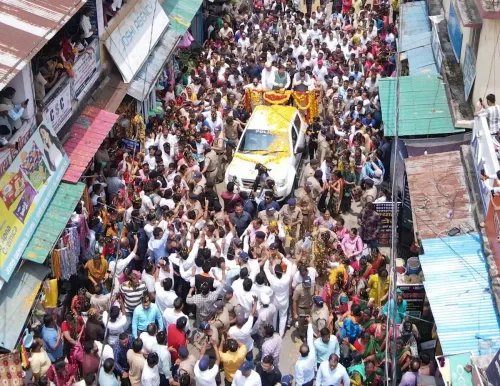
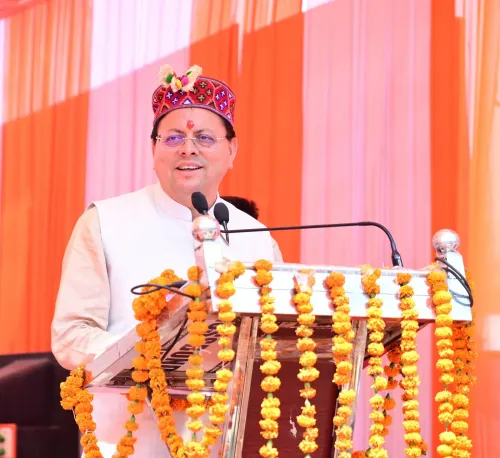
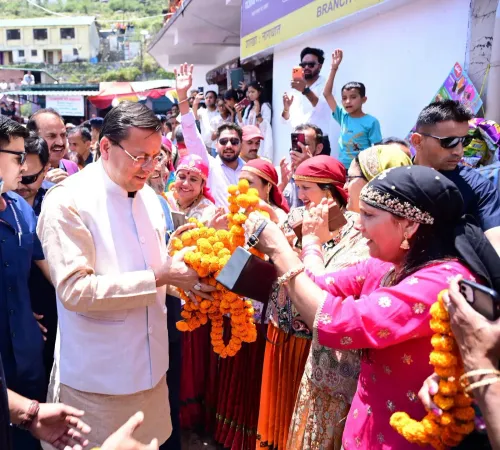
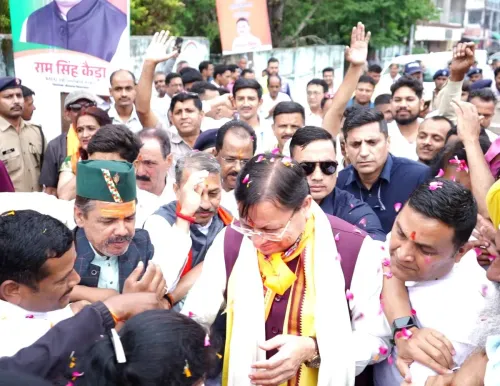
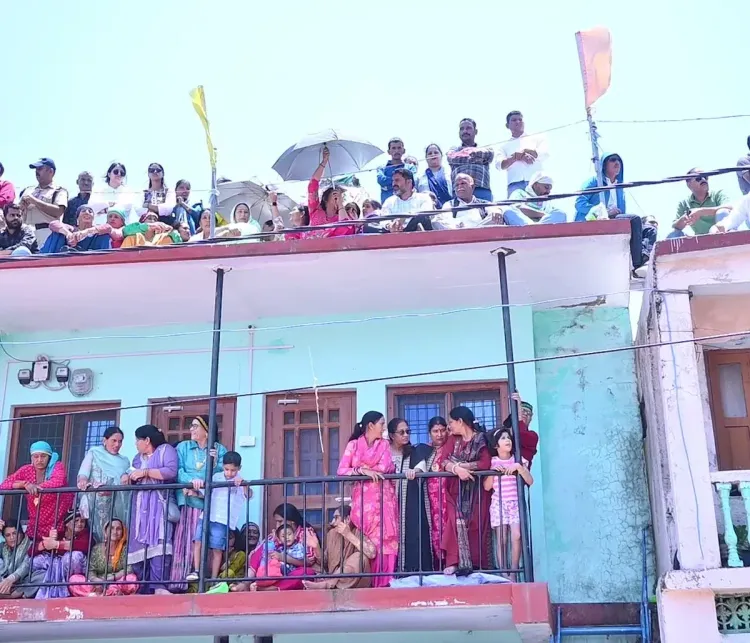
Uttarakhand Chief Minister Pushkar Singh Dhami on Monday, June 8, 2026, pointed to a large public gathering at Nagthat in the Jaunsar area of Dehradun as evidence of unwavering popular confidence in his government's welfare policies and development agenda.
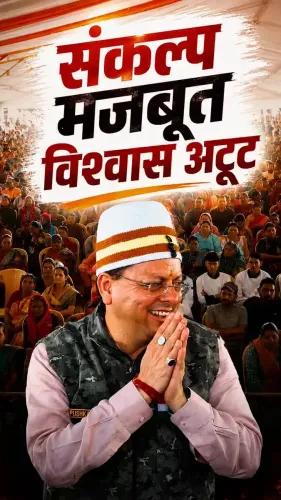
Posting on X, CM Dhami wrote: 'Nagthaat (Jaunsar) Dehradun mein umda yeh vishal janasailaab is baat ka spasht praman hai ki pradeshvasiyon ka hamari neetiyon, nirnayon aur jankalyankari yojanaon par atoot vishwas hai' — ['The massive public outpouring at Nagthat (Jaunsar), Dehradun is clear proof that the people of the state have unshakeable faith in our policies, decisions, and public-welfare schemes.'] He added that inspired by this affection and trust, his government would continue advancing its commitment to development and public welfare. The post tagged Prime Minister Narendra Modi, Union Home Minister Amit Shah, and the official BJP4India handle.
Context
Nagthat is a town in the Jaunsar-Bawar tribal belt of Dehradun district, a region historically marked by distinct cultural practices and relatively limited connectivity with the state's urban centres. The area falls within the broader hill and tribal pocket that successive Uttarakhand governments have targeted with outreach programmes. A large gathering here carries symbolic weight, signalling administrative reach into a traditionally underserved constituency.
The Dhami government, in power since 2021, has made periodic visits to border and tribal regions a visible part of its political communication, using such events to underscore grassroots delivery of welfare entitlements.
Policy Backdrop
Since taking office, CM Dhami has aligned Uttarakhand's state welfare architecture closely with centrally sponsored schemes covering housing, health, road connectivity, and livelihood support for hill communities. The Jaunsar-Bawar region has been a specific focus, given its tribal status and the constitutional obligations that accompany it.
BJP-led state governments across India have consistently used the framework of central scheme implementation as a campaign narrative, presenting beneficiary counts and physical infrastructure as tangible proof of governance. In Uttarakhand, this has been accompanied by anti-encroachment drives and connectivity projects in border belts close to Himachal Pradesh and Uttar Pradesh.
Stakeholders and Impact
The primary stakeholders are the tribal and hill communities of Jaunsar-Bawar and the wider rural population of Dehradun district. For these communities, the political messaging around public gatherings is intertwined with expectations of continued scheme disbursement — from housing under Pradhan Mantri Awas Yojana to road and drinking-water infrastructure.
The tagging of PM Modi and Home Minister Shah in the post reflects the standard BJP communication practice of linking state-level welfare delivery to central leadership, reinforcing the party's unified governance narrative ahead of electoral cycles.
What's Next
Analysts will watch for follow-up announcements on scheme implementation in Jaunsar and other tribal pockets, as well as any state budget allocations directed at hill-area development in the coming months. The Dhami government's ability to convert such public-outreach moments into measurable delivery outcomes will be a key metric of its governance record as the state moves closer to the next assembly electoral cycle.
Point of View
Using crowd size as a proxy for governance approval. Tagging the Prime Minister and Home Minister is a deliberate signal of vertical alignment within the party, framing state-level welfare delivery as a joint achievement of the central and state leadership. The choice of Jaunsar — a tribal, geographically peripheral area — is strategically significant: it projects administrative reach into constituencies that have historically felt neglected. As Uttarakhand approaches its next electoral cycle, such outreach events are likely to intensify, with welfare scheme announcements serving as both governance milestones and campaign anchors.
NationPress
24 Oct 2026
Frequently Asked Questions
What did CM Dhami say about the Nagthat gathering in Dehradun?
CM Pushkar Singh Dhami said the large public gathering at Nagthat in the Jaunsar area of Dehradun was 'clear proof' that the people of Uttarakhand have unshakeable faith in his government's policies, decisions, and welfare schemes.
Where is Nagthat and why is it significant?
Nagthat is a town in the Jaunsar-Bawar tribal belt of Dehradun district, Uttarakhand. It is significant because it lies in a historically underserved tribal and hill region that has been a focus of government welfare outreach.
Why did CM Dhami tag PM Modi and Amit Shah in his post?
Tagging PM Narendra Modi and Home Minister Amit Shah is a standard BJP communication practice that links state-level welfare delivery to central leadership, presenting governance as a unified effort between the state and central governments.
What welfare schemes has the Dhami government implemented in tribal areas?
Since 2021 the Dhami government has aligned Uttarakhand's welfare programmes with central schemes covering housing under Pradhan Mantri Awas Yojana, health, road connectivity, and livelihood support, with a specific focus on tribal belts like Jaunsar-Bawar.
What is Jaunsar-Bawar known for in Uttarakhand politics?
Jaunsar-Bawar is a tribal region in Dehradun district with distinct cultural practices and constitutional tribal status. It has been a recurring focus of welfare and connectivity initiatives by successive Uttarakhand governments, making it politically important for outreach campaigns.