CM Dhami Enters Tunnel as 3 Workers Remain Trapped in Chamoli
Synopsis
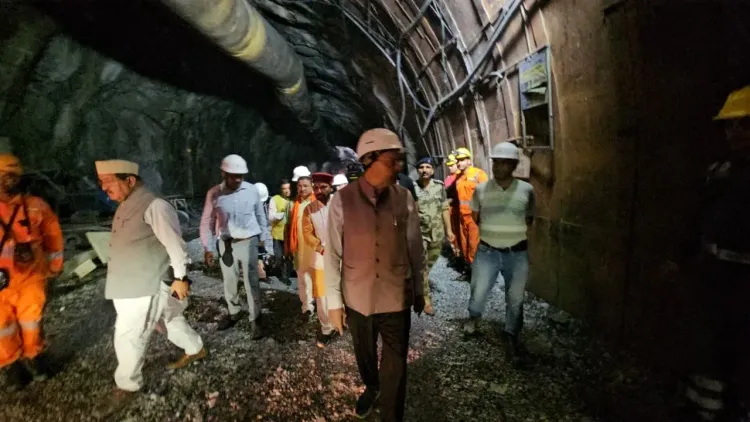
CM Pushkar Singh Dhami personally entered the debris-filled THDC tunnel at Piplakoti in Chamoli on August 14, 2026, as rescue teams work to free 3 remaining trapped workers. Seven deaths have been confirmed; 19 of 22 trapped workers have been pulled out alive.
Key Takeaways
22 workers were trapped when debris and water filled the TRT Tunnel of the Vishnugad-Piplakoti Hydroelectric Project in Chamoli district .
19 workers have been rescued so far; 3 remain trapped inside approximately 1.5 km of the compromised tunnel section.
7 deaths have been confirmed as of the CM's site visit on August 14, 2026 .
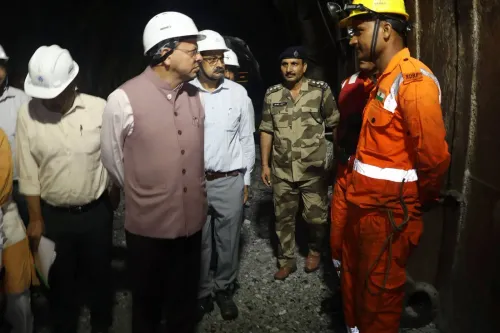
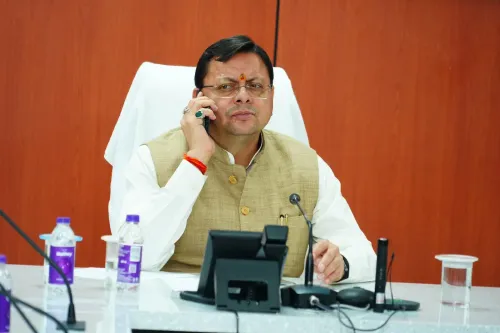
CM Dhami entered the tunnel personally to review rescue operations and directed all agencies to treat the mission as the highest priority.
Rescue teams include NDRF, SDRF, ITBP , and police, coordinated on-site with senior state officials.
Injured workers are being treated at District Hospital Gopeshwar under continuous medical supervision.
Seven workers are dead, three remain unaccounted for inside a debris-choked tunnel, and Uttarakhand Chief Minister Pushkar Singh Dhami walked into that tunnel himself on Friday, August 14, 2026 — not to inspect from a distance, but to see the rescue operation firsthand at Mayapur (Piplakoti) in Chamoli district. The Chief Minister's Office confirmed the visit as multi-agency teams race against time inside a structure that has already claimed seven lives.
What collapsed — and how deep the crisis runs
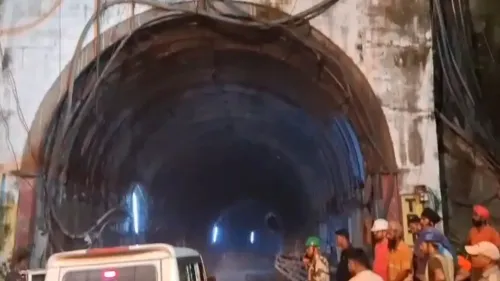
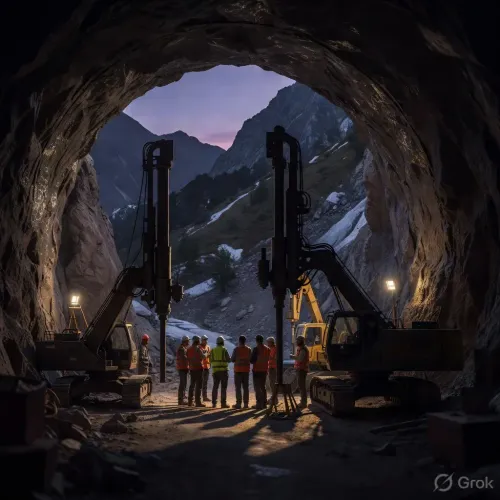
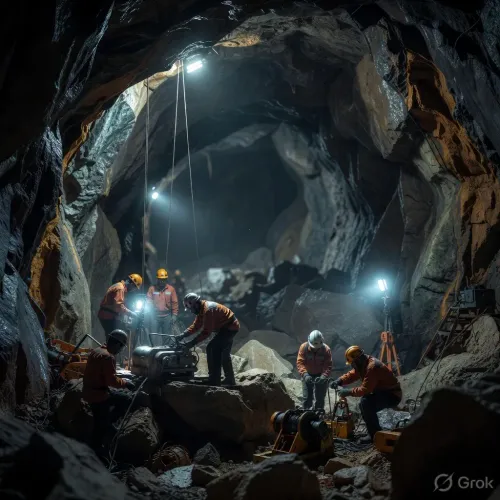
The tunnel in question is the TRT (Tail Race Tunnel) of THDC India Ltd's Vishnugad-Piplakoti Hydroelectric Project, a 444 MW under-construction power project in Chamoli. The tunnel stretches roughly 3 kilometres in total length. A landslide-triggered ingress of debris and water has compromised approximately 1.5 kilometres of that stretch — essentially half the structure.
Of the 22 workers trapped when the incident occurred, 19 have been brought out alive. The rescued injured have been transported to District Hospital Gopeshwar, where a medical team is monitoring them continuously. Three workers are still inside.
CM Dhami's ground-level command
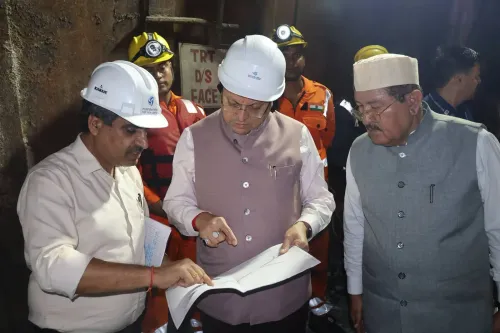
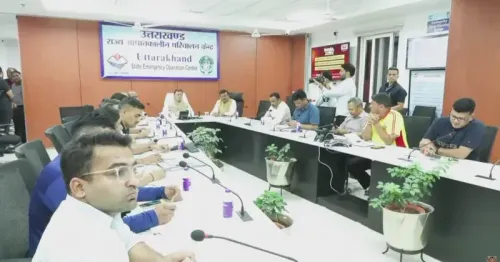
District Magistrate Gaurav Kumar briefed Chief Minister Dhami on the sequence of events and the progress of rescue operations. Dhami then issued direct orders: the rescue mission must be treated as the highest priority, every available resource and technical capability must be deployed, and coordination between all agencies must not break down for a single moment.
The teams on the ground include NDRF (National Disaster Response Force), SDRF (State Disaster Response Force), ITBP (Indo-Tibetan Border Police), and local police — a standard but formidable multi-agency formation that Uttarakhand has deployed in previous tunnel emergencies. Dhami also directed officials to ensure no gap in care for the injured, support for victims' families, and logistics at the site.
Senior officials present included Disaster Secretary Vinod Kumar Suman, Garhwal Commissioner Anand Swaroop, IG Garhwal Rajeev Swaroop, and SP Surjit Singh Panwar, alongside district-level representatives and elected officials including Incharge Minister Bharat Choudhary and Tharali MLA Bhoopal Ram Tamta.
Chamoli's geological curse and the hydro imperative
This incident is not an isolated shock — it is the latest chapter in a long, difficult story. Chamoli district sits in one of the most geologically active corridors of the Himalayas, where landslides, flash floods, and ground subsidence regularly intersect with ambitious infrastructure. Uttarakhand has pursued hydroelectric development aggressively since its formation in 2000, betting on river potential for power and revenue. The Vishnugad-Piplakoti project is a flagship of that bet.
Multi-agency tunnel rescues have become almost a recurring protocol in this terrain — a testament both to the state's improving emergency response capacity and to the stubborn geological risk that no engineering plan has yet fully resolved.
Three lives, one tunnel, a race that cannot stop
With 19 rescued and 7 confirmed dead, the arithmetic of this disaster now hinges on three names officials have not yet been able to account for. Rescue teams continue to work through the debris-filled 1.5-kilometre section, and the Chief Minister has made clear: the operation does not stand down until every worker is found.
Uttarakhand's hydro ambitions will survive this crisis — but the three workers still inside that tunnel are the only number that matters right now.
Point of View
Central to the state's fiscal and energy strategy since 2000, is once again colliding with the Himalayan geology that makes these projects both necessary and dangerous. The recurring pattern of multi-agency rescues in this terrain raises a structural question that will outlast this incident: whether tunnel safety standards for under-construction hydro infrastructure in fragile mountain zones are keeping pace with project ambition. The political calculus is clear — visible, hands-on leadership during disasters is a defining image for state governments in India, and Dhami is pressing that advantage.
NationPress
14 Aug 2026
Frequently Asked Questions
What happened in the THDC tunnel at Piplakoti in Chamoli?
A landslide caused debris and water to fill approximately 1.5 kilometres of the Tail Race Tunnel (TRT) of the Vishnugad-Piplakoti Hydroelectric Project in Mayapur (Piplakoti), Chamoli district, trapping 22 workers inside.
How many workers are still trapped in the Chamoli tunnel?
As of August 14, 2026, three workers remain trapped inside the tunnel. Of the original 22 trapped, 19 have been rescued and 7 deaths have been confirmed.
What is the Vishnugad-Piplakoti Hydroelectric Project?
It is a 444 MW under-construction hydroelectric project being executed by THDC India Ltd in Chamoli district, Uttarakhand, featuring a tunnel-based design to harness river flow for power generation.
Which rescue agencies are operating at the Chamoli tunnel site?
NDRF (National Disaster Response Force), SDRF (State Disaster Response Force), ITBP (Indo-Tibetan Border Police), and local police are all deployed and coordinating the rescue operation.
Where are the rescued workers being treated?
Injured workers rescued from the tunnel are being treated at District Hospital Gopeshwar in Chamoli, where a medical team is providing continuous care and monitoring.