CM Dhami: Govt Will Reach Every Eligible Beneficiary's Door
Synopsis
Chief Minister Pushkar Singh Dhami has reaffirmed that the Uttarakhand government will proactively deliver welfare scheme benefits to eligible citizens' doorsteps, operating on a four-point mantra of simplification, resolution, disposal, and satisfaction.
Key Takeaways
CM Pushkar Singh Dhami stated that no eligible person should be deprived of government scheme benefits.
The Uttarakhand government has pledged a doorstep-delivery model: 'governance will walk up to your door.' The administration is guided by a four-point mantra: simplification, resolution, disposal, and satisfaction .
The approach builds on reforms initiated since Dhami's 2021 assumption of office, targeting procedural simplification.
Primary beneficiaries include rural households , elderly citizens, and persons with limited access to district offices.
District-level audits and coverage reports are expected after the next quarterly welfare scheme review .
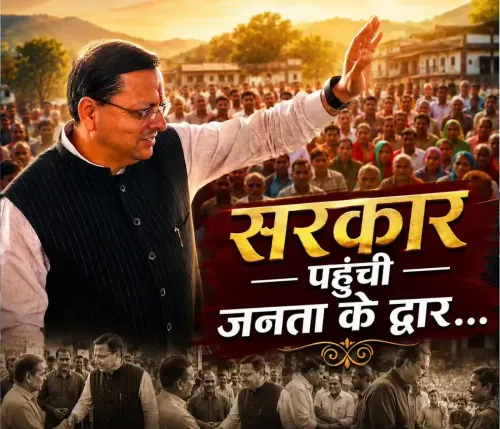
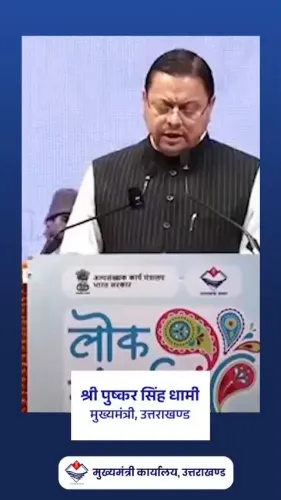
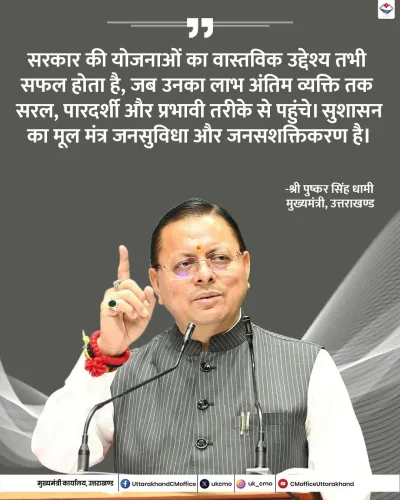
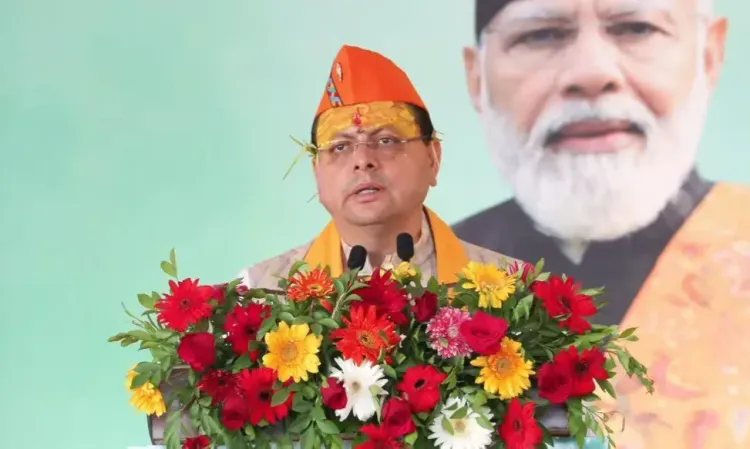
The Chief Minister's Office of Uttarakhand, on Thursday, 16 July 2026, shared a statement by Chief Minister Pushkar Singh Dhami reaffirming the state government's commitment to ensuring that no eligible person is left out of government welfare schemes — with the administration pledging to take services directly to citizens' doorsteps.
Context
In the post, CM Dhami is quoted as saying: 'हमारा लक्ष्य है कि कोई भी पात्र व्यक्ति सरकारी योजनाओं के लाभ से वंचित न रहे।' ('Our goal is that no eligible person should remain deprived of the benefits of government schemes.') He added that the administration is operating on a four-point mantra: simplification, resolution, disposal, and satisfaction — or saralīkaraṇ, samādhān, nistāraṇ, aur santuṣṭi.
The statement captures a central theme of the Dhami government: proactive outreach rather than waiting for citizens to navigate bureaucratic channels. The phrase 'shasan chalkar aapke dwar tak pahunchega' — 'governance will walk up to your door' — signals a doorstep-delivery model for entitlements.
Policy Backdrop
Since Pushkar Singh Dhami assumed office as Chief Minister in 2021, Uttarakhand has pursued administrative reforms aimed at reducing procedural friction in welfare delivery. The emphasis on simplification aligns with national frameworks such as Digital India, which encourages states to minimise exclusion errors and bring services closer to underserved populations.
Indian state governments have increasingly adopted proactive outreach models — conducting camps, mobile units, and doorstep drives — to ensure that eligible rural and remote households receive entitlements without having to travel long distances or engage middlemen. Uttarakhand's hilly and dispersed geography makes such last-mile outreach especially critical, as large sections of the population live in remote villages with limited access to district headquarters.
Stakeholders and Impact
The primary beneficiaries of this approach are rural households, elderly citizens, persons with disabilities, and others who face physical or informational barriers to accessing welfare schemes. By taking the administration to the doorstep, the government aims to reduce the gap between scheme enrolment targets and actual on-ground coverage.
Scheme beneficiaries across categories — including food security, housing, health insurance, and pension programmes — stand to gain from faster grievance redressal and on-the-spot documentation support. Periodic good-governance rankings at the national level also reward states that demonstrate reduced leakage and faster resolution of citizen complaints, creating an institutional incentive for Uttarakhand to sustain this model.
What's Next
District-level coverage reports and beneficiary audits are expected following the next quarterly review of Uttarakhand welfare schemes. These reviews will test whether the doorstep-delivery model is translating into measurable increases in enrolment and satisfaction among eligible citizens.
If the outreach drives yield verifiable gains in coverage, the model could serve as a template for other hill states grappling with similar last-mile delivery challenges. The government's stated four-point mantra will likely be the benchmark against which its own performance is measured in the months ahead.
Point of View
Resolution, disposal, and satisfaction gives the initiative a measurable, slogan-ready identity that can be tracked against district-level data. This fits a broader pattern among Indian state governments that have found last-mile outreach to be both a governance imperative and an electoral asset, particularly in hill states where physical access to services is a persistent grievance. Whether the rhetoric translates into auditable gains in beneficiary coverage will determine its long-term credibility.
NationPress
16 Jul 2026
Frequently Asked Questions
What did CM Pushkar Singh Dhami say about welfare scheme delivery in Uttarakhand?
CM Dhami stated that no eligible person should be left out of government welfare schemes and that the administration will take services directly to citizens' doorsteps, guided by a mantra of simplification, resolution, disposal, and satisfaction.
What is the doorstep delivery model announced by the Uttarakhand government?
The Uttarakhand government's doorstep delivery model involves proactively reaching eligible citizens at their homes rather than requiring them to visit government offices, ensuring last-mile access to welfare scheme benefits.
What is CM Dhami's four-point governance mantra?
CM Dhami's four-point mantra is simplification ( saralīkaraṇ ), resolution ( samādhān ), disposal ( nistāraṇ ), and satisfaction ( santuṣṭi ), which guides the Uttarakhand government's welfare outreach approach.
Who benefits from Uttarakhand's doorstep welfare scheme delivery?
The primary beneficiaries are rural households, elderly citizens, persons with disabilities, and others who face physical or informational barriers to accessing welfare schemes at district offices.
When did Pushkar Singh Dhami become Chief Minister of Uttarakhand?
Pushkar Singh Dhami became Chief Minister of Uttarakhand in 2021 and has since focused on administrative reforms aimed at simplifying welfare delivery and reducing procedural barriers for citizens.