CM Dhami Grinds Salt on Silbatta at Chamoli Women's Meet
Synopsis
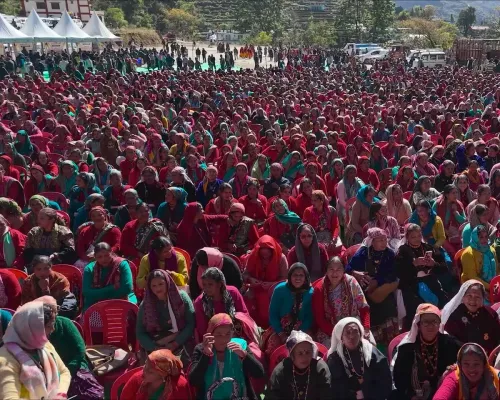
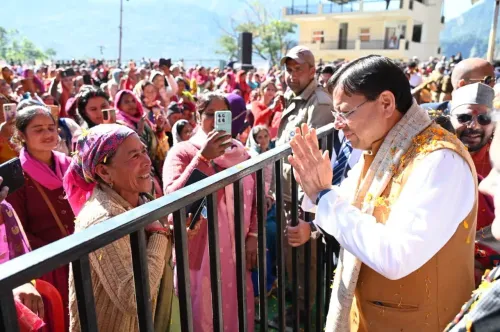
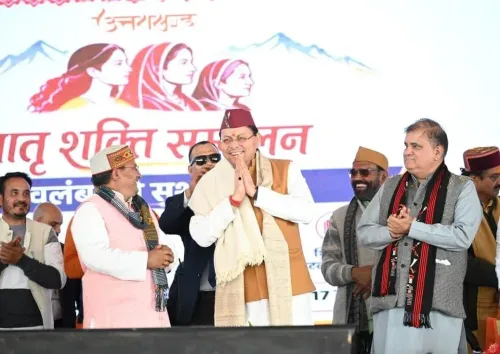
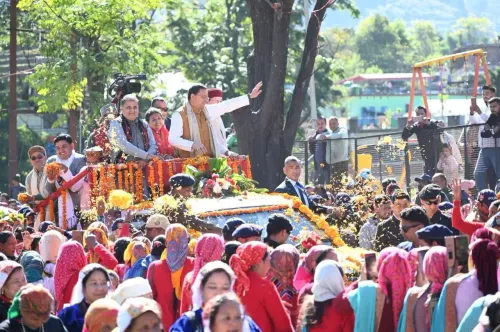
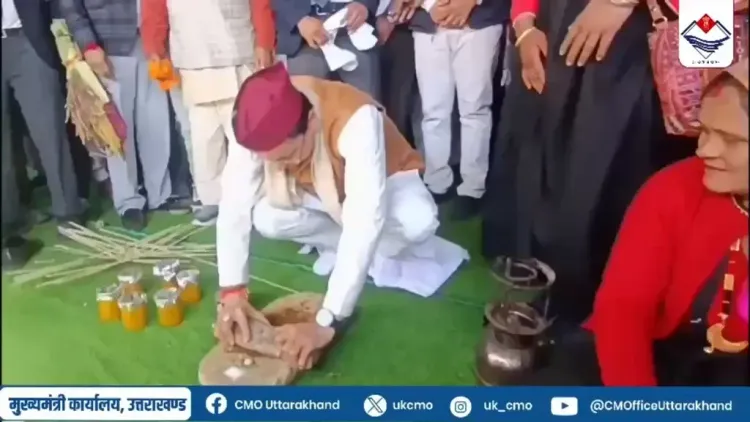
Chief Minister Pushkar Singh Dhami ground salt on a traditional silbatta at the Matrushakti Sammelan in Piplakoti, Chamoli, on 17 November 2026, spotlighting Uttarakhand's Pahari heritage and rural lifestyle during a women-focused district conference.
Key Takeaways
CM Pushkar Singh Dhami demonstrated the traditional silbatta grinding stone at the Matrushakti Sammelan in Piplakoti, Chamoli on 17 November 2026 .
The silbatta — a stone used for grinding spices and salt — remains a living cultural artefact in remote Uttarakhand hill villages.
The Matrushakti Sammelan is a periodic women's conference format used across Uttarakhand hill blocks to link rural women with government schemes and cultural programming.
Chamoli district in Garhwal is home to major pilgrimage sites including Badrinath and Hemkund Sahib , giving cultural symbolism added tourism resonance.
Dhami has consistently used district-level cultural participation as a marker of Pahari identity since taking office in 2021 .
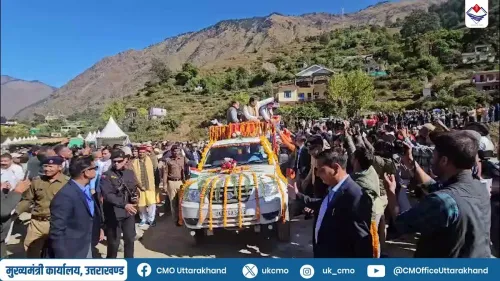
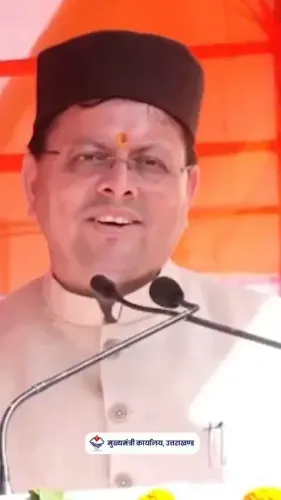
A stone grinding slab, a pinch of rock salt, and a Chief Minister's hands — that image from Piplakoti in Chamoli district on Tuesday, 17 November 2026 said more than any speech could. Chief Minister Pushkar Singh Dhami picked up a silbatta — the traditional grinding stone found in Pahari kitchens — and ground salt on it during the Matrushakti Sammelan, drawing a vivid, unscripted line between high office and the mountain life he invokes on the campaign trail.
The Chief Minister's Office shared the moment on X, describing how Dhami offered a glimpse of his connection to 'pahad ki paramparik sanskriti aur gramin jeevanashaili' (the traditional culture and rural lifestyle of the hills) through the act. The silbatta — once the centrepiece of every hill household's kitchen before electric grinders arrived — has become an emblem of Uttarakhand's pre-modern domestic heritage, still used in remote villages across the Garhwal and Kumaoni belts.
What the Silbatta Symbolises in Uttarakhand's Hill Villages
In mountain communities stretching from Chamoli to Pithoragarh, the silbatta is not nostalgia — it is living practice. Spices ground on stone carry a texture and flavour that blenders cannot replicate, and older generations in villages still prefer it for wedding-day chutneys and festival preparations. Its appearance at a government-organised women's conference underscores how the state is weaving intangible heritage into its outreach calendar, alongside self-help group programmes and rural livelihood schemes.
Matrushakti Sammelan: Women's Voices from the Hills
The Matrushakti Sammelan is a periodic women's conference format deployed across Uttarakhand's hill blocks to bring together rural women, self-help groups, and local administration. Piplakoti, a village in the high-altitude Chamoli district that sits along the road to Badrinath, is a natural gathering point for communities from surrounding valleys. These sammelans typically blend policy updates — livelihood support, health schemes, education — with cultural programming that affirms Pahari identity.
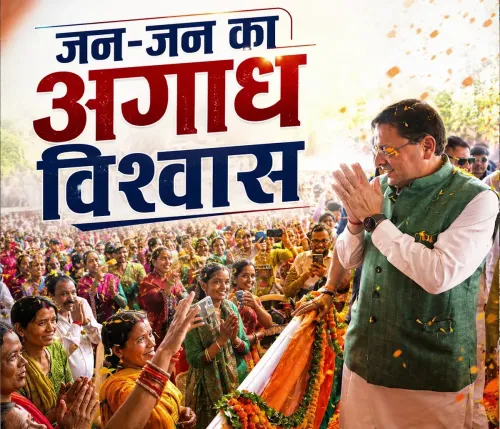
Dhami, who has served as Chief Minister since 2021, has made district-level cultural participation a consistent feature of his public style. Joining a Chholiya dance troupe, tying a traditional dhoti, or — as here — working a grinding stone are gestures that his office frames as authentic connection rather than photo opportunity. Whether voters in the hills read them the same way is the question every such image quietly asks.
Uttarakhand's cultural preservation agenda runs in parallel with its booming religious-tourism economy — Chamoli alone hosts the Badrinath and Hemkund Sahib shrines. Keeping living traditions visible in the state's official narrative matters both as identity politics and as soft tourism infrastructure. A silbatta moment at a women's conference, broadcast from the CM's official account, does both at once.
The sammelans are set to continue in other Uttarakhand blocks, and observers will watch whether today's cultural register is followed by concrete announcements on heritage documentation or women's self-help funding — turning a symbolic gesture into a policy signal.
Point of View
In front of an audience of rural women who use — or remember — that very stone. The Matrushakti Sammelan format amplifies this, blending welfare delivery with cultural affirmation in a single event. For a BJP government that has staked its Uttarakhand project on 'dev bhoomi' pride and women's self-reliance, the visual does heavy lifting with minimal policy spend. The real test, as always, is whether the gesture precedes a budgetary commitment to heritage documentation or women's livelihood programmes — or remains a compelling image standing alone.
NationPress
17 Nov 2026
Frequently Asked Questions
What is a silbatta and why is it significant in Uttarakhand?
A silbatta is a traditional flat stone grinding tool used in Indian kitchens, especially in Himalayan hill communities, to grind spices, salt and pastes. In Uttarakhand it represents pre-modern domestic life and Pahari cultural identity, still used in remote villages across the Garhwal and Kumaoni regions.
What is the Matrushakti Sammelan in Uttarakhand?
The Matrushakti Sammelan is a periodic women's conference organised in hill districts of Uttarakhand, bringing together rural women, self-help groups and local officials to discuss livelihood schemes, health, education and cultural preservation.
Where is Piplakoti and why was it chosen for this event?
Piplakoti is a village in Chamoli district of Uttarakhand's Garhwal division, located on the main road leading to the Badrinath shrine. Its position makes it a natural gathering hub for communities from the surrounding high-altitude valleys.
How long has Pushkar Singh Dhami been Chief Minister of Uttarakhand?
Pushkar Singh Dhami has served as Chief Minister of Uttarakhand since 2021, and has made regular participation in district-level cultural events a feature of his public engagement style.
What is Uttarakhand's broader approach to preserving Pahari culture?
Uttarakhand promotes intangible cultural heritage — including traditional food practices, folk music and crafts — alongside its religious-tourism economy. State-organised events like the Matrushakti Sammelan weave cultural programming into government outreach, with district-level demonstrations helping keep living traditions visible.