Sonowal Reviews IMU to Drive Maritime Vision 2047
Synopsis
Union Minister Sarbananda Sonowal chaired a review of Indian Maritime University on November 17, 2026, focusing on public outreach, institutional strengthening, and aligning IMU's roadmap with Maritime Amrit Kaal Vision 2047 to drive research, innovation, and coastal community empowerment.
Key Takeaways
Sarbananda Sonowal chaired a comprehensive review of Indian Maritime University (IMU) on November 17, 2026 .
The review focused on enhancing IMU's public outreach and sharpening its institutional roadmap aligned with Maritime Amrit Kaal Vision 2047 .
IMU was established by an Act of Parliament in 2008 to consolidate maritime education under a single central university.
Key agenda items included research, innovation, skilled human resource development, and empowerment of India's coastal communities .
The session positions IMU as a strategic driver of India's maritime growth within the centenary-year 2047 vision framework .
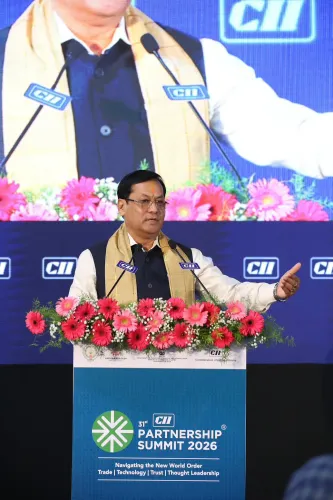
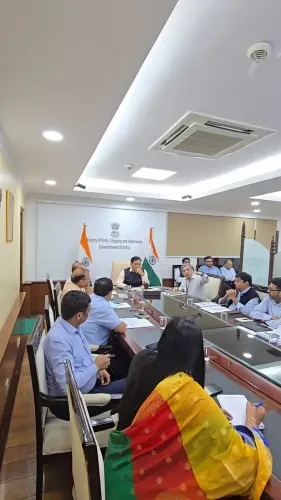
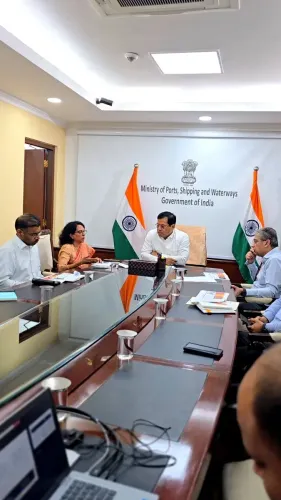
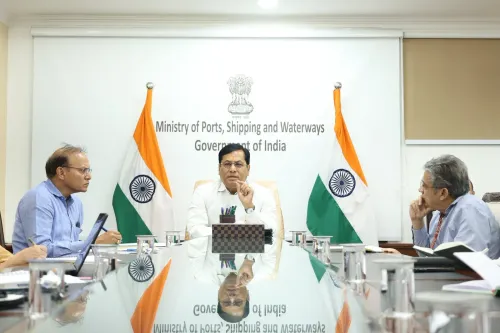
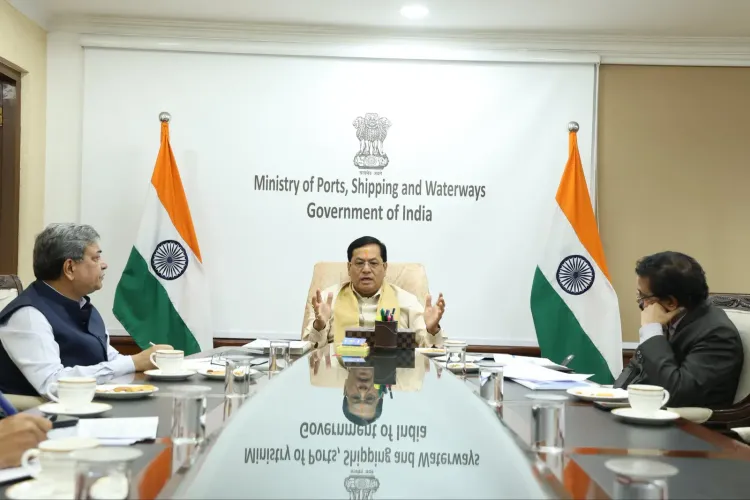
India's maritime education infrastructure came under a sharp ministerial lens on Tuesday, November 17, 2026, when Union Minister of Ports, Shipping and Waterways Sarbananda Sonowal chaired a comprehensive review of the Indian Maritime University (IMU) — the country's apex institution for maritime learning — anchoring the session firmly to the long-horizon ambitions of the Maritime Amrit Kaal Vision 2047.
What the IMU review put on the table
Minister Sonowal described IMU as 'the bedrock of India's maritime education and capacity-building' — a phrase that signals the government's intent to treat it not merely as an academic institution but as a strategic national asset. The review deliberated on two immediate priorities: broadening IMU's public outreach and sharpening its institutional roadmap so it moves in lockstep with the 2047 vision. Also on the agenda was IMU's role in accelerating maritime growth through research, innovation, and the development of skilled human resources — with an explicit focus on empowering India's coastal communities.
IMU's parliamentary roots and multi-campus reach
IMU was established by an Act of Parliament in 2008, designed to consolidate what had been a fragmented landscape of maritime training institutes under a single central university. Its mandate spans education, training, and research across multiple campuses, making it the institutional spine of India's seafarer and maritime professional pipeline. The shipping industry, maritime students, and millions of people living along India's vast coastline all sit downstream of decisions made at IMU's strategic level.
Where Maritime Amrit Kaal Vision 2047 fits in
The Maritime Amrit Kaal Vision 2047 is India's centenary-year framework for the sector — a blueprint that extends earlier port modernisation drives into an integrated national ambition covering infrastructure, capacity-building, and self-reliance. It is squarely in the tradition of Atmanirbhar Bharat, and ministerial reviews like Tuesday's are the mechanism through which broad vision documents get translated into institutional action plans. The deliberate alignment of IMU's roadmap with 2047 goals signals that maritime education is being repositioned as a driver of economic growth, not just a training function.
Coastal communities in the frame
Perhaps the sharpest signal from Tuesday's review is the explicit mention of coastal community empowerment alongside research and innovation. India's coastline stretches over 7,500 kilometres, and the communities that live along it have historically been underrepresented in the formal maritime economy. By placing their empowerment as a stated objective of IMU's enhanced mandate, the ministry is flagging an equity dimension that goes beyond skilling the next generation of merchant navy officers. Watch for follow-up announcements on revised outreach programmes and measurable targets under the 2047 framework in the weeks ahead.
India's maritime future will be built on the talent it trains today — and Tuesday's review served notice that the government is determined to close the gap between ambition and institutional delivery.
Point of View
The Ministry is signalling that maritime education is being elevated from a niche sectoral concern to a pillar of Atmanirbhar Bharat's human capital strategy. The coastal community empowerment angle is politically telling — it widens the constituency for maritime policy beyond the shipping industry into one of India's most electorally significant demographic groups. Whether the review translates into measurable institutional reform or remains a high-profile alignment exercise will depend entirely on the follow-up targets announced in coming weeks.
NationPress
17 Nov 2026
Frequently Asked Questions
What is the Indian Maritime University and when was it established?
The Indian Maritime University (IMU) is a central university established by an Act of Parliament in 2008 to consolidate maritime education, training, and research under a single institution across multiple campuses in India.
What is Maritime Amrit Kaal Vision 2047?
Maritime Amrit Kaal Vision 2047 is India's long-term national framework for the maritime sector targeting the country's centenary year, focusing on infrastructure, capacity-building, self-reliance, and integrating maritime growth with broader national development goals.
What did Sarbananda Sonowal discuss in the IMU review on November 17, 2026?
Minister Sonowal chaired a comprehensive review of IMU covering enhanced public outreach, strengthening its institutional roadmap aligned with Vision 2047, and IMU's role in accelerating maritime growth through research, innovation, skilled human resources, and coastal community empowerment.
Why is IMU important for India's coastal communities?
IMU's expanded mandate includes empowering coastal communities — the millions of people living along India's 7,500-kilometre coastline — by integrating them into the formal maritime economy through education, skilling, and research-driven opportunities.
What should we watch for after the IMU review by Minister Sonowal?
Follow-up announcements on IMU's revised institutional roadmap, new public outreach programmes, and measurable targets under the Maritime Amrit Kaal Vision 2047 framework are expected in the weeks after the November 2026 review.