Sonowal Reviews IMU Progress, Eyes Maritime Skilling for 2047
Synopsis
Union Minister Sarbananda Sonowal reviewed Indian Maritime University's progress on 6 July 2026, calling for intensified industry-oriented training and advanced skilling as India pursues its Maritime Amrit Kaal Vision 2047. IMU's growing ties with global bodies like IAMU and UArctic were highlighted as key to cementing India's maritime leadership.
Key Takeaways
Union Minister Sarbananda Sonowal reviewed Indian Maritime University (IMU) progress on 6 July 2026 , citing its role in maritime education, research and skilling.
IMU , established by Parliament in 2008 , is a central university under the Ministry of Ports, Shipping and Waterways with campuses across India.
The minister highlighted IMU's growing global stature through partnerships with IAMU and UArctic , two major international academic bodies.
Sonowal linked advanced maritime skilling directly to India's Maritime Amrit Kaal Vision 2047 (MAKV2047) , the ministry's long-term sectoral roadmap.
A 'highly skilled workforce' was described by the minister as the 'anchor' for India's leadership in global shipbuilding and the broader maritime sector.
The review signals continued ministry focus on industry-oriented training to compete with dominant East Asian shipbuilding economies .
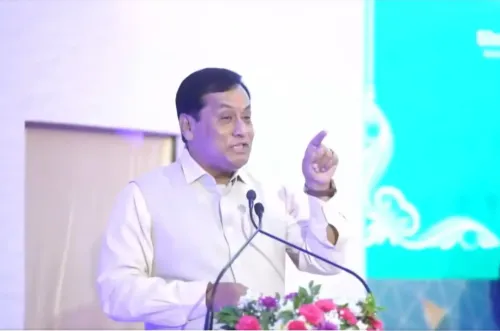
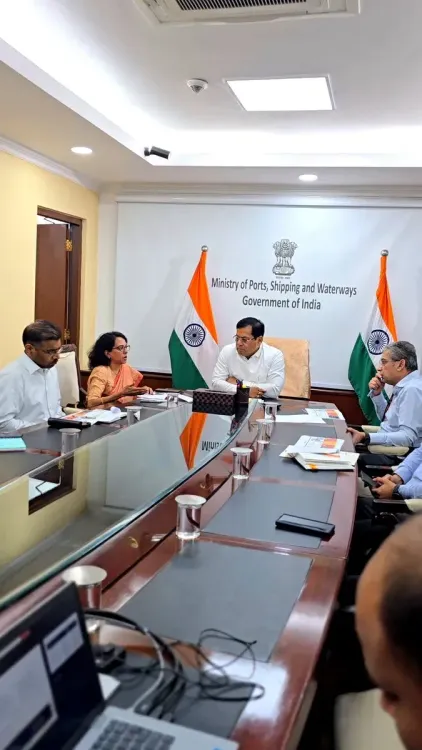
Union Minister of Ports, Shipping and Waterways Sarbananda Sonowal on Monday, 6 July 2026, reviewed the progress of the Indian Maritime University (IMU), highlighting its growing role in maritime education, research, and skilling as India works toward its long-term maritime ambitions under #MAKV2047.
Context
In his post on X, Minister Sonowal stated that he had 'reviewed progress of Indian Maritime University and its vital contribution to India's maritime education, research and skilling ecosystem.' He specifically noted IMU's 'growing global stature, driven by increasing international academic partnerships and engagements with strategic forums like IAMU and UArctic.' The review signals the ministry's active oversight of the institution as a cornerstone of India's maritime ambitions.
The Indian Maritime University was established by an Act of Parliament in 2008 to consolidate and upgrade maritime training that had previously been spread across disparate government institutes. It operates multiple campuses across India and functions as a central university under the Ministry of Ports, Shipping and Waterways.
Policy Backdrop
Sonowal's review is anchored in the Maritime Amrit Kaal Vision 2047 (MAKV2047), a long-term sectoral roadmap aligned with India's centenary goals for 2047. This builds on the Maritime India Vision 2030, released in 2021, which set targets spanning port capacity, shipbuilding output, and skill development. The minister underscored that 'intensifying our focus on industry-oriented training and advanced maritime skilling is crucial' as India navigates toward MAKV2047.
IMU's international engagements include participation in the International Association of Maritime Universities (IAMU), a global body promoting academic standards in maritime education since 1999, and UArctic, a cooperative network of institutions focused on circumpolar Arctic research and education. These partnerships are considered essential for aligning Indian maritime training with International Maritime Organisation (IMO) standards and for advancing India's strategic interests in the Indo-Pacific.
The push for industry-ready maritime skilling mirrors broader national drives under the National Education Policy 2020 and the Skill India programme, reflecting a whole-of-government approach to workforce development in high-priority sectors.
Stakeholders and Impact
The primary beneficiaries of a strengthened IMU are maritime students seeking internationally recognised qualifications, the shipbuilding industry, and shipping companies that depend on a steady pipeline of skilled seafarers and technical personnel. India currently lags behind East Asian economies — notably China, South Korea, and Japan — in global shipbuilding market share, and a skilled domestic workforce is widely seen as a prerequisite for closing that gap.
Sonowal stated that 'a highly skilled workforce will be the anchor for cementing India's leadership in global shipbuilding and the wider maritime sector.' This framing positions IMU not merely as an educational institution but as a strategic instrument of industrial policy, with its output directly linked to the competitiveness of India's shipbuilding and seafarer-supply sectors.
What's Next
Observers will watch for announcements of new international academic MoUs and updated placement data in IMU's forthcoming annual reports. Parliamentary and budget references to MAKV2047 funding and infrastructure targets in 2026-27 will be key indicators of how the ministry translates the minister's stated priorities into resource allocation. The emphasis on advanced maritime skilling also suggests possible future alignment with India's broader defence-shipbuilding ambitions, where a technically trained civilian maritime workforce serves dual-use purposes.
Point of View
The ministry is framing skilling as the missing variable in India's bid to challenge East Asian dominance in global shipping and vessel construction. This fits a broader pattern under the current government of deploying central universities as instruments of sectoral policy rather than purely academic institutions. The mention of UArctic — a body focused on circumpolar research — alongside IAMU also hints at India's expanding maritime interests in the Arctic, an area of growing geopolitical salience.
NationPress
5 Oct 2026
Frequently Asked Questions
What is the Indian Maritime University and who controls it?
The Indian Maritime University (IMU) is a central university established by an Act of Parliament in 2008. It operates under the Ministry of Ports, Shipping and Waterways and runs multiple campuses across India focused on maritime education, training and research.
What is MAKV2047 in India's maritime policy?
MAKV2047, or Maritime Amrit Kaal Vision 2047, is a long-term roadmap for India's maritime sector aligned with the country's centenary goals for 2047. It builds on the Maritime India Vision 2030 released in 2021 and covers port capacity, shipbuilding and skill development targets.
Why did Sonowal review IMU in July 2026?
Minister Sonowal reviewed IMU's progress to assess its contribution to India's maritime education and skilling ecosystem and to reinforce the ministry's focus on industry-oriented training as a pillar of the MAKV2047 roadmap.
What is IAMU and why is India's maritime university involved?
IAMU, the International Association of Maritime Universities, is a global body promoting academic standards in maritime education since 1999. IMU's engagement with IAMU helps align Indian maritime training with International Maritime Organisation standards and supports India's strategic objectives in the Indo-Pacific.
How does maritime skilling connect to India's shipbuilding ambitions?
A skilled domestic workforce is widely considered essential for India to increase its share of global shipbuilding, a sector currently dominated by East Asian economies. Advanced training at institutions like IMU is intended to supply industry-ready personnel to shipyards and shipping companies.