Dr. Jitendra Singh Walks Tribal Empowerment Exhibition on Janjatiya Gaurav Divas
Synopsis
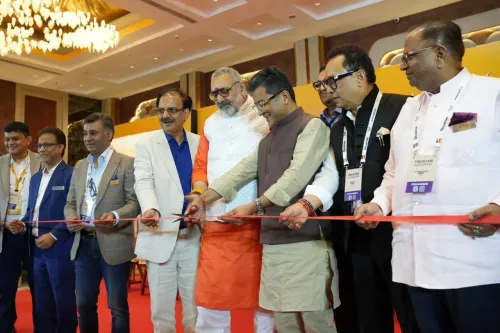
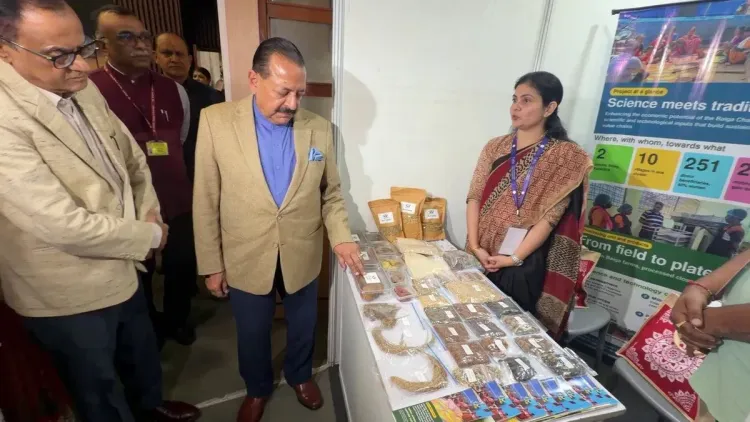
Union Minister Dr. Jitendra Singh toured an exhibition of tribal bamboo crafts, agricultural produce and state-led empowerment initiatives on Janjatiya Gaurav Divas 2026, the annual observance honouring freedom fighter Birsa Munda and India's Scheduled Tribe communities.
Key Takeaways
Jitendra Singh visited exhibition stalls showcasing grassroots tribal initiatives, bamboo crafts, and agricultural products on 17 November 2026 .
Janjatiya Gaurav Divas is observed on 15 November each year, marking the birth anniversary of 19th-century tribal leader Birsa Munda .
The national observance was instituted by the central government and first held in 2021 .
Multiple state governments displayed their tribal empowerment efforts, with traditional bamboo crafts featuring as a key livelihood sector.
The exhibition connects to the Vanbandhu Kalyan Yojana framework, which has targeted tribal district development since 2014 .
Bamboo and minor forest produce value chains remain a focus area ahead of the next Union Budget cycle.
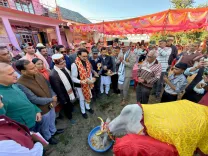
Bamboo crafts, agricultural produce, and grassroots stories from across India's tribal heartlands filled the exhibition stalls that Union Minister Dr. Jitendra Singh walked through on Tuesday, 17 November 2026, as the nation marked Janjatiya Gaurav Divas — the annual celebration of tribal heritage anchored to the birth anniversary of freedom fighter Birsa Munda.
What the exhibition floor looked like
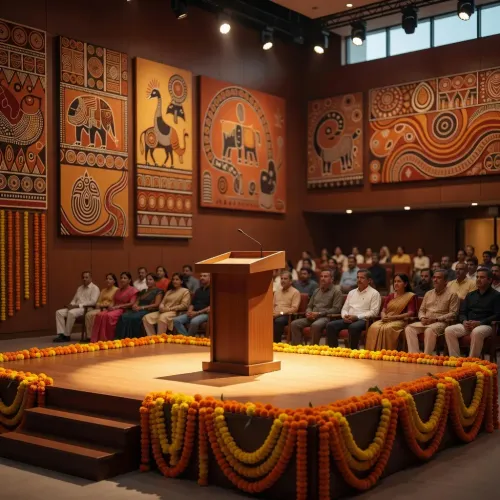
The minister moved through stalls showcasing 'diverse grassroots initiatives, traditional bamboo crafts, agricultural products and efforts of different States for Tribal Empowerment' — his words capturing a floor that was equal parts cultural archive and economic showcase. State governments brought forward the work happening on the ground in Scheduled Areas: handicrafts rooted in generations of forest knowledge, farm produce tied to tribal livelihoods, and development models built around communities rather than imposed on them.
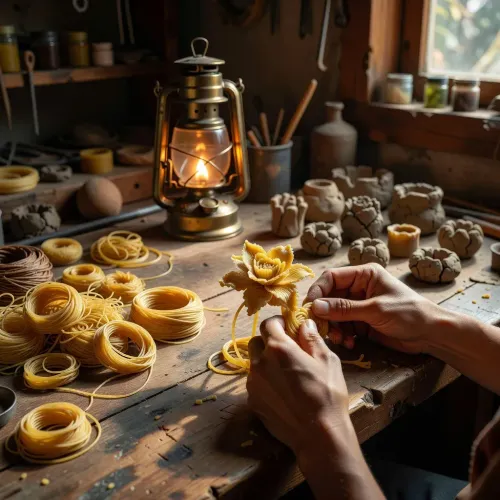
Bamboo, long the backbone of tribal artisan economies, featured prominently — a craft form that successive policy frameworks have tried to link to formal value chains and market access.
Why Birsa Munda's birth anniversary carries this weight
Janjatiya Gaurav Divas was instituted by the central government and first observed nationwide in 2021, designating 15 November — the birth anniversary of Birsa Munda — as the focal date. Munda, a 19th-century tribal leader from present-day Jharkhand, led one of the most storied resistances against British colonial rule and remains a defining symbol of tribal assertion and dignity.
Placing an exhibition of living tribal enterprise on this day is deliberate: it links cultural memory to present-day economic inclusion, framing craft and agriculture not as heritage curiosities but as ongoing contributions to the national economy.
Bamboo and beyond: the policy thread running through the stalls
The exhibition sits inside a longer policy arc. The Vanbandhu Kalyan Yojana, launched in 2014, has sought to accelerate development in tribal districts through livelihood support and infrastructure investment. Bamboo processing and minor forest produce value chains have repeatedly appeared as priority areas in that framework — sectors where tribal communities hold traditional expertise but have historically lacked market linkages.
What exhibitions like this one attempt to do is shorten the distance between that expertise and buyers, policymakers, and state-level procurement systems. Whether individual states convert showcase momentum into durable supply-chain support is the question that follows every such event.
With the next Union Budget cycle approaching, the visibility these stalls generate for bamboo and agricultural produce from tribal belts could feed into allocation conversations — particularly for communities whose economic case is strongest when it arrives with faces, products, and stories attached.
Point of View
And exhibitions featuring state-level produce and crafts operationalise that intent. The harder question is whether showcase visibility converts into supply-chain investment and budgetary allocation — the gap between exhibition stall and market linkage has historically been where tribal economic initiatives stall. With budget discussions on the horizon, the political calculus of tribal welfare visibility will be watched closely.
NationPress
17 Nov 2026
Frequently Asked Questions
What is Janjatiya Gaurav Divas and when is it celebrated?
Janjatiya Gaurav Divas is an annual national observance held on 15 November to honour the contributions and heritage of India's tribal communities. It was instituted by the central government and first observed in 2021 , coinciding with the birth anniversary of tribal freedom fighter Birsa Munda .
Who was Birsa Munda?
Birsa Munda was a 19th-century tribal leader born in present-day Jharkhand who led a significant resistance movement against British colonial rule. He is revered as a symbol of tribal dignity and self-assertion across India.
What did the Janjatiya Gaurav Divas exhibition showcase?
The exhibition featured grassroots tribal initiatives, traditional bamboo crafts , agricultural products, and state government efforts toward tribal empowerment, with multiple states displaying their programmes at dedicated stalls.
What is the Vanbandhu Kalyan Yojana?
The Vanbandhu Kalyan Yojana , launched in 2014 , is a central government scheme aimed at accelerating development in tribal districts through livelihood support, infrastructure investment, and economic inclusion of Scheduled Tribe communities.
Why is bamboo significant for tribal communities in India?
Bamboo is a traditional craft and livelihood resource deeply embedded in tribal economies across India's Scheduled Areas. Policy frameworks have increasingly sought to link tribal bamboo artisans to formal value chains and market access as part of broader economic inclusion efforts.