Sonowal Chairs Port Ministry Review, Announces Maritime Reform Utsav
Synopsis
Union Minister Sarbananda Sonowal chaired a high-level review in New Delhi on 25 May 2026, announcing a nationwide Maritime Reform Utsav to mark 12 years of port reforms, a new integrated digital platform and mobile app for seamless services, and a dedicated monitoring mechanism for time-bound project execution and grievance redressal.
Key Takeaways
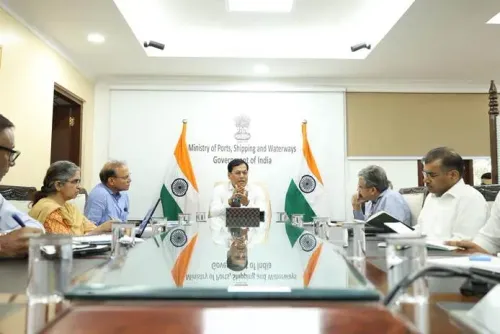
Union Minister Sarbananda Sonowal chaired a high-level review with Ministry of Ports, Shipping and Waterways officials in New Delhi on 25 May 2026 .
A nationwide Maritime Reform Utsav will be held to commemorate 12 years of maritime sector growth and reforms.
An integrated digital platform and mobile app will be launched to consolidate maritime services and improve ease of doing business.
A dedicated monitoring mechanism will be established for time-bound project execution and effective grievance redressal.
The decisions are anchored in PM Narendra Modi 's 'Reform, Perform, Transform and Inform' governance framework.
The reforms build on earlier milestones including the Sagarmala Project (2015) , Maritime India Vision 2030 , and the Major Port Authorities Act, 2021 .
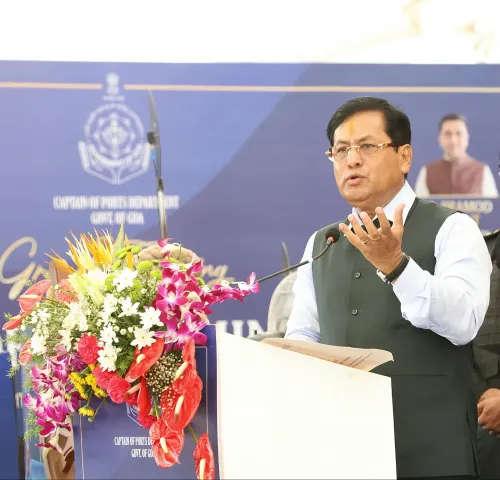
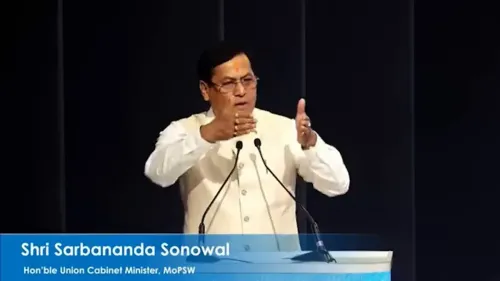
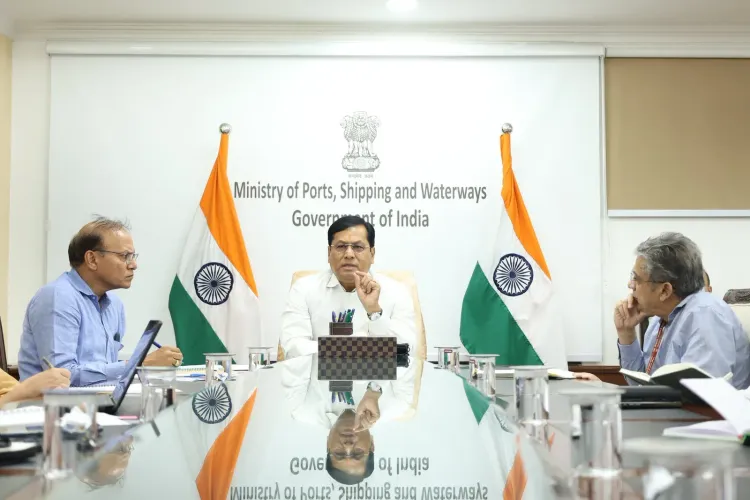
Union Minister of Ports, Shipping and Waterways Sarbananda Sonowal chaired a high-level review meeting with Ministry of Ports, Shipping and Waterways officials in New Delhi on Monday, 25 May 2026, announcing a set of governance and digital reform decisions aimed at accelerating maritime sector delivery.
Context
The review meeting produced three headline decisions. First, the ministry will commemorate 12 years of maritime sector growth and reforms through a nationwide event called the Maritime Reform Utsav. Second, a new integrated digital platform and mobile application will be launched to consolidate services and boost ease of doing business for port and shipping stakeholders. Third, a dedicated monitoring mechanism will be established to ensure time-bound execution of projects and effective grievance redressal.
Sonowal framed the decisions within Prime Minister Narendra Modi's governance philosophy, stating the ministry is 'guided by Hon'ble PM Shri Narendra Modi Ji's mantra of Reform, Perform, Transform and Inform' to ensure 'every reform brings real, ground-level benefits to citizens.'
Policy Backdrop
The announcements build on a decade-long policy architecture in India's maritime sector. The Sagarmala Project, launched in 2015, set the template for port-led economic development by modernising ports and improving connectivity. The Maritime India Vision 2030, unveiled in 2021, laid out long-term modernisation targets, while the Major Port Authorities Act, 2021 replaced the 1963 Act to grant greater operational autonomy to major ports.
The 12-year milestone referenced in the Maritime Reform Utsav traces the arc of reform to 2014, when the current central government took office and began a sustained push to improve ease of doing business at Indian ports through digitalisation and institutional restructuring.
Stakeholders and Impact
Port authorities, shipping companies and maritime logistics firms stand to be the primary beneficiaries of the integrated digital platform, which is designed to replace fragmented service touchpoints with a single interface accessible via mobile. For smaller operators and individual maritime service users, the grievance redressal component of the new monitoring mechanism could reduce delays that have historically added cost to port-side operations.
The Maritime Reform Utsav, as a nationwide commemorative programme, is also expected to serve a public-visibility function — highlighting cumulative policy outcomes to a broader audience beyond specialist maritime stakeholders, consistent with the ministry's communication strategy around sector milestones.
What's Next
The ministry's next measurable steps will be the formal launch of the integrated digital platform and mobile app, with adoption metrics likely to serve as a key indicator of success. The scope and schedule of the Maritime Reform Utsav events across the country are yet to be detailed publicly. Progress on projects placed under the new dedicated monitoring mechanism may surface in parliamentary updates or budgetary reviews in the months ahead.
With maritime trade volumes and port capacity expansion remaining central to India's infrastructure and export ambitions, the ministry's emphasis on time-bound execution and digital governance signals an intent to reduce the implementation gap that has long challenged large infrastructure programmes.
Point of View
Digitalisation, monitoring) into one governance narrative ahead of what the ministry frames as a 12-year reform milestone. The Maritime Reform Utsav follows a well-established BJP playbook of converting policy anniversaries into outreach events, simultaneously mobilising stakeholder visibility and reinforcing the party's infrastructure record. The integrated digital platform, if delivered, would address a persistent criticism that Indian port services remain siloed and paper-heavy despite successive reform rounds. The dedicated monitoring mechanism for time-bound execution is arguably the most consequential of the three: it directly targets the implementation gap that has slowed Sagarmala and related port-connectivity projects, and its effectiveness will be judged by whether project timelines actually compress.
NationPress
16 Sept 2026
Frequently Asked Questions
What is the Maritime Reform Utsav announced by Sonowal?
The Maritime Reform Utsav is a nationwide commemorative programme announced by Union Minister Sarbananda Sonowal on 25 May 2026 to mark 12 years of maritime sector growth and reforms in India since 2014.
What is the new digital platform for Indian ports?
The Ministry of Ports, Shipping and Waterways announced an integrated digital platform and mobile app that will consolidate maritime services into a single interface to improve ease of doing business for port operators, shipping companies and logistics firms.
What is the dedicated monitoring mechanism announced by the port ministry?
The dedicated monitoring mechanism is a new institutional arrangement announced on 25 May 2026 to ensure time-bound execution of port and shipping projects and provide effective grievance redressal for stakeholders.
What is the Sagarmala Project and how does it relate to these reforms?
The Sagarmala Project, launched in 2015, is the central government's port-led development programme to modernise ports and improve connectivity. The latest reforms announced by Sonowal build on the policy architecture established under Sagarmala and subsequent milestones like Maritime India Vision 2030.
What is Sarbananda Sonowal's role in the Indian government?
Sarbananda Sonowal is the Union Minister of Ports, Shipping and Waterways in the Government of India. He is a senior BJP leader and former Chief Minister of Assam.