Dr. Jitendra Singh: Tribal Knowledge Meets CRISPR Science
Synopsis
Union Science and Technology Minister Dr. Jitendra Singh, speaking at Janjatiya Gaurav Divas 2026, announced a multi-institutional CRISPR-Cas9 gene therapy effort for sickle cell anaemia and called for STEM pipelines and technology enterprises to uplift tribal communities, especially in India's North East.
Key Takeaways
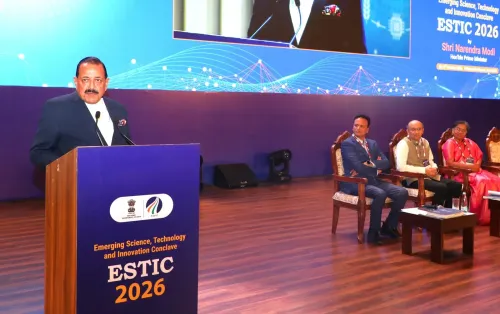
Janjatiya Gaurav Divas , instituted in 2021 to mark Bhagwan Birsa Munda's birth anniversary, was observed on 17 November 2026 with a programme by the Ministry of Science and Technology.
A multi-institutional CRISPR-Cas9 gene therapy effort for sickle cell anaemia involves CSIR-IGIB, AIIMS New Delhi, CSIR-IICT Hyderabad, NII Mumbai and other institutions.
The National Sickle Cell Anaemia Elimination Mission , launched in 2023 , targets tribal populations with high disease prevalence.
Singh called for digital education and STEM training to enable tribal youth to lead India's scientific journey.
The North Eastern Region was specifically identified for technology-based enterprise development with skills, mentoring, finance and market linkages.
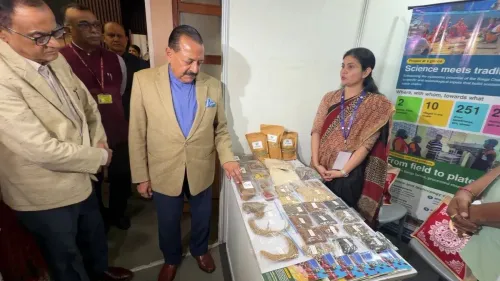
Tribal communities were described as 'guardians of India's biodiversity' whose knowledge continues to inspire modern science.
When a Union Minister stands before a Janjatiya Gaurav Divas audience and invokes Bhagwan Birsa Munda in the same breath as CRISPR-Cas9 gene therapy, the distance between forest wisdom and frontier science collapses into a single, pointed argument. Union Science and Technology Minister Dr. Jitendra Singh addressed the Ministry of Science and Technology's programme marking Janjatiya Gaurav Divas on Tuesday, 17 November 2026, laying out a vision that positions tribal communities not as passive welfare recipients but as both custodians of India's biodiversity and the intended beneficiaries of its most ambitious biomedical research.
Birsa Munda as the frame for 21st-century inclusion
Bhagwan Birsa Munda, the 19th-century Adivasi leader who led the Ulgulan (great tumult) against colonial exploitation, is not an incidental invocation here. Janjatiya Gaurav Divas was instituted in 2021 to commemorate his birth anniversary on 15 November and to formally recognise tribal contributions to India's freedom struggle and ecological heritage. Dr. Singh framed Munda's legacy as a living mandate — 'his life and contribution continue to inspire efforts towards social justice, equality and inclusive development.'
The minister's remarks placed tribal communities at the intersection of two roles that policy had long treated separately: guardians of forests, rivers and mountains whose ecological knowledge 'continues to inspire modern science', and a population whose health and livelihood deficits demand targeted technological intervention.
CRISPR at the frontier of sickle cell elimination
The sharpest, most consequential signal in Dr. Singh's address was the multi-institutional CRISPR-Cas9 gene therapy effort for sickle cell anaemia — a disease that disproportionately burdens tribal populations across central and eastern India. The collaborative involves CSIR-IGIB (the CSIR Institute of Genomics and Integrative Biology), AIIMS New Delhi, CSIR-IICT Hyderabad, NII Mumbai, and other institutions working collectively toward a potential cure.
The National Sickle Cell Anaemia Elimination Mission, launched in 2023, had already signalled the government's intent to treat the disease as a public-health priority rather than a statistical footnote. CRISPR-based gene editing moves that mission from mass screening into the realm of curative medicine. Dr. Singh was explicit: it is 'this government headed by PM Sh Narendra Modi which has, for the first time, placed both the tribal communities as well as sickle cell anaemia high in its priority list.'
STEM pipelines and technology enterprises in the North East
Beyond the biomedical headline, Dr. Singh sketched a broader economic architecture — one built around digital education, STEM training for tribal youth, and technology-based enterprises supported by 'skills, mentoring, finance and market linkages.' The North Eastern Region received specific mention as a focal geography for this livelihood-creation model.
The emphasis on 'affordable, accessible technologies suited to local conditions and easy to operate and maintain' signals a deliberate pivot away from transplanting urban-centric solutions into Scheduled Areas. The theory of change here is structural: equip tribal youth with scientific skills, anchor them in local enterprise ecosystems, and let them carry India's scientific journey — not as apprentices to the mainstream, but as drivers of it.
India's tribal belt sits atop some of the country's richest biodiversity and some of its deepest development deficits. If CRISPR can close the health gap and STEM pipelines can close the opportunity gap, Janjatiya Gaurav Divas 2026 may be remembered as the moment the government's tribal-science compact moved from policy language into clinical and institutional reality.
Point of View
The minister reinforces the Modi government's broader narrative of inclusive technological nationalism. The focus on the North Eastern Region for STEM and enterprise support also signals continued political and developmental attention to a geography that has gained outsized strategic importance. Whether the CRISPR programme's institutional collaboration translates into accessible clinical outcomes for tribal patients — rather than remaining a research milestone — will be the true test of this policy convergence.
NationPress
17 Nov 2026
Frequently Asked Questions
What is Janjatiya Gaurav Divas and why is it celebrated on 15 November?
Janjatiya Gaurav Divas is a national observance instituted in 2021 to commemorate the birth anniversary of Bhagwan Birsa Munda , the Adivasi freedom fighter born on 15 November 1875 . It recognises tribal contributions to India's freedom struggle and cultural heritage.
What is the CRISPR sickle cell anaemia treatment being developed in India?
A multi-institutional CRISPR-Cas9 gene therapy effort for sickle cell anaemia is being collectively undertaken by CSIR-IGIB, AIIMS New Delhi, CSIR-IICT Hyderabad, NII Mumbai and other institutions. It aims to offer a curative approach for the disease, which disproportionately affects tribal communities.
What is the National Sickle Cell Anaemia Elimination Mission?
The National Sickle Cell Anaemia Elimination Mission was launched in 2023 to screen and manage sickle cell disease with a particular focus on tribal populations across India, who face a higher prevalence of the genetic condition.
What did Dr. Jitendra Singh say about tribal communities and science?
Dr. Singh said tribal communities are 'guardians of India's biodiversity' whose traditional knowledge 'continues to inspire modern science.' He called for digital education and STEM training to help tribal youth lead India's scientific journey and urged technology-based enterprise creation especially in the North Eastern Region .
Why is sickle cell anaemia a priority for tribal welfare in India?
Sickle cell anaemia is a genetic blood disorder with significantly higher prevalence among India's Scheduled Tribe populations, particularly in central and eastern India. The government has identified it as a priority health issue within its broader tribal welfare agenda, linking it to the National Sickle Cell Anaemia Elimination Mission launched in 2023 .