CM Dhami Hails Lok Sabha Passage of Exam Anti-Cheat Bill
Synopsis
Uttarakhand CM Pushkar Singh Dhami on 29 July 2026 hailed the Lok Sabha passage of the Public Examinations (Prevention of Unfair Means) Amendment Bill, 2026, praising PM Modi for strengthening legal action against paper leaks and exam mafias to protect India's youth.
Key Takeaways
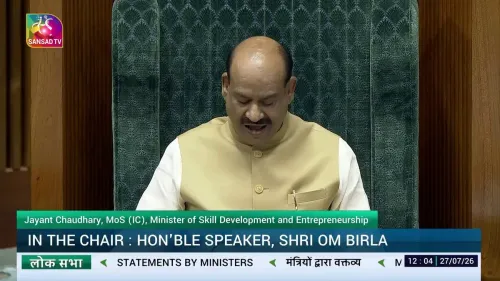
The Public Examinations (Prevention of Unfair Means) Amendment Bill, 2026 was passed in Lok Sabha on 29 July 2026 .
CM Pushkar Singh Dhami credited PM Narendra Modi and the central government for prioritising youth interests with this legislation.
The bill strengthens the legal framework established by the Public Examinations (Prevention of Unfair Means) Act, 2024 against paper leaks and organised cheating.
Dhami said the law will enable stricter action against exam mafias and paper-leak gangs .
The amendment is framed as advancing the goal of a 'Nakal Mukt Bharat' — a cheat-free India.
State-level coordination on enforcement will be the critical next step following Parliament's approval.
Millions of young Indians who have watched hard-earned exam results crumble under the shadow of paper leaks now have a sharper legal shield. Chief Minister Pushkar Singh Dhami on Wednesday, 29 July 2026 welcomed the passage of the Public Examinations (Prevention of Unfair Means) Amendment Bill, 2026 in Lok Sabha, calling it a landmark step toward protecting the futures of India's meritorious youth.
Expressing gratitude to Prime Minister Narendra Modi, CM Dhami described the legislation as a decisive move to ensure 'pardarshita, nishpakshata aur vishvasniyata' (transparency, impartiality and credibility) in the public examination system. 'This law will further empower strict and effective action against exam mafias, paper-leak gangs, and organised cheating,' he said.
From the 2024 Act to the 2026 Amendment
The amendment builds on the foundation laid by the Public Examinations (Prevention of Unfair Means) Act, 2024, which established the original legal framework to crack down on malpractice in competitive and recruitment exams. That law was itself a response to a string of high-profile paper-leak scandals that had shaken public confidence in major national examinations. The 2026 amendment is designed to tighten those provisions further — hardening penalties and expanding the state's capacity to act against organised cheating networks.What the Bill Means for Crores of Exam Aspirants
India's competitive examination ecosystem — spanning government recruitment drives, entrance tests, and public sector selection processes — touches tens of millions of aspirants every year. Each leak, each instance of organised malpractice, does not just cost an individual a job; it erodes the foundational trust that merit-based selection depends on. CM Dhami stated his confidence that the amended law would 'strengthen the credibility of recruitment and competitive examinations across the country' and 'further reinforce the trust of capable and hardworking candidates.' He framed the Lok Sabha's approval as proof of the central government's resolve, taken under PM Modi's leadership, to place youth interests at the highest priority. The CM also said the decision would give fresh momentum to the vision of a 'Nakal Mukt Bharat' — a cheat-free India. For state governments like Uttarakhand's, the next phase is coordination on enforcement — translating Parliament's resolve into on-ground deterrence against the syndicates that have long operated in the shadows of India's exam calendar. The bill's passage is the beginning of that reckoning, not its end.Point of View
Signalling a sustained political commitment rather than a one-off response to scandal. For CM Dhami, publicly aligning Uttarakhand with this bill serves a dual purpose: it associates the state government with a youth-centric reform and reinforces BJP's broader 'governance credibility' messaging ahead of future electoral cycles. The 'Nakal Mukt Bharat' framing is deliberate — it elevates a procedural legal amendment into a national moral mission, making it harder for opponents to oppose without appearing pro-malpractice. The real test, however, lies in enforcement architecture at the state level, where most examination fraud actually occurs.
NationPress
29 Jul 2026
Frequently Asked Questions
What is the Public Examinations (Prevention of Unfair Means) Amendment Bill 2026?
It is a legislative amendment passed in Lok Sabha on 29 July 2026 that strengthens the original 2024 law against malpractice in public examinations, targeting paper leaks, exam mafias, and organised cheating in recruitment and competitive exams.
What was the original Public Examinations (Prevention of Unfair Means) Act 2024?
The 2024 Act established India's foundational legal framework to curb unfair means in public exams, including paper leaks. The 2026 amendment builds on and tightens those provisions.
What did CM Pushkar Singh Dhami say about the exam bill?
CM Dhami called the bill a 'historic step' for protecting the futures of India's hardworking youth, and said it would strengthen action against exam mafias while giving fresh momentum to the vision of a 'Nakal Mukt Bharat' — a cheat-free India.
What is Nakal Mukt Bharat?
'Nakal Mukt Bharat' translates to 'Cheat-Free India' and is a policy vision articulated by the central government to eliminate malpractice from public examinations and restore credibility to merit-based selection processes.
How does the 2026 amendment affect competitive exam aspirants in India?
The amendment is intended to make recruitment and competitive examinations more credible and fair by imposing stricter penalties on those who organise or facilitate cheating, thereby protecting the results of honest candidates.