CM Dhami Hails Haridwar as Soul of Indian Civilisation
Synopsis
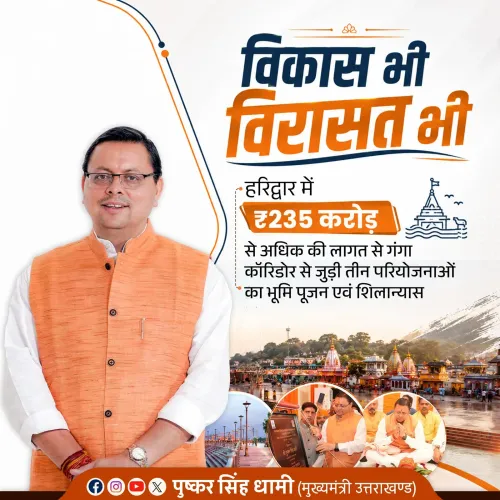
Chief Minister Pushkar Singh Dhami has described Haridwar as the living identity of Indian culture and the spiritual gateway of Sanatan civilisation, reinforcing Uttarakhand's sustained focus on religious heritage and pilgrimage tourism anchored around the Ganges.
Key Takeaways
CM Pushkar Singh Dhami described Haridwar as the 'living identity of Indian culture and the spiritual gateway of Sanatan civilisation' on 22 July 2026 .
Haridwar serves as the primary entry point to the Char Dham pilgrimage circuit — Yamunotri , Gangotri , Kedarnath , and Badrinath .
The city hosts the Kumbh Mela , one of the world's largest religious gatherings, and is central to Uttarakhand's pilgrimage economy.
The Char Dham all-weather road project designated Haridwar as the gateway to the Himalayan pilgrimage circuit, drawing major infrastructure investment.
Uttarakhand under CM Dhami has actively branded the state as 'Devbhoomi' to promote religious tourism and cultural identity.
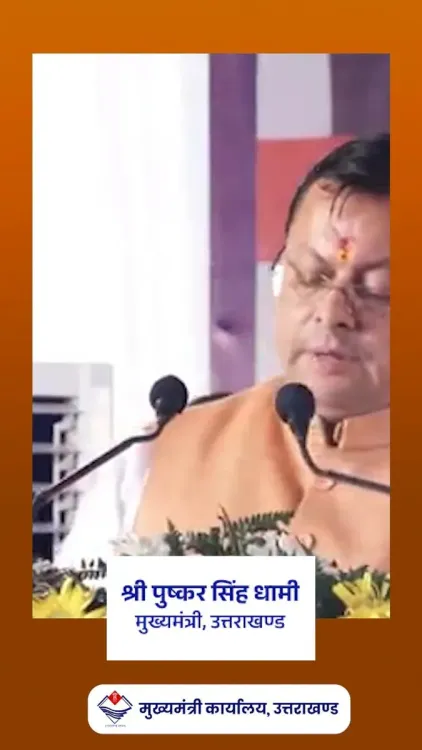
The Chief Minister's Office of Uttarakhand, on behalf of Chief Minister Pushkar Singh Dhami, on Wednesday, 22 July 2026, declared Haridwar the living identity of Indian culture and the spiritual gateway of Sanatan civilisation, underscoring the state government's sustained emphasis on religious and cultural heritage.
In his statement, CM Dhami said: 'भारतीय संस्कृति की जीवंत पहचान और सनातन सभ्यता का आत्मिक द्वार माँ गंगा का द्वार हरिद्वार है' — ('Haridwar, the abode of Mother Ganga, is the living identity of Indian culture and the spiritual gateway of Sanatan civilisation.')
Context
Haridwar, situated at the foothills of the Himalayas in Uttarakhand, is one of the seven holiest cities in Hinduism and the point where the Ganges descends from the mountains to the plains. It serves as the primary entry point for pilgrims travelling to the Char Dham shrines — Yamunotri, Gangotri, Kedarnath, and Badrinath. The city is also the site of the Kumbh Mela, one of the world's largest religious gatherings.
The Ganges is constitutionally recognised as India's national river and holds deep ritual significance across northern India, with Haridwar's Har Ki Pauri ghat considered among its most sacred banks.
Policy Backdrop
Uttarakhand has consistently positioned Haridwar and the Ganges corridor at the centre of its cultural and tourism strategy. The Char Dham all-weather road project, which advanced significantly through the 2010s and 2020s, designated Haridwar as the primary gateway to the Himalayan pilgrimage circuit, attracting substantial central government investment in road and infrastructure upgrades.
State governments across India have increasingly woven religious site promotion into broader narratives of civilizational identity, and Uttarakhand under CM Dhami has been among the most vocal in framing its pilgrimage economy within a heritage discourse. Preparations for successive Kumbh and Ardh Kumbh events have driven parallel upgrades in crowd management, sanitation, and connectivity at Haridwar.
Stakeholders and Impact
The statement carries direct relevance for the pilgrimage tourism industry in Uttarakhand, which spans hotels, transport operators, priests, and local traders concentrated around Haridwar's ghats and markets. Millions of domestic pilgrims pass through the city annually, making it one of the most economically significant religious destinations in northern India.
Residents of Haridwar and the broader Garhwal region stand to benefit from continued state focus on infrastructure and promotion, while the framing of the city as a civilizational symbol reinforces Uttarakhand's identity as 'Devbhoomi' — the land of the gods — a branding the state government has actively cultivated.
What's Next
The statement is likely to precede or accompany announcements tied to pilgrimage infrastructure, cultural events, or preparations for future Kumbh gatherings at Haridwar. As the state continues to position itself as India's foremost religious tourism destination, such declarations signal an intent to attract both domestic pilgrims and policy attention to the Ganges corridor.
The broader trajectory points toward deeper integration of civilizational heritage narratives with infrastructure investment — a pattern that will shape Uttarakhand's tourism and cultural policy in the years ahead.
Point of View
A pattern visible across BJP-ruled states with significant pilgrimage economies. For Uttarakhand specifically, such statements serve a dual purpose: reinforcing the 'Devbhoomi' brand to attract domestic pilgrims and signalling to the Centre the state's readiness for continued infrastructure investment in the Ganga corridor. The framing of Haridwar in civilizational — rather than merely religious — terms reflects a broader shift in Indian political discourse where cultural heritage is increasingly deployed as a policy anchor. Observers will watch whether this statement precedes a concrete announcement on Kumbh infrastructure or pilgrimage connectivity.
NationPress
21 Oct 2026
Frequently Asked Questions
Why is Haridwar called the gateway of the Ganges?
Haridwar is called the gateway of the Ganges because it is the point where the river descends from the Himalayas to the plains, making it the first major pilgrimage city on the Ganga and the entry point for the Char Dham circuit.
What did CM Pushkar Singh Dhami say about Haridwar?
CM Dhami stated that Haridwar, as the abode of Mother Ganga, is the 'living identity of Indian culture and the spiritual gateway of Sanatan civilisation.'
What is the significance of Haridwar in Uttarakhand tourism?
Haridwar is Uttarakhand's primary pilgrimage gateway, hosting millions of visitors annually and serving as the launchpad for the Char Dham yatra to Yamunotri, Gangotri, Kedarnath, and Badrinath.
What is the Char Dham project and how does it relate to Haridwar?
The Char Dham all-weather road project upgraded road connectivity to four major Himalayan shrines, with Haridwar designated as the primary entry gateway, drawing significant infrastructure investment from the central government.
When is the next Kumbh Mela at Haridwar?
Haridwar hosts the Kumbh Mela on a 12-year cycle and the Ardh Kumbh every six years; the state government's ongoing infrastructure focus at Haridwar is partly aimed at ensuring readiness for future Kumbh events.