CM Dhami holds intellect dialogue, Jan Samvad in Khatima
Synopsis
Chief Minister Pushkar Singh Dhami engaged intellectuals and party workers in Khatima, Udham Singh Nagar, calling for collective participation in Uttarakhand's development and urging door-to-door voter roll revision under the SIR exercise.
Key Takeaways
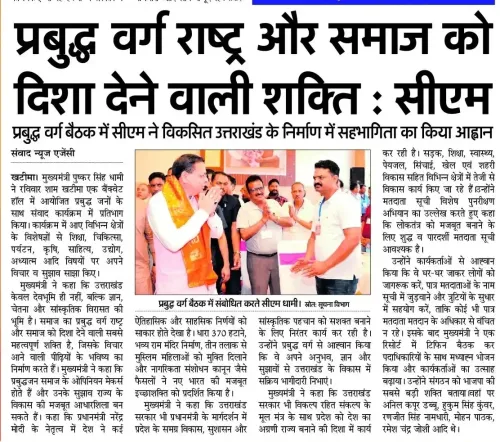
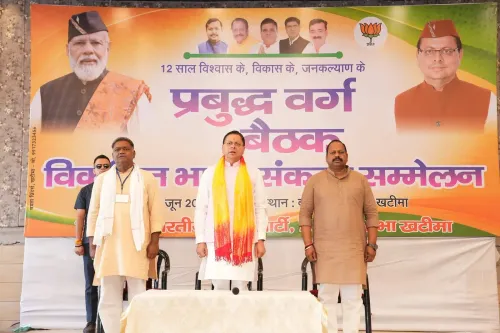
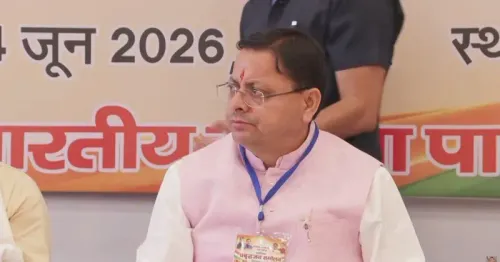
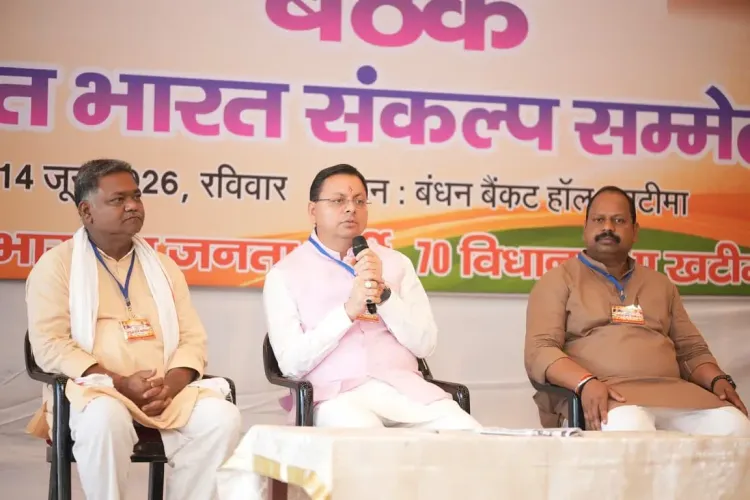
CM Pushkar Singh Dhami participated in a Prabhuddhjan Samvad in Khatima, Udham Singh Nagar on 14 June 2026 , engaging experts from education, medicine, tourism, agriculture, literature, industry and spirituality.
He described intellectuals as society's 'opinion makers' whose suggestions can form 'the strong foundation of the state's development.' CM Dhami cited abrogation of Article 370 , Ram Mandir construction, criminalisation of triple talaq and the Citizenship Amendment Act as landmark decisions under PM Modi 's leadership.
He invoked Uttarakhand 's governing motto of 'vikalp rahit sankalp' — 'resolve without alternatives' — to position the state as a national leader in development.
At the Mukhya Sevak Jan Samvad in Bandiya , he called on BJP workers to drive the Special Intensive Revision (SIR) voter roll exercise door-to-door to ensure no eligible voter is left out.
Senior officials including DM Nitin Singh Bhadauria and SSP Ajay Ganapati were present at the Khatima programme.
Chief Minister Pushkar Singh Dhami of Uttarakhand participated in a structured dialogue programme with intellectuals and opinion-makers in Khatima, Udham Singh Nagar on Sunday, 14 June 2026, where experts from fields including education, medicine, tourism, agriculture, literature, industry and spirituality shared ideas and suggestions for the state's development.
Context
The Prabhuddhjan Samvad (intellectual dialogue) brought together domain experts who presented their views on key sectors. CM Dhami told participants that Uttarakhand is not merely a land of temples — 'devbhoomi' — but 'a land of knowledge, consciousness and cultural heritage.' He described the educated and enlightened section of society as 'the most important force that gives direction to the nation and shapes the future of coming generations,' calling intellectuals the 'opinion makers' whose suggestions 'can become the strong foundation of the state's development.'
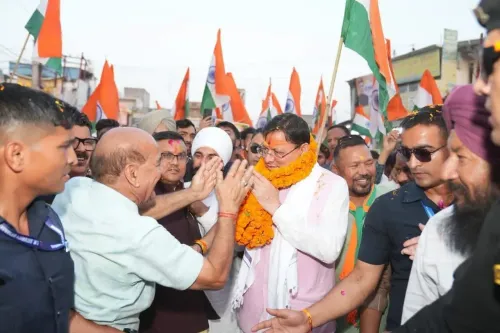
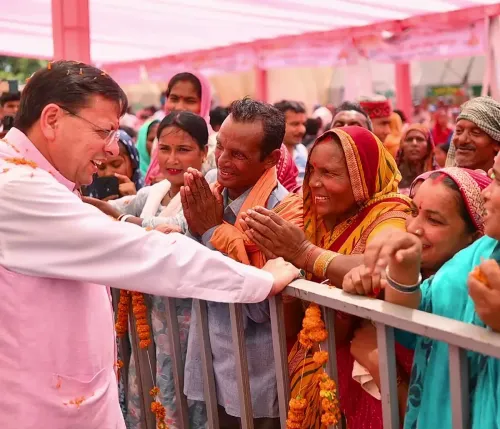
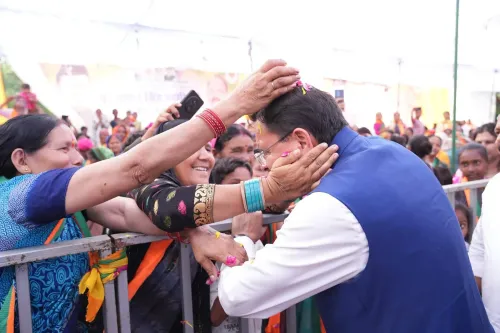
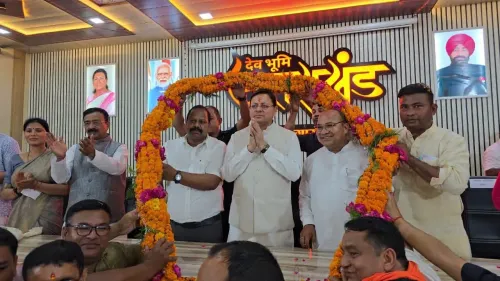
Earlier in the day, CM Dhami also attended the Mukhya Sevak Jan Samvad programme at a private resort in Bandiya, where he was welcomed with garlands and tilak. He addressed party office-bearers and workers, asserting that under Prime Minister Narendra Modi's leadership, India has achieved historic milestones in development, infrastructure, economy, science and technology, and is establishing itself as a powerful nation on the global stage.
Policy Backdrop
CM Dhami invoked the national governance mantra of 'Sabka Saath, Sabka Vikas, Sabka Vishwas aur Sabka Prayas' — 'Together with all, development for all, trust of all, effort of all' — framing it as the guiding principle behind India's march toward Viksit Bharat (Developed India). He cited several decisions taken under PM Modi's leadership as expressions of the new India's resolve: the abrogation of Article 370 in August 2019, the construction of the Ram Mandir in Ayodhya following the 2019 Supreme Court verdict and its consecration in 2024, the criminalisation of triple talaq through legislation in 2019, and the enactment of the Citizenship Amendment Act in December 2019.
The Uttarakhand government, he said, is working continuously under PM Modi's guidance to ensure the state's comprehensive development, good governance and cultural identity — operating under the motto of 'vikalp rahit sankalp', meaning 'resolve without alternatives,' aimed at making Uttarakhand a leading state in the country.
Stakeholders and Impact
CM Dhami made a direct appeal to the intellectual community to actively participate in Uttarakhand's development by contributing their experience, knowledge and suggestions. He emphasised that 'development of the state is not done by governments alone — the thinking of society, participation of citizens and collective effort take it to new heights,' and committed that the government will use positive suggestions from every section of society to make policies more effective.
At the Jan Samvad meeting, CM Dhami also highlighted the Special Intensive Revision (SIR) exercise for electoral rolls, stressing that a 'clean and transparent voter list is essential to strengthen democracy.' He urged party workers to go door-to-door, raise public awareness, ensure eligible voters are enrolled, and help correct errors in the rolls so that 'no eligible voter is deprived of the right to vote.' Senior officials present included District Magistrate Nitin Singh Bhadauria, SSP Ajay Ganapati and ADM Kaustubh Mishra, alongside elected representatives and party functionaries.
What's Next
The SIR voter roll revision exercise is ongoing, and CM Dhami's call to BJP workers to participate actively signals that the drive will intensify in the coming weeks ahead of the next electoral cycle. Progress on Uttarakhand's sector-specific policy roadmap — covering tourism, agriculture, industry and education — will be a key indicator of whether the state can translate the intellectual dialogue's suggestions into actionable governance outcomes.
Point of View
Ram Mandir, triple talaq, CAA — at a district-level event signals an attempt to tie local governance messaging firmly to the BJP's central political identity. The emphasis on the SIR voter roll exercise, framed as a democratic duty rather than a party exercise, mirrors a multi-state BJP pattern of using electoral roll clean-up drives as grassroots mobilisation tools. How effectively the intellectual community's inputs are institutionalised into policy will determine whether these dialogues move beyond optics.
NationPress
13 Sept 2026
Frequently Asked Questions
What is the Prabhuddhjan Samvad programme held by CM Dhami in Khatima?
The Prabhuddhjan Samvad is a structured dialogue programme where CM Pushkar Singh Dhami engages domain experts and intellectuals from fields such as education, medicine, tourism, agriculture, literature, industry and spirituality to gather ideas and suggestions for Uttarakhand 's development.
What is the SIR exercise that CM Dhami mentioned in Khatima?
The Special Intensive Revision (SIR) is a voter roll revision exercise aimed at ensuring electoral lists are clean, accurate and transparent. CM Dhami urged BJP workers to go door-to-door to help enrol eligible voters and correct errors so no eligible voter is denied the right to vote.
What decisions did CM Dhami highlight as achievements under PM Modi's leadership?
CM Dhami cited the abrogation of Article 370 in 2019 , the construction of the Ram Mandir in Ayodhya, the criminalisation of triple talaq through legislation in 2019 , and the enactment of the Citizenship Amendment Act in December 2019 as landmark decisions reflecting the new India's resolve.
What does 'vikalp rahit sankalp' mean and how does it apply to Uttarakhand?
Vikalp rahit sankalp translates to 'resolve without alternatives' — the governing motto CM Dhami has adopted to signal an unwavering commitment to making Uttarakhand a leading developed state in India through new sector-specific policies and a strong development roadmap.
Where was the Jan Samvad programme held in Khatima and who attended?
The Mukhya Sevak Jan Samvad was held at a private resort in Bandiya , Khatima . Attendees included party office-bearers, workers, DM Nitin Singh Bhadauria , SSP Ajay Ganapati , ADM Kaustubh Mishra , former MLA Prem Singh Rana , and other elected representatives and officials.